
What if a two-word clapback changed how a generation talks back?
“OK Boomer” actually began as a buried Reddit throwaway in 2009, then simmered for years before exploding into a global catchphrase in late 2019.
Gen Z weaponized it as a quick shut down for patronizing takes, from lectures about work ethic to climate denial, and a New Zealand MP’s viral clip helped send it mainstream.
This piece traces that slow burn, from the early posts to the platform loop between TikTok, Reddit and Twitter, and how a simple reply became a cultural shorthand for dismissing older voices.
Early Roots and True Origin Story Behind the “OK Boomer” Meme
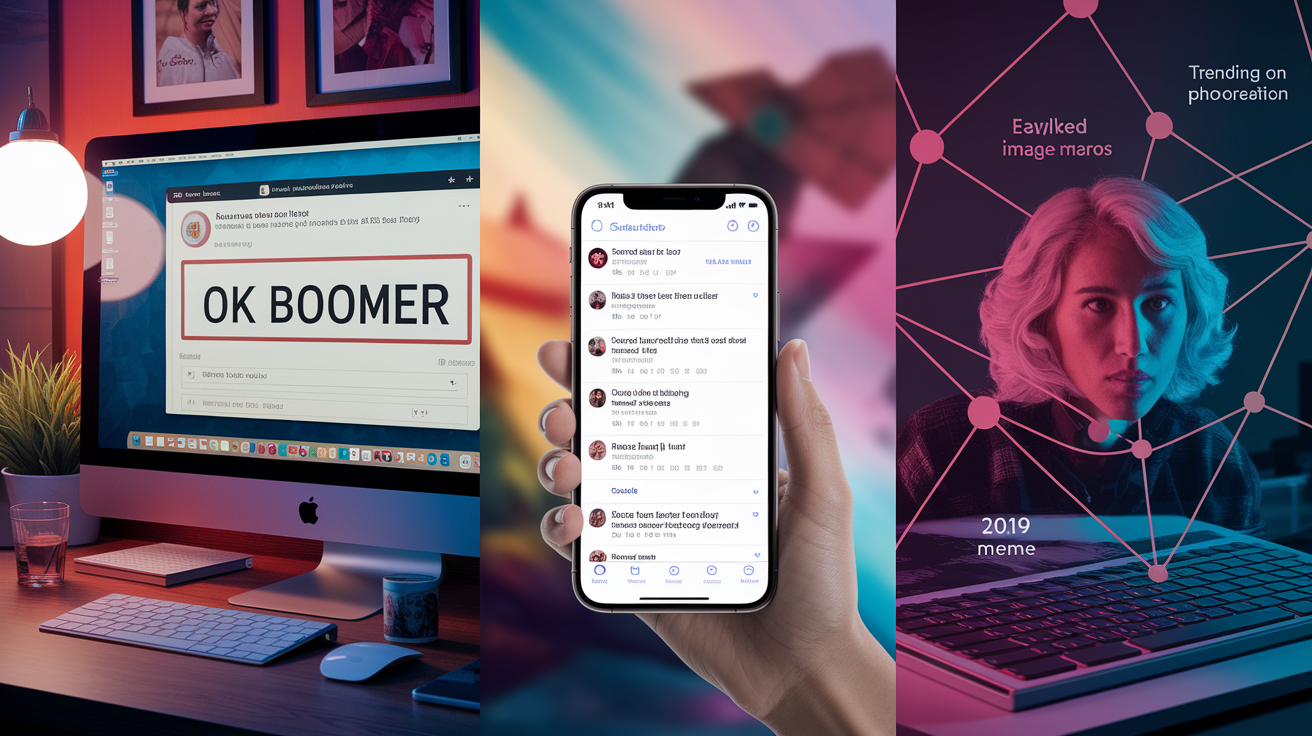
The first “OK Boomer” comment showed up on Reddit in 2009. It got buried in some niche thread and never went anywhere. For nearly ten years, the phrase just sat there, popping up now and then in random corners of the internet but never breaking through. Most people who saw it treated it like throwaway slang, not something that would become a whole cultural moment.
Baby Boomers are generally people born between 1946 and 1964. Gen Z covers roughly 2000 to 2015. Those birth years matter because by the late 2010s, the gap between generations had gotten pretty wide. Economic stress, climate debates, rapid social change—all of it made younger people feel dismissed by older adults who kept offering advice nobody asked for. Advice about work ethic, technology, lifestyle choices. That frustration had been building, and it needed an outlet.
- 2009 Reddit comment: Earliest archived instance appeared in a minor subreddit discussion. Nobody paid attention.
- Early 2019 TikTok comments: The phrase started showing up as a reply under videos of older people criticizing Gen Z behavior.
- First meme formats: Simple image macros with “OK Boomer” text began circulating on Reddit’s r/okboomer and r/boomershumor.
- Earliest subreddits: Communities for generational humor existed before the phrase went viral, giving it ready-made distribution.
Researchers rebuilt this timeline by digging through Reddit archives, scanning TikTok metadata, cross-referencing Google Trends. Lots of viral-origin myths popped up in late 2019. Some claimed the phrase was invented during that New Zealand parliamentary moment or by a specific TikTok creator. Those claims are wrong. The phrase existed years earlier, just waiting for the right cultural moment to blow up.
How the “OK Boomer” Meme Went Viral Across Platforms

The meme exploded in late 2019 through this weird cascade where every platform fed the others. TikTok users made it a comment template, Twitter turned it into a hashtag, Reddit communities built entire meme formats around it, and mainstream news outlets covered the whole thing in real time. Each platform pushed the others, creating this feedback loop that took the phrase from internet slang to something people talked about at dinner.
-
The TikTok “Peter Pan syndrome” clip: An older man posted a video accusing Gen Z and Millennials of refusing to grow up. Thousands of users flooded the comments with “OK Boomer,” mocking how patronizing he sounded. The dismissive reply spread to other videos featuring older people giving unsolicited life advice.
-
The SoundCloud song and its chorus used as TikTok audio: Musicians Peter Kill and Jed Will released a satirical song called “OK Boomer,” aimed at the “65+ crowd.” The catchy chorus racked up hundreds of thousands of listens. TikTok creators sampled the audio for lip-sync videos and comedic skits, embedding the phrase into a soundtrack that played across millions of posts.
-
Reddit meme formats and subreddit activity: Subreddits like r/okboomer and r/boomershumor became hubs for generational humor. Users posted image macros pairing “OK Boomer” text with screenshots of condescending social media posts or outdated advice columns. Simple format, easy to replicate.
-
Twitter amplification and hashtag spikes: The hashtag #OKBoomer started trending in November 2019, driven by retweets of viral TikTok clips and Reddit posts. Twitter’s public feed turned the phrase into shorthand for intergenerational frustration. Influencers, journalists, celebrities joined in, broadening its reach.
-
News outlets reporting in late 2019: Major media outlets published explainer articles and opinion pieces. Taylor Lorenz’s widely read article introduced the phrase to readers who’d never encountered it on TikTok or Reddit. Television segments and radio debates followed, cementing “OK Boomer” as a recognized cultural moment.
The New Zealand Parliamentary Clip
In November 2019, New Zealand MP Chlöe Swarbrick used “OK Boomer” during a parliamentary speech on climate change. An older legislator heckled her mid-sentence. She dismissed the interruption with a quick “OK Boomer” before continuing her remarks. The exchange was captured on video, clipped, and shared across Twitter, Facebook, and Instagram within hours. Mainstream news picked up the story, framing it as a generational showdown in a formal government setting. That single moment gave the meme legitimacy outside internet culture. It proved the phrase could function as a real-world rhetorical tool.
Viral memes typically follow a predictable path: obscure origin, exponential growth driven by platform mechanics, peak media attention, eventual decline as novelty wears off. “OK Boomer” hit every stage fast. The hybrid media system where social platforms, traditional news, and user-generated content blend together accelerated the spread. A phrase that took ten years to surface needed only weeks to become a global catchphrase.
Cultural Meaning and Generational Tension Behind “OK Boomer”
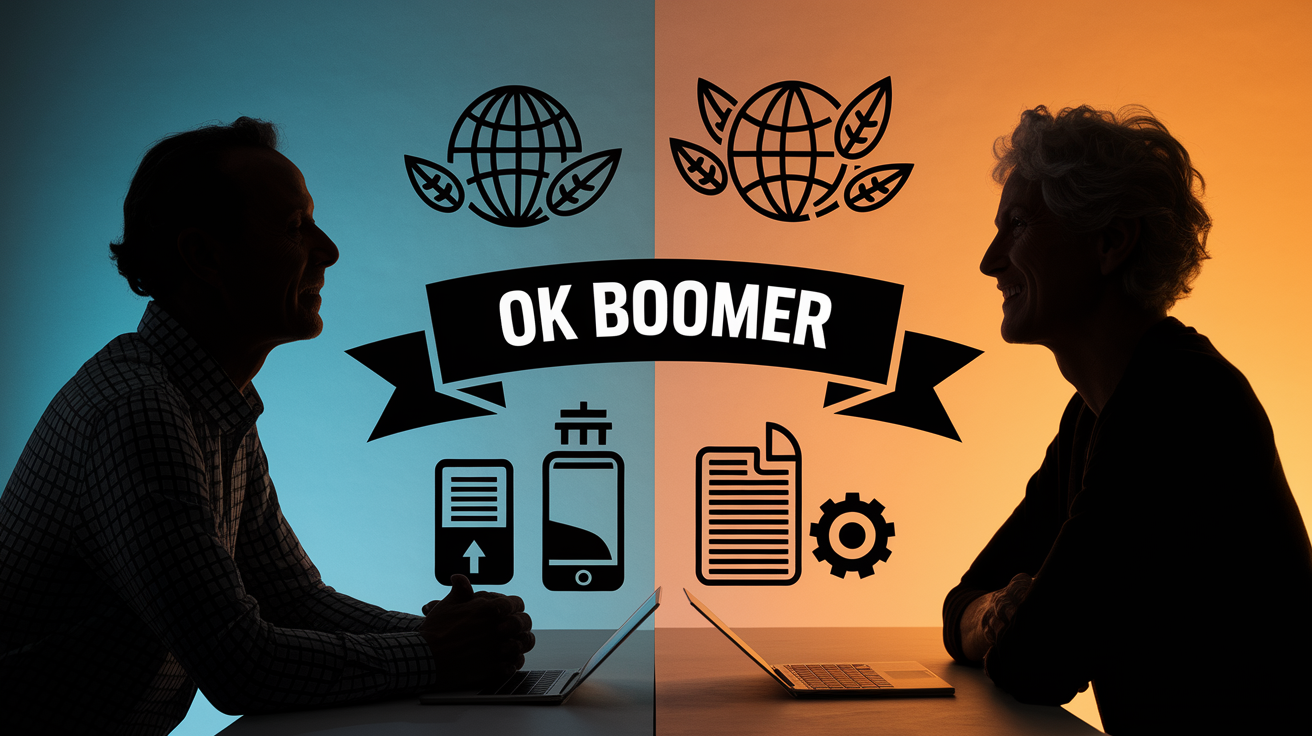
Younger generations used the phrase as a shortcut to reject recurring stereotypes. They’d spent years hearing accusations of laziness, entitlement, over-reliance on technology. Every thinkpiece about avocado toast or participation trophies reinforced the perception that older adults misunderstood their economic reality. “OK Boomer” became a way to dismiss those judgments without engaging in a lengthy defense. It said, in two words, “Your criticism is outdated and I’m not interested in debating it.”
The meme also functioned as a response to ideological disagreements. Users invoked it in debates over climate science denial, where older commentators downplayed environmental threats despite overwhelming scientific consensus. It appeared in arguments about military intervention, with younger people citing Iraq and Afghanistan as cautionary tales while some older voices advocated for new conflicts. Technology skepticism, complaints about smartphones, social media, or online activism, prompted the retort as well. In each case, the phrase signaled that the speaker viewed the opposing perspective as rooted in outdated values rather than reasoned analysis.
Economics drove a lot of the frustration. Wage stagnation, student debt, housing costs versus older narratives about bootstrapping and hard work. Social issues created friction too. Disagreements on LGBTQ rights, feminism, and racial justice, where younger people saw progress and older voices expressed discomfort or resistance. Technology split generations between digital natives who treat online life as essential and older adults who view it as frivolous or harmful.
Over time, “boomer” evolved from a demographic label into an ideological shorthand. Users applied it to anyone expressing what they perceived as conservative, out of touch, or patronizing views, regardless of actual birth year. A 35-year-old could be called a “boomer” for dismissing climate activism. A 70-year-old could escape the label by supporting progressive policies. This shift made the phrase more versatile but also more contentious, because it blurred the line between age-based stereotyping and critique of specific beliefs.
The phrase sparked genuine disagreement about whether it constituted ageism or legitimate intergenerational critique. Critics argued it unfairly lumped all older adults into a single dismissive category, erasing the diversity of political views and lived experiences within the Baby Boomer generation. Supporters countered that the phrase targeted attitudes, not age, and reflected justified frustration with systemic inequalities younger generations inherited. The debate remains unresolved, with interpretation often depending on whether you view generational labels as primarily demographic or ideological.
Major Public Moments and Media Coverage That Amplified “OK Boomer”
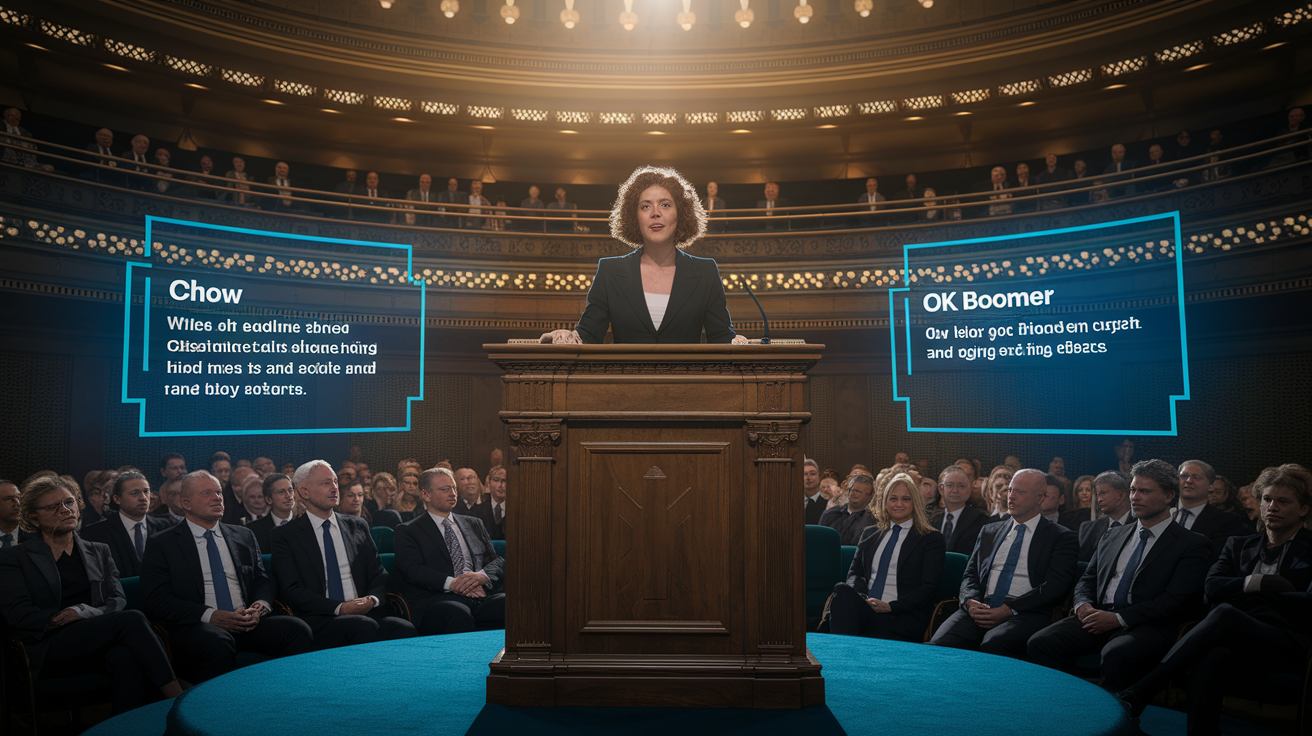
The Swarbrick clip acted as a tipping point. Before that moment, “OK Boomer” lived primarily in TikTok comments and Reddit threads. After the parliamentary exchange went viral, the phrase appeared in newspaper op-eds, television segments, and dinner conversations worldwide. The formal government setting gave the meme weight, transforming it from internet joke into a real-world rhetorical device. Politicians, educators, and business leaders suddenly had to decide whether the phrase was harmless generational banter or a troubling sign of cultural division.
Taylor Lorenz’s article in a major outlet introduced the meme to readers who rarely visited TikTok or Reddit. The piece explained the phrase’s origins, detailed its viral spread, and interviewed young people about why they used it. That mainstream coverage triggered a wave of follow-up stories, think pieces, and hot takes. Media attention created a self-reinforcing cycle. More coverage drove more searches, which prompted more usage, which generated more headlines. By late November 2019, “OK Boomer” had become one of the most discussed phrases in English-language media.
Backlash arrived quickly. Conservative radio host Bob Lonsberry tweeted that “boomer” was “the n-word of ageism,” drawing immediate criticism for the comparison. His statement became its own viral moment, with thousands of users condemning the false equivalence. The controversy illustrated how polarizing the meme had become. What some saw as lighthearted pushback, others interpreted as a serious social problem. An AARP executive responded to the trend with a dismissive counter: “OK, millennials. But we’re the people that actually have the money.” That remark highlighted the economic dimension of the generational divide, reinforcing younger people’s frustrations about wealth concentration among older generations.
| Incident | Impact on Meme Spread |
|---|---|
| Chlöe Swarbrick parliamentary clip (November 2019) | Moved the phrase from internet slang to mainstream news topic. Demonstrated real-world usage in formal settings. |
| Taylor Lorenz article in major outlet | Explained the meme to audiences unfamiliar with TikTok. Triggered wave of follow-up media coverage. |
| Bob Lonsberry “n-word of ageism” tweet | Generated backlash and counter-backlash. Highlighted generational and political polarization around the phrase. |
| AARP executive’s response about money | Reinforced economic tensions. Gave older adults a counter-narrative to the meme. |
Political, Ideological, and Discursive Uses of “OK Boomer”
The meme functions as a dismissive retort aimed at specific viewpoints rather than a blanket condemnation of all older adults. Users deployed it to reject climate science denial, particularly during debates over Australia’s catastrophic 2019–2020 bushfire season. It appeared in arguments against military intervention when tensions flared between the United States and Iran in early 2020. Gun control discussions, impeachment debates, and technology skepticism posts all attracted the phrase. In each case, the target was an idea, one the speaker viewed as rooted in outdated or harmful thinking, not simply someone’s age.
Issue-Based Usage
Climate change became the most common context for the meme. Younger activists pointed to decades of inaction and fossil fuel dependence, blaming older generations for prioritizing short-term economic growth over long-term environmental stability. When older commentators dismissed youth-led climate movements as naive or alarmist, the response was often a simple “OK Boomer.” The phrase also surfaced in debates over LGBTQ rights, feminism, and veganism, where younger people framed their positions as moral progress and older skeptics as obstacles. War-related uses spiked during U.S.–Iran tensions, with younger users citing the Iraq War as evidence that military escalation rarely delivers promised outcomes.
Meme Format and Discursive Limits
The typical meme pairs an image with superimposed text. A screenshot of a condescending Facebook post might appear above the caption “OK Boomer,” or a photo of a burning planet might carry the phrase alongside climate denial quotes. This format prioritizes speed and shareability over nuance. Complex historical debates about labor movements, economic policy, or generational wealth transfer get flattened into two-word punchlines. Humor and brevity make the meme effective at capturing attention, but they also strip away context and invite oversimplification. A serious policy disagreement becomes a generational joke, which can alienate potential allies and harden tribal divides.
Research into hybrid media systems shows that “OK Boomer” spread rapidly across disparate political topics but never coalesced into an organized movement. Unlike #MeToo or #BlackLivesMatter, which mobilized sustained activism and policy advocacy, the meme remained primarily a rhetorical device. It expressed frustration and signaled generational identity, but it didn’t generate coordinated political action or translate into significant real-world influence in legislative or institutional settings.
Examples of Everyday “OK Boomer” Usage and Meme Variants
The phrase appears most often as a casual comment on social media. A parent texts unsolicited career advice, and the reply is “OK Boomer.” A coworker complains that younger employees rely too much on Google, and someone mutters the phrase under their breath. It functions like “okay mom” or “sure, whatever you say.” A verbal eye-roll that ends the conversation without escalating conflict. On TikTok, users layer the phrase over video clips of older people making outdated claims, often paired with the SoundCloud song audio or exaggerated facial reactions.
A Twitter user posts a climate science denial article, and replies flood in with “OK Boomer” GIFs. A Reddit thread on r/boomershumor shares a cartoon about millennials’ phone addiction, captioned “OK Boomer” in the title. A TikTok creator lip-syncs to the Peter Kill and Jed Will chorus while pointing at screenshots of condescending advice columns. A Facebook comment dismisses renewable energy as impractical, and younger commenters respond with the hashtag #OKBoomer. Variants like “OK Zoomer” or “OK Doomer” emerge, applying the dismissive format to other generational or ideological groups.
Backlash, Controversy, and Ethical Debates Around “OK Boomer”
High-profile outrage moments multiplied as the meme gained traction. Bob Lonsberry’s “n-word of ageism” comparison sparked fierce debate about whether the phrase unfairly targeted older adults. Some commentators argued that dismissing someone based on generational identity mirrored the prejudice younger people claimed to oppose. Others pointed out that Baby Boomers had collectively benefited from economic conditions like affordable college, accessible housing, strong union representation that no longer existed for younger generations, making the frustration understandable if not entirely fair.
Critics worried the meme reinforced harmful stereotypes. Not all Baby Boomers deny climate science, oppose LGBTQ rights, or dismiss technology. Many older adults marched for civil rights, fought for gender equality, and championed environmental protections decades before Gen Z was born. Lumping them together with conservative voices erased that diversity and discouraged intergenerational coalition-building. The phrase risked becoming a lazy shorthand that replaced substantive argument with demographic caricature, making it harder to address shared challenges like wealth inequality or political polarization.
Defenders of the meme framed it as humorous intergenerational pushback rather than serious discrimination. They argued that older adults hold disproportionate political and economic power, so a dismissive joke doesn’t carry the same weight as discrimination against marginalized groups. The phrase punches up, targeting those with structural advantages, rather than punching down. Young people face economic precarity, climate anxiety, and student debt, so a snarky retort seemed like a reasonable response to patronizing lectures. The debate ultimately hinges on whether generational labels function primarily as demographic categories or as proxies for ideology and power.
Long-Term Impact, Decline, and Cultural Legacy of “OK Boomer”
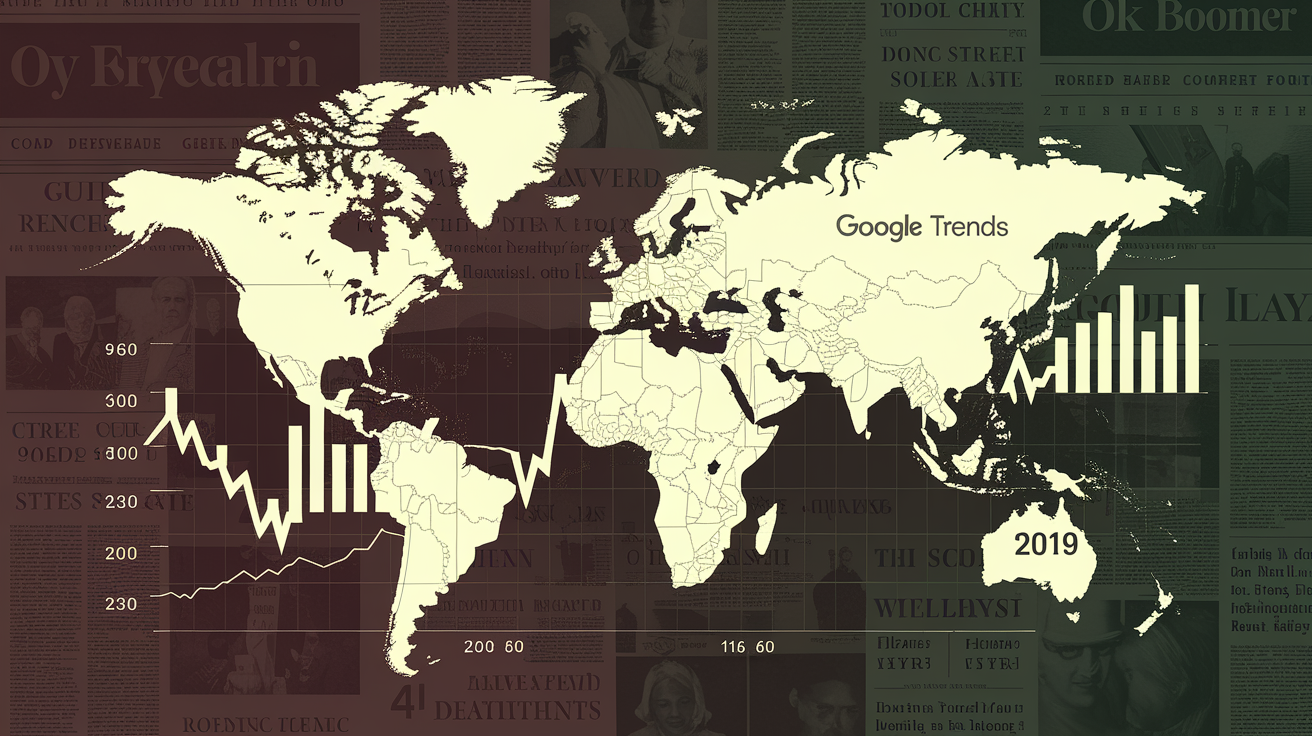
Google Trends data shows search interest for “OK Boomer” peaked in November 2019 and declined steadily into the mid-2020s. By 2021, the phrase had largely faded from mainstream conversation, though it still appeared occasionally in niche online communities. The meme’s rapid rise and fall followed the typical lifecycle of viral internet phenomena: explosive growth, saturation, and eventual obsolescence as users moved on to new jokes. Hybrid media analysis confirms the phrase had limited long-term political influence, with few examples of it shaping legislation, electoral outcomes, or sustained activist campaigns.
Generational awareness: The meme forced public conversations about intergenerational economic inequality, climate responsibility, and shifting social values.
Rhetorical shorthand: It demonstrated how a simple phrase can encapsulate complex frustrations and spread globally within weeks.
Meme history: “OK Boomer” became a case study in how platform affordances, cultural timing, and media attention combine to create viral moments.
Despite its short lifecycle, the phrase left a mark on how people talk about generational divides. It proved that humor and dismissiveness can function as political speech, even if they don’t translate into organized action. The meme also highlighted the limits of viral culture. What spreads fastest is rarely what lasts longest. Within a few years, “OK Boomer” became a historical artifact, a reference point for a specific moment when younger generations voiced their frustration in two words and the internet listened, at least for a little while.
Final Words
In the action, we traced the phrase from a 2009 Reddit comment to subreddit threads, TikTok audios, and the New Zealand parliamentary clip that pushed it mainstream. We unpacked generational dates, key moments, and how the meme spread across platforms.
Researchers reconstructed the timeline and cleared up false origin claims, showing how humor and protest met online.
If you want one takeaway: origin of the OK boomer meme explained shows a small phrase can spark big cultural conversations, and it’s still worth watching.
FAQ
Q: Where did the OK, Boomer meme come from and who first said “okay boomer”?
A: The OK Boomer meme originated on Reddit in 2009, stayed niche, then exploded across TikTok, Twitter and news in 2019; there’s no single credited first speaker—it’s crowd-created.
Q: What does “OK boomer” actually mean?
A: The phrase “OK boomer” means a quick, dismissive retort aimed at perceived patronizing or out-of-touch views from older people; it’s shorthand for intergenerational or ideological frustration and can seem ageist.
Q: Is Donald Trump a boomer or Silent Generation?
A: Donald Trump is a Baby Boomer: he was born in 1946, which places him solidly in the 1946–1964 Baby Boomer generation rather than the Silent Generation.