
What if the real star of a hit TV scene is the song, not the actor?
A perfect soundtrack moment grabs attention, ties an image to a melody, and makes viewers search, clip, and remix, sparking streaming boosts, chart comebacks, and waves of short-form content.
This post shows how emotional timing, searchable music hooks, and platform remix loops turn one scene into a viral event and why producers should treat music as a key growth tool.
Core Mechanisms Behind Soundtrack Moments Driving TV Show Virality
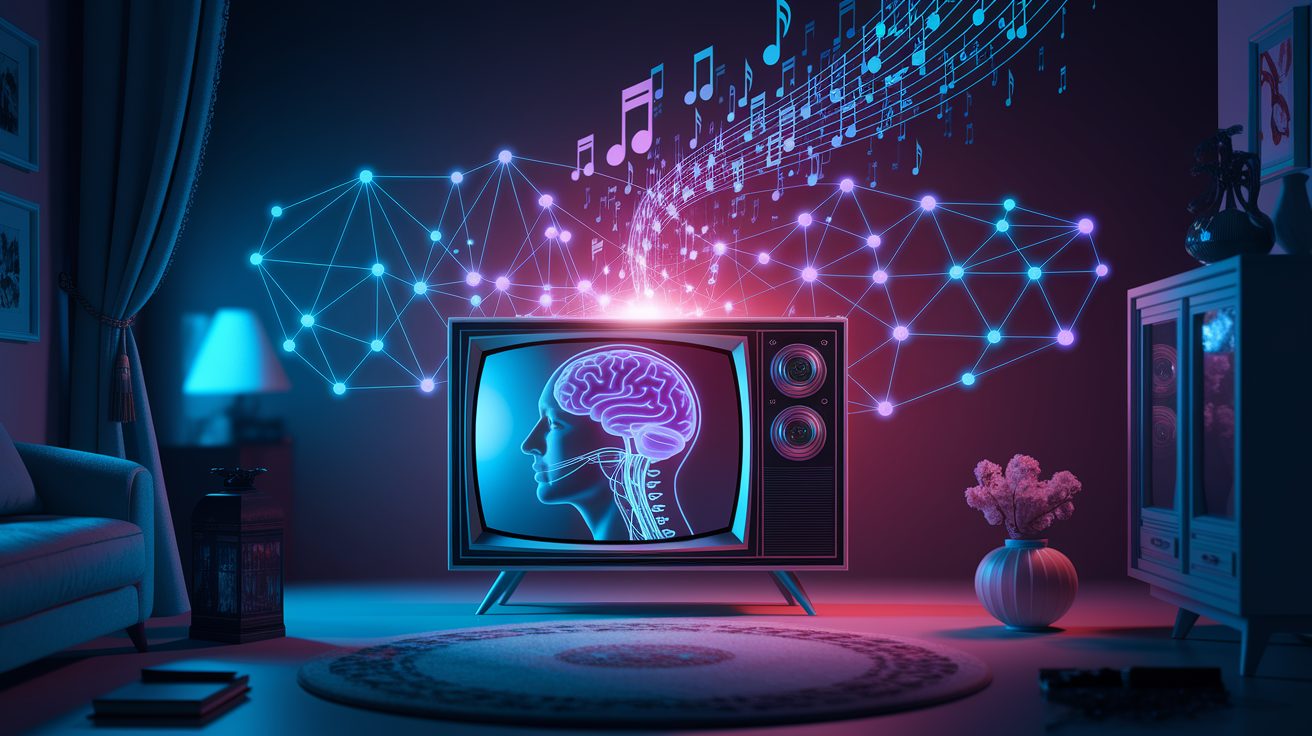
Music doesn’t just sit in the background. It hijacks attention, locks into emotional memory, and creates narrative glue that sticks around long after you’ve moved on to the next episode. When a song hits at exactly the right moment, it converts passive watching into an emotional event people need to revisit, share, and dissect. That’s what turns isolated moments into viral content.
The whole thing works through emotional scaffolding. Music shifts your emotional state faster than dialogue or visuals can, telling you what to feel before your brain catches up to what’s happening. Then comes memory mapping: you store the image and the song as one package, which explains why fans immediately Google “song from episode X” the second the credits roll. That search behavior? It’s proof the moment just crossed over from entertainment into something people actually want to talk about.
And the search is just the beginning. Fans hunting down a track are halfway to creating or watching user content already. Clip edits, reaction videos, lyric breakdowns, nostalgic rants. The soundtrack moment becomes a conversation starter, a creative prompt, and shorthand for emotional beats that would take paragraphs to explain otherwise.
Look at Stranger Things. They didn’t just use Kate Bush’s “Running Up That Hill.” They activated a 37-year-old song into global chart re-entry because the scene worked as a memory map millions of people wanted to replay and reinterpret. Euphoria turned Labrinth’s score into the show’s subconscious voice. The Bear used ’90s Chicago alt-rock like Smashing Pumpkins’ “Today” and Pearl Jam’s “Animal” to nail down time and tension. The White Lotus threw Hawaiian chants next to disco to build absurdist unease.
Five reasons music-driven scenes go viral:
- Emotion acceleration – music compresses emotional buildup into seconds, creating peaks that feel earned and worth sharing
- Pacing alignment – when a song’s rhythm syncs with visual editing, the scene feels inevitable, which makes you want to watch it again
- Nostalgia triggers – cross-generational tracks pull in different age groups and kick off rediscovery cycles
- Character connection – song choice reveals subtext about identity or motivation without needing exposition
- Context shift – music reframes familiar visuals with new meaning, making moments quotable and meme-ready
Once a soundtrack moment lands emotionally and becomes searchable, it spreads across platforms. Clips migrate from streaming services to TikTok, Instagram Reels, YouTube, Twitter. Short-form edits remix the original context into new ones: POV stories, transitions, relationship montages, performance repurposes. Each remix pushes the moment further and creates fresh entry points for discovery.
The feedback loop’s predictable. Social usage drives intentional streaming. Streaming activity pushes chart movement. Chart placement triggers press coverage. Coverage cycles back into social conversation. The result is sustained virality that can run for weeks or months, turning a single scene into a recurring cultural reference.
Emotional Resonance of Soundtrack Moments and Their Impact on Virality
Music works as emotional architecture. It sets the internal landscape of a scene faster and more precisely than any other tool. When you hit a pivotal moment paired with the right song, you experience emotional priming: the opening notes prepare you to feel before you fully understand why. That’s how Euphoria’s Labrinth compositions function as the show’s subconscious voice, shaping audience emotion in real time and turning abstract internal states into shared, recognizable feelings.
The pairing of visuals and music creates iconic moments you encode as single emotional memories. Normal People used Imogen Heap and The Magnetic Fields to deepen empathy and closure in ways dialogue alone couldn’t touch. The combination of image, performance, and song becomes inseparable—a memory trigger you return to when you need that specific emotion again.
That memory encoding leads straight to shares, rewatches, and user content. Once a scene is emotionally encoded, it becomes a portable cultural object. Fans clip it, quote it, recreate it, use it to explain their own feelings. The more emotionally resonant the original pairing, the more versatile it becomes in new contexts.
Viral soundtrack moments don’t just live inside the show. They migrate across platforms as emotional shorthand. A 90-second scene with the perfect song choice can generate thousands of derivative works, each one reinforcing the original moment’s cultural reach and driving new viewers back to the source. The emotional impact is the spark. The social ecosystem is the accelerant.
Case Studies of Viral TV Soundtrack Moments That Drove Massive Audience Engagement
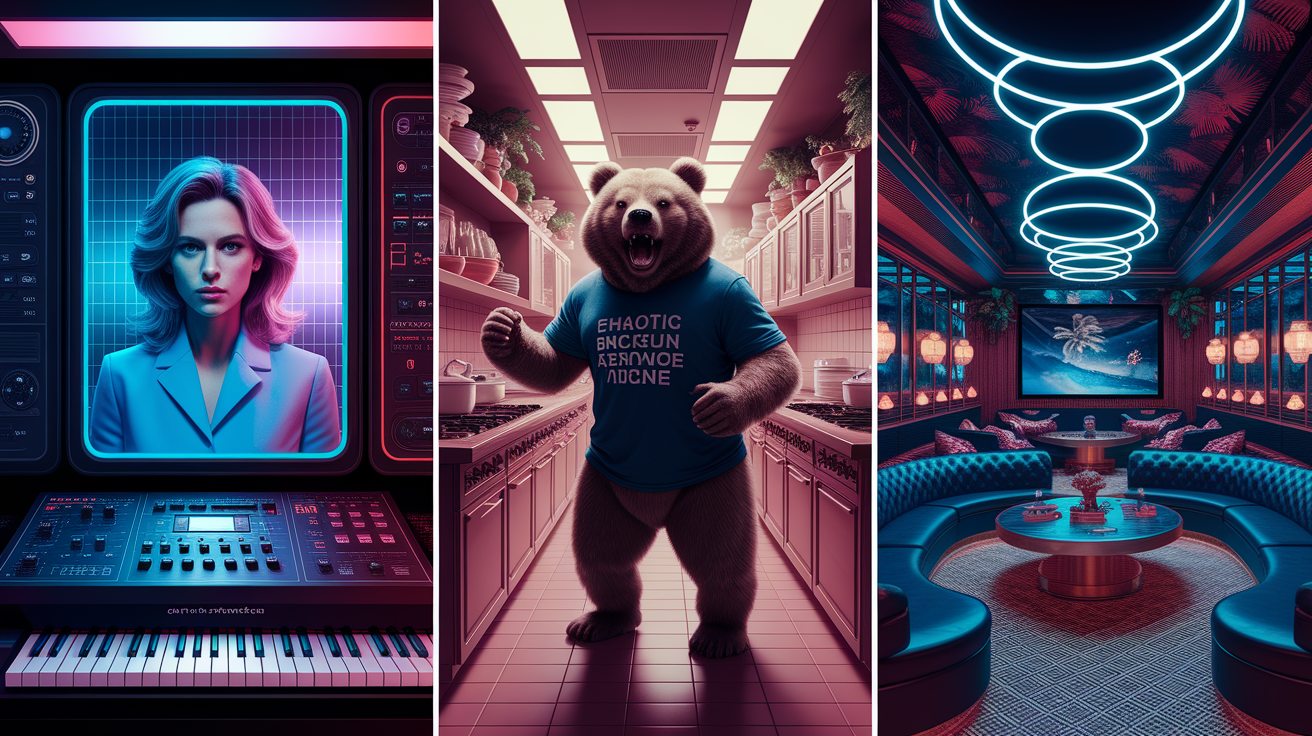
Stranger Things turned Kate Bush’s “Running Up That Hill” from a nostalgic deep cut into a global streaming phenomenon. The 37-year-old track re-entered charts worldwide after the show used it as the emotional anchor of a life-or-death character moment in season four. Fans didn’t just remember the scene. They needed to own the song, replay it, share it.
Within days, the track dominated streaming platforms, climbed international charts, and generated millions of user videos dissecting the pairing. The virality wasn’t random: the song’s building intensity matched the scene’s escalating stakes, and its lyrical themes of perseverance and connection mirrored the character’s internal battle. The result was a measurable resurgence that turned a single episode into a cultural event and proved the right soundtrack moment can resurrect decades-old music into mainstream relevance.
The Bear’s second season used ’90s Chicago alt-rock to define time, place, and tension with surgical precision. Tracks like Smashing Pumpkins’ “Today” and Pearl Jam’s “Animal” weren’t just period-appropriate. They became the show’s emotional texture, grounding chaotic kitchen scenes in a specific cultural moment and geographic identity. The music choices communicated backstory, character formation, and unspoken pressure without a single line of exposition.
Fans responded by hunting down the full tracklist, creating curated playlists, and using the songs as entry points to discuss the show’s themes of legacy, survival, and creative ambition. The sonic world-building turned casual viewers into engaged fans who wanted to live inside the show’s atmosphere.
The White Lotus took a different approach, using genre-shifting music—Hawaiian chants, disco, classical strings—to establish a tone of absurdity and unease. The eclectic soundtrack mirrored the show’s thematic collision of luxury, privilege, and chaos, and became a signature element that set it apart from other prestige dramas. The unpredictability of the music choices kept viewers off-balance and heightened the show’s satirical edge.
Playlist and chart impact across shows like Barbie, The Last of Us, and Guardians of the Galaxy demonstrated the financial and cultural power of soundtrack-driven virality. Official playlists like “Songs from The Bear” and “Music from Heartstopper” accumulated millions of plays, turning episodic cues into continuous listening habits. Soundtrack albums became streaming goldmines and chart staples, proving a well-executed musical moment doesn’t just enhance a scene. It creates a secondary revenue stream and extends the show’s cultural footprint long after the season ends.
How Social Platforms Amplify Soundtrack Moments Into Viral Television Events
The phrase “song from episode X” is one of the most reliable signals that a soundtrack moment has crossed into viral territory. Fans searching for a track immediately after watching are already primed to share, clip, and remix. That search behavior feeds straight into social media loops: viewers find the song, post about it, tag friends, or create short-form video content using the audio.
The cycle accelerates when clips migrate to platforms like TikTok, Instagram Reels, and YouTube Shorts, where millions of users can discover a moment without ever watching the full episode. Social search transforms individual viewing into collective conversation, and the feedback loop from social usage to streaming generates the momentum that pushes songs onto charts and playlists.
Short-form video platforms act as the primary amplification engine. A single powerful scene—especially one with a distinctive musical hook—becomes raw material for thousands of derivative edits. Creators remix the audio and visuals into new contexts: POV storytelling, emotional breakdowns, transitions, nostalgia-driven montages. Each remix introduces the original moment to a new audience segment, and the platform’s recommendation algorithms prioritize content that holds attention and generates engagement.
A song that works across multiple formats and emotional contexts has the highest chance of sustained virality. Official soundtrack playlists on Spotify and Apple Music benefit directly from this cycle, capturing the streaming intent generated by social discovery and converting casual viewers into repeat listeners.
Creator adoption follows a predictable trajectory: niche accounts experiment first, mid-sized creators validate the trend, and mainstream influencers cement it as culturally significant. Early adoption by trusted niche creators matters more than late-stage mass reach because it signals authenticity and creative potential. Once mid-tier creators begin using the audio, the moment transitions from niche interest to scalable trend. By the time mainstream accounts join, the moment is already embedded in the cultural conversation, and its virality becomes self-sustaining.
Four formats that generate viral audio clips:
- POV edits – first-person narrative videos that recontextualize the song’s emotion into relatable scenarios
- Transition effects – visual cuts timed to musical beats, showcasing technical skill and aesthetic alignment
- Emotional breakdown scenes – raw reaction content where creators process the original moment’s impact
- Nostalgia-driven edits – montages pairing the song with archival footage, childhood photos, or retro aesthetics
The Role of Music Supervision and Song Placement Strategy in Creating Viral Moments

Music supervisors work at the intersection of narrative instinct and cultural fluency. Their job is finding the one track—out of thousands—that will make a scene unforgettable. The process starts with deep script analysis: understanding character arcs, emotional beats, pacing, subtext. Supervisors then match those narrative needs with songs that carry the right mood, lyrical resonance, and sonic texture.
The goal is alignment. When music, image, and performance lock together, the moment feels inevitable. That inevitability is what makes scenes shareable.
A supervisor’s choices are inherently human-curated, which matters in an era dominated by algorithmic playlists. Audiences trust that a director, showrunner, or supervisor placed a song because it served the story, not because it gamed a recommendation engine. That trust translates into engagement.
Five elements supervisors evaluate when placing a song:
- Mood and tone – does the track’s emotional register match or intentionally contrast the scene’s feeling
- Pacing and rhythm – does the song’s tempo align with visual editing and narrative momentum
- Lyrical content – do the words add subtext, irony, or thematic weight without over-explaining
- Cultural context – does the track signal time, place, identity, or generational perspective
- Emotional beat – does the song arrive at the precise moment when character emotion peaks or shifts
The economics of sync virality have fundamentally changed how independent artists and labels approach exposure. A single well-timed TV placement can generate overnight streaming spikes that surpass months of touring or playlist pitching. The sync economy is booming because streaming platforms reward active listener behavior: saves, repeat plays, playlist adds, completion rates. All of which spike when a song is tied to a memorable scene.
For independent artists, a sync placement offers distribution without traditional gatekeeping. One scene can introduce a track to millions of engaged viewers who are already emotionally primed to listen. Licensing deals that once served as modest revenue sources now function as breakout accelerants, and supervisors have become some of the most influential curators in the music industry.
| Factor | Effect on Virality |
|---|---|
| Narrative alignment | Increases emotional resonance and shareability by making the song feel essential to the story |
| Cross-generational appeal | Expands audience reach by triggering both discovery and rediscovery across age groups |
| Licensing speed | Enables rapid response to organic social moments and maintains momentum during critical first 72 hours |
Streaming Metrics and Data Proving Soundtrack Moments Drive TV Show Virality
Official playlists like “Songs from The Bear” and “Music from Heartstopper” have racked up millions of plays, proving viewers don’t just enjoy soundtrack moments. They return to them repeatedly. These numbers represent active listening behavior, not passive background noise. Each save, repeat play, and playlist add signals the song has transcended its original scene and entered the listener’s personal rotation.
Streaming platforms reward this behavior by feeding the track into algorithmic recommendations, which extends reach beyond the show’s core audience. The cycle reinforces itself: viral scenes drive playlist adds, playlist adds generate algorithmic exposure, and algorithmic exposure pulls in new viewers who then watch the original episode to understand the context.
Chart movement functions as a lagging indicator. Social usage and streaming spikes typically precede chart positions by one to two weeks. This lag creates a strategic window for teams monitoring daily platform activity. A song spiking on TikTok and showing increased save rates on Spotify will likely appear on charts within days, but only if the momentum sustains through that critical conversion period.
The most successful soundtrack moments maintain upward trajectories for weeks. Some tracks, like “Running Up That Hill,” stay on charts for months or re-enter after dips. Multi-week longevity and the ability to re-chart signal enduring cultural relevance, not just a fleeting viral spike.
Viewer rewatch behavior increases measurably around music-driven moments. Fans return to specific episodes or scenes to relive the emotional peak, and streaming services track these repeat views as engagement signals that boost a show’s algorithmic ranking. The more a soundtrack moment drives rewatches, the more the platform prioritizes the show in recommendations, which pulls in new viewers and extends the show’s virality window.
Music doesn’t just enhance individual scenes. It creates behavioral loops that increase total watch time, subscriber retention, and cross-episode engagement. The data makes it clear: soundtrack moments aren’t decorative. They’re structural drivers of virality, discovery, and long-term audience loyalty.
How Soundtrack Moments Drive Music Discovery, Artist Exposure, and Cultural Ripple Effects
Independent artists increasingly view sync placements as breakout moments that bypass traditional industry gatekeeping. A single scene in a popular show can deliver more exposure than months of playlist pitching or touring. The sync economy rewards songs that carry emotional weight and narrative utility, not just commercial polish.
When a relatively unknown track lands in a pivotal moment, it inherits the scene’s emotional charge and reaches an audience already primed to listen. That audience doesn’t just stream passively. They search, save, share, and add to personal playlists. Behaviors that streaming algorithms interpret as strong engagement signals.
For emerging artists, this path offers distribution without the need for major-label backing, radio play, or expensive marketing campaigns. The result is a more democratic discovery ecosystem where music supervisors function as tastemakers with immediate, measurable impact on artist careers.
Cross-generational rediscovery has become one of the most visible cultural effects of soundtrack-driven virality. Kate Bush’s “Running Up That Hill” resurging after 37 years demonstrated the right placement can reintroduce legacy artists to entirely new demographics. Younger audiences discover older songs through the lens of contemporary storytelling, while older fans experience renewed cultural relevance for music they grew up with.
This intergenerational exchange creates shared cultural moments that transcend age divides and fuel sustained conversation across platforms. Soundtrack albums have also resurged as both streaming revenue sources and cultural products. Albums from Barbie, The Last of Us, and Guardians of the Galaxy landed on global charts and became standalone listening experiences, proving a well-curated soundtrack can outlive its source material and become a permanent part of the cultural landscape.
Five cultural ripple effects from viral soundtrack moments:
- Legacy artist revival – older tracks re-enter mainstream conversation and charts decades after release
- Independent artist breakout – emerging musicians gain exposure and streaming momentum without traditional industry infrastructure
- Cross-platform memory formation – shared moments become cultural shorthand that audiences reference across social media, memes, and conversation
- Soundtrack album resurgence – curated collections become chart products and streaming staples in their own right
- Genre crossover and discovery – viewers encounter musical styles and artists outside their typical listening habits, broadening cultural taste
Creative Best Practices for Content Creators Crafting Viral Soundtrack Moments
Strategic placement means treating music as a narrative tool, not an afterthought. The most viral moments occur when a song arrives at the precise emotional beat where character stakes peak, tone shifts, or subtext surfaces. Place music where it performs structural work: revealing identity, anchoring time and place, or converting internal emotion into external expression.
Cross-generational song choices broaden audience reach and create discovery opportunities for both younger viewers encountering older tracks and older audiences rediscovering familiar music in new contexts. The dual appeal increases the potential for social sharing and cross-demographic conversation, which accelerates virality.
Leveraging official soundtrack albums and curated streaming playlists extends a moment’s cultural lifespan beyond the episode itself, capturing post-viewing listening behavior and converting it into sustained streaming revenue.
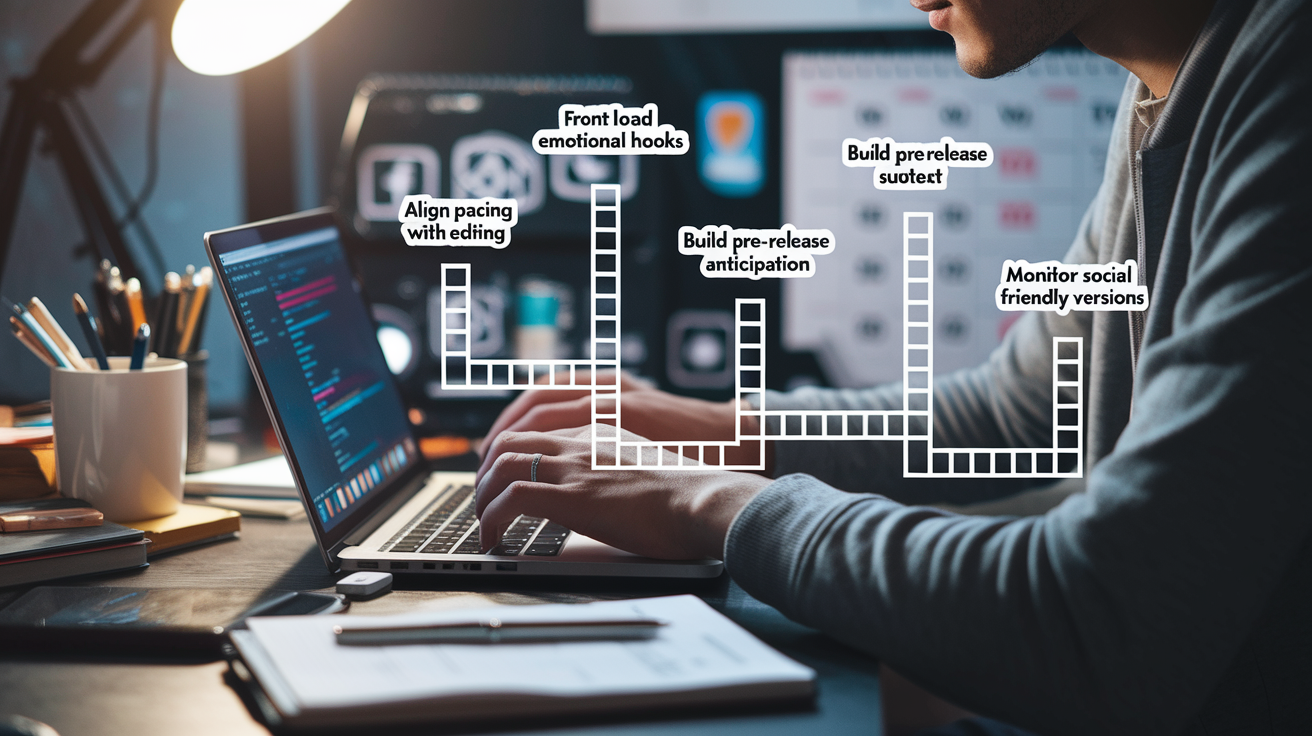
Six actionable tactics for creators:
- Front-load emotional hooks – place the most impactful part of a song within the first 30 seconds to maximize creator entry points for short-form remixes
- Align pacing with editing – match song rhythm to visual cuts so the moment feels seamless and inevitable
- Prioritize lyrical subtext – choose tracks where lyrics add thematic weight or irony without over-explaining the scene
- Build pre-release anticipation – use teaser clips, behind-the-scenes content, and creator partnerships 2–4 weeks before release to seed momentum
- Monitor social usage daily – track which song segments creators repeatedly isolate and respond quickly to organic adoption patterns
- Release creator-friendly versions – provide clean edits, instrumental stems, or alternate cuts that make remixing easier and more appealing
The first 72 hours after an episode drops are critical for building momentum. Early social and streaming activity signals platform algorithms to prioritize the content, and that algorithmic boost compounds reach exponentially.
Teams should mobilize creator networks in staged phases: niche accounts validate authenticity, mid-tier creators scale the trend, and mainstream influencers cement cultural significance. Timing matters. Intervening while a moment is still organically growing allows teams to amplify rather than manufacture virality. The goal isn’t forcing a soundtrack moment into trending status but recognizing when one is forming and accelerating its natural trajectory through strategic support, data monitoring, and cross-platform coordination.
Final Words
Right in the action: this piece showed how emotional scaffolding, memory mapping, and the attention economy turn a song cue into a shareable moment.
We walked through case studies — Stranger Things’ Kate Bush resurgence, Euphoria’s Labrinth, The Bear’s alt‑rock vibe — plus streaming and social metrics to explain the mechanics.
In short, how soundtrack moments boost TV show virality explained by emotional resonance, clip-ready beats, smart song placement, and platform loops that send viewers back to rewatch and stream.
Keep an ear out — the next scene could be the next chart-topper.
FAQ
Q: What is the 80/20 rule in songwriting?
A: The 80/20 rule in songwriting is the idea that about 80% of a song’s impact comes from roughly 20% of its parts—usually the hook, chorus, and key production—so focus effort there for biggest payoff.
Q: What is the 3 minute rule in music?
A: The 3 minute rule in music is the practice of keeping songs near three minutes to match radio and listener attention spans, improving replay value and making tracks easier to use in clips and playlists.
Q: How is TikTok rewriting the soundtrack of music Discovery?
A: TikTok is rewriting music discovery by turning short song snippets into viral trends—its algorithm surfaces niche tracks via creator clips, driving massive streaming spikes, playlist adds, and mainstream chart breaks.
Q: How does the music enhance the scene?
A: Music enhances a scene by acting as emotional scaffolding and memory mapping—it sets mood, syncs pacing with visuals, deepens character feeling, and creates a sticky moment viewers want to replay and share.