

Think pop culture references are lazy?
They’re actually the shortcut that makes your meaning click.
Two words can call up a whole movie. Saying “I’ll be back” gives you the Terminator vibe.
They save time and add layers in captions, dialogue, or a tweet.
This post walks through the most instantly recognizable examples from film, TV, music, and memes.
You’ll see why each one sticks and how to use them so your lines land every time.
Quick Orientation With Core Pop Culture Reference Examples

Pop culture references work because they tap straight into a shared memory or feeling. Saying “I’ll be back” gives you the Terminator’s whole vibe in two words. Tell someone they “pulled a Keyser Soze” and anyone who’s seen The Usual Suspects knows a shadowy operator just disappeared. These shortcuts save time and add layers, whether you’re writing dialogue, posting a caption, or explaining why your friend’s sudden exit from the group chat felt so wild.
The best ones jump across decades and formats. Films hand you quotable lines like “Don’t call me Shirley” from Airplane!, TV drops catchphrases that outlast the show itself, music plants nostalgia with one opening chord, and internet memes turn a single image into an entire emotion. Same core idea every time: a tiny piece of culture that everyone recognizes. What follows breaks down film callbacks, TV moments, music cues, meme culture, decade markers, and how to actually use them in writing so you can pick what fits and understand why it sticks.
Film-Based Pop Culture Reference Examples and Why They Stick

Classic film lines last because they pack an entire scene or character into a handful of words. When someone says “You can’t handle the truth!” everyone hears Jack Nicholson’s courtroom meltdown from A Few Good Men, even if they’ve never sat through the trial. Guardians of the Galaxy (2014) pulled hard on 1970s and early-80s song nostalgia, dropping Redbone’s “Come and Get Your Love” (1973) and a Footloose nod to anchor Peter Quill’s whole personality in retro warmth. Ghost Dog: The Way of the Samurai (1999) stacked Japanese samurai traditions over hip-hop and French noir by tipping its hat to Jean-Pierre Melville’s Le Samouraï (1967), building a reference pile that screams arthouse credibility. Airplane! (1980) became a reference machine by parodying disaster films like Zero Hour! (1957), giving the world “Surely you can’t be serious” and the immortal “I am serious, and don’t call me Shirley.”
Cult and genre films pump out references through pure style worship. The Editor (2014) rebuilt 1970s Italian giallo cinema, complete with wild zooms, split screens, and synth scores that point straight at directors like Dario Argento and Mario Bava. Army of Darkness (1992) gave us Bruce Campbell’s “Gimme some sugar, baby!” and stop-motion love letters to Ray Harryhausen’s The 7th Voyage of Sinbad (1958). High-ranking IMDb Top 250 films like Amélie at number 48 and Metropolis at number 86 work as shorthand for whimsy and dystopian grandeur. References stick when they carry visual, tonal, or dialogue DNA that other creators can quote, remix, or layer into something new.
Six film-reference moves worth stealing:
- Direct quotes that turn into standalone phrases, like “I’ll have what she’s having” from When Harry Met Sally
- Soundtrack drops that instantly signal an era, the way “O-o-h Child” by Five Stairsteps anchors a Guardians dance-off
- Visual tributes through camera work or editing rhythms, copying a director’s signature look
- Genre reconstruction that rebuilds a whole aesthetic, like The Editor does with giallo
- Character-name code, turning “Keyser Soze” into slang for a ghost mastermind
- Parody stacking, where one film directly lampoons another’s beats and dialogue, Airplane! style
| Film | Reference Type | Why It Endures |
|---|---|---|
| The Godfather (#2 IMDb Top 250) | Dialogue and character templates | Lines like “I’m gonna make him an offer he can’t refuse” pack power, menace, and mafia mythology into everyday talk |
| Guardians of the Galaxy (2014) | Soundtrack nostalgia and Kevin Bacon joke | Uses 1970s–80s tracks and pop callbacks to make a space opera feel emotionally grounded |
| Airplane! (1980) | Rapid-fire disaster-film parody | Every gag riffs on earlier serious movies, turning Zero Hour! into a punchline factory people still quote |
TV and Sitcom Pop Culture Reference Examples
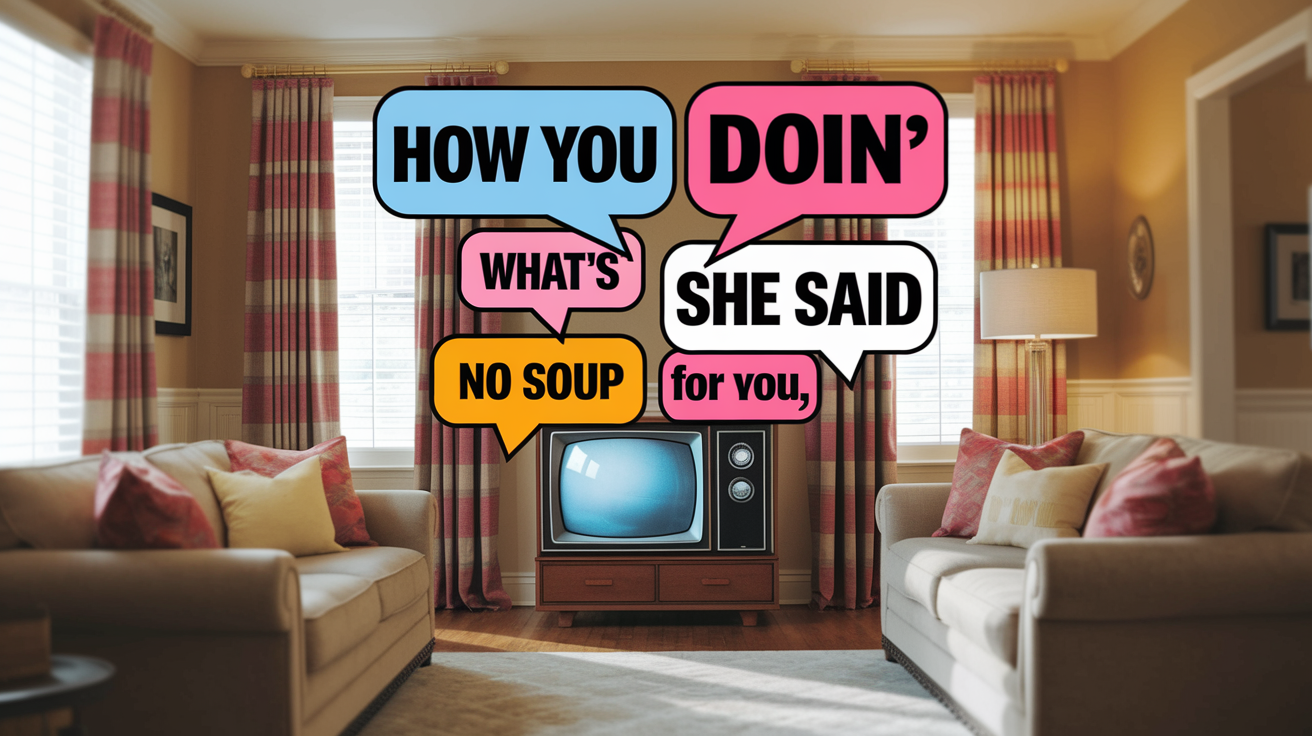
Sitcoms build pop culture references through sheer repetition and callbacks that reward loyal watchers and become everyone’s shorthand. A single “How you doin’?” imports Joey Tribbiani’s charm from Friends into any flirt attempt. “That’s what she said” from The Office turns boring sentences into instant jokes. These catchphrases work because the shows ran hundreds of episodes, drilling the line into memory until it escaped the screen and entered regular speech. Running bits, like Seinfeld’s “No soup for you!” or The Simpsons’ “D’oh,” act as emotional or comedic shortcuts anyone can use without needing backstory.
TV references also run as callback loops inside their own worlds. Arrested Development built whole plots around phrases like “I’ve made a huge mistake” and “There’s always money in the banana stand,” paying off fans who track continuity. Community went meta by parodying film genres episode by episode, turning each half hour into a pastiche of action flicks, space opera, or documentary format. That layered setup lets casual viewers enjoy surface comedy while dedicated fans dig deeper. It’s why TV-born phrases travel farther than a lot of film quotes, they get repeated weekly until they feel like part of the language itself.
Streaming-era TV cranks up reference speed. Shows like Stranger Things borrow 1980s Spielberg vibes and Dungeons & Dragons culture, creating a nostalgia loop that references the references. Ted Lasso’s “Believe” poster and optimism callbacks turned into motivational memes months after launch. The format’s the same as classic sitcom catchphrases, but the speed at which they spread and mutate has exploded. Whether a line lasts decades or burns out in a season usually depends on whether it carries an emotion people want to reuse. Comfort, irony, absurdity, shared frustration.
Eight TV catchphrase examples with quick backstory:
- “How you doin’?” (Friends, Joey’s pickup line, universal flirtation signal)
- “That’s what she said” (The Office, Michael Scott’s reflex joke, turns any statement into innuendo)
- “D’oh!” (The Simpsons, Homer’s frustration grunt, now in the Oxford English Dictionary)
- “No soup for you!” (Seinfeld, the Soup Nazi’s rejection, code for arbitrary authority)
- “I’ve made a huge mistake” (Arrested Development, Gob Bluth’s regret loop, used for any bad call)
- “Winter is coming” (Game of Thrones, Stark family warning, became shorthand for impending doom)
- “Treat yo’ self” (Parks and Recreation, Tom and Donna’s indulgence motto, self-care battle cry)
- “Pivot!” (Friends, Ross’s furniture-moving yell, now code for any awkward physical task)
Music Lyric, Song, and Soundtrack Pop Culture References
Music references fire off instant emotional and era-locked recognition. A few bars of “Come and Get Your Love” by Redbone (1973) drops listeners straight into the opening of Guardians of the Galaxy, where Peter Quill dances across an alien planet. That song was already a classic-rock staple, but the film gave it new context for a fresh generation, proving that pairing a track with a strong visual or story beat can reboot its cultural reach. Songs become pop culture touchstones when their lyrics, hooks, or attached imagery carry meaning past the music itself. Nostalgia, rebellion, romance, irony.
Artists and bands turn into cultural code. Dropping The Beatles or Elvis Presley in fiction or conversation signals timeless, universal appeal, which is why writing guides peg them as “safe references” that won’t age a manuscript. A Tribe Called Quest represents hip-hop credibility and 1990s alternative culture. Soundtrack picks in film and TV curate these associations on purpose. Ghost Dog: The Way of the Samurai (1999) used an original RZA score to merge hip-hop with samurai philosophy, making the Wu-Tang Clan’s sound part of the film’s DNA. These references work because the music already carries weight. Storytellers just borrow and amplify.
Five music-driven reference examples worth knowing:
- “Bohemian Rhapsody” by Queen (Wayne’s World car-headbanging scene revived the song for a new crowd)
- “Don’t Stop Believin'” by Journey (became the emotional anchor of The Sopranos finale and endless karaoke nights)
- “O-o-h Child” by Five Stairsteps (Guardians of the Galaxy turned it into a dance-off victory track)
- The Beatles’ catalog (any mention signals broad, multigenerational pop literacy, from “Hey Jude” to “Let It Be”)
- Elvis Presley’s image and voice (code for rock-and-roll rebellion, American kitsch, or retro cool depending on context)
Meme Culture, Viral Trends, and Internet Pop Culture Reference Examples
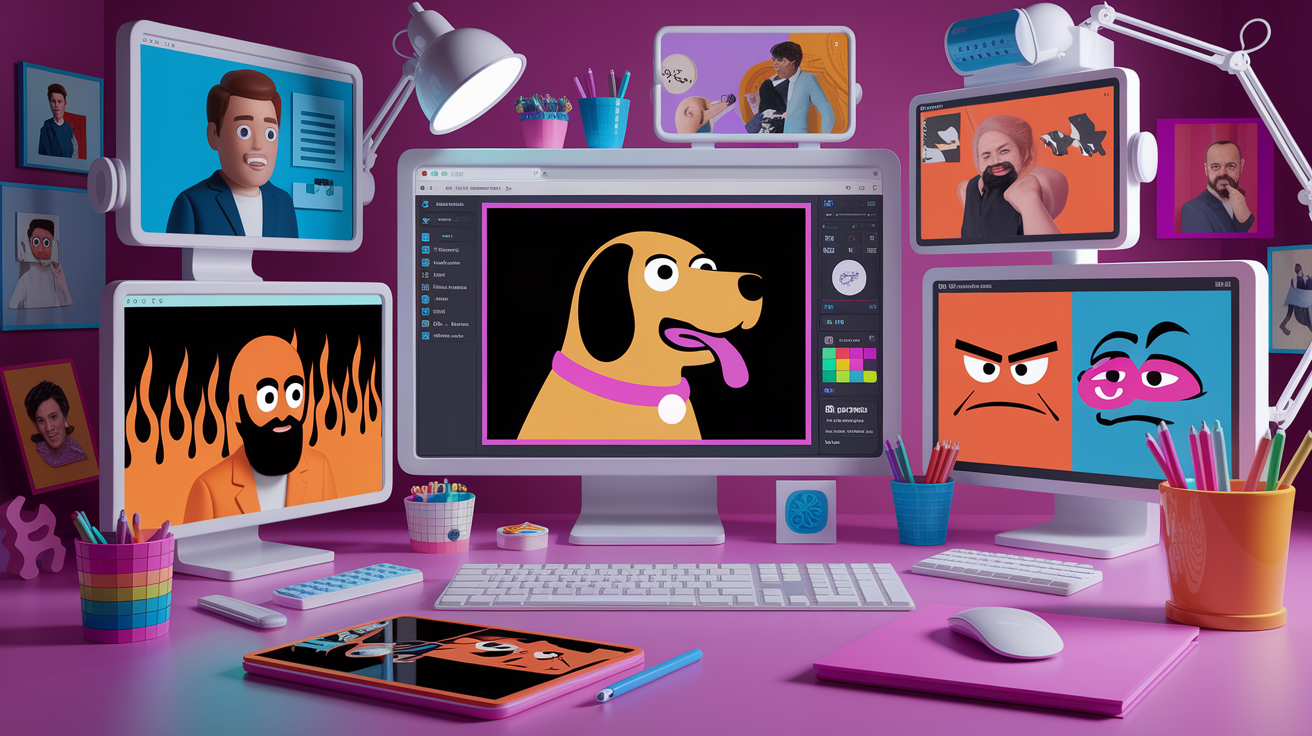
Internet memes run on a shorter clock than film or music references, but their peak saturation can make them even more recognizable inside their moment. A still image of a woman yelling at a confused cat (the “Woman Yelling at a Cat” meme) became code for any argument where both sides talk past each other. “Distracted Boyfriend,” showing a guy looking at another woman while his girlfriend glares, captures temptation, disloyalty, or shifting priorities in one frame. These references work because the image alone carries the whole joke or emotional beat. No caption needed if the audience is already online.
Meme speed mirrors the publishing-lag warning from fiction-writing advice: what feels current today can look ancient in two years, especially to younger audiences. A TikTok trend that owns feeds for three weeks may vanish completely by the time a traditional article or video citing it goes live. But some memes hit longevity by becoming templates. “This is fine” (a cartoon dog in a burning room) now applies to any situation of calm denial during chaos. Reaction GIFs and images, like the “Blinking White Guy” or “Side-Eye Chloe,” work as reusable emotional shorthand across platforms, outlasting their original viral flash because they’re endlessly remixable.
Meme references in writing or conversation need calibration. Overuse feels try-hard, and citing a meme that’s already cycled out makes you look disconnected. The sweet spot is knowing which memes crossed into broader culture versus which live only in niche internet corners. “Salt Bae” (the chef sprinkling salt with flair) became a global gesture. “Loss” (a minimalist four-panel comic about miscarriage) stays an in-joke for extremely online people. Knowing the gap helps you pick references that land with your specific audience instead of ones that alienate or confuse.
Ten meme examples with quick context:
- “Distracted Boyfriend” (guy looks at another woman, symbolizes temptation or shifting focus)
- “Woman Yelling at a Cat” (split argument image, used for any mismatch in perspective)
- “This is fine” (dog in burning room, represents calm denial during disaster)
- “Blinking White Guy” (confused reaction GIF, signals disbelief or processing shock)
- “Side-Eye Chloe” (little girl’s skeptical look, code for judgment or doubt)
- “Salt Bae” (chef’s dramatic salt sprinkle, became a gesture for flair and confidence)
- “Expanding Brain” (four-panel progression from small to galaxy brain, ranks ideas from basic to absurd)
- “Drake Hotline Bling” (disapproval top panel, approval bottom, binary choice meme)
- “Mocking SpongeBob” (alternating caps text, mimics whiny repetition of someone’s words)
- “Two Buttons” (sweating superhero choosing between two bad options, represents tough decisions)
| Meme | Origin Year | Cultural Meaning |
|---|---|---|
| “Distracted Boyfriend” | 2017 | Visual metaphor for temptation, distraction, or ditching one option for another |
| “This is fine” | 2016 | Represents denial or forced calm during obvious crisis or chaos |
| “Mocking SpongeBob” | 2017 | Text format mimicking annoying repetition or childish argument, usually deployed ironically |
Decade-Based Pop Culture Reference Examples (1980s–2010s)
Decade-locked references carry built-in nostalgia and context. An 1980s reference might pull in neon colors, arcade culture, synth music, or blockbuster films like E.T. and The Breakfast Club. Guardians of the Galaxy used 1970s and early-80s hits to make Peter Quill’s character feel emotionally stuck in a childhood frozen in time. That deliberate nostalgia works because the decade’s aesthetic and music already code as warm, adventurous, and optimistic. But fiction-writing guidance warns against forcing 1980s or 1990s references through a character who’s “obsessed” with the era unless the story’s actually set there. Otherwise it reads as a cheap trick instead of real world-building.
The 1990s brought grunge, dial-up internet, boy bands, and early reality TV. Dropping The Fresh Prince of Bel-Air, Clueless, or the Spice Girls signals that decade’s mix of irony and earnestness. The 2000s shifted into early social media, flip phones, emo music, and viral videos before YouTube took over. Mentioning MySpace Top 8 drama or “Chocolate Rain” immediately places a story or conversation in that specific window. Each decade’s references work best when they capture the feeling of the time instead of just name-dropping a brand or song.
The 2010s stacked streaming culture, smartphone ubiquity, and meme-driven humor. References to Netflix binge-watching, Snapchat filters, “Gangnam Style,” or the Ice Bucket Challenge pin a moment in the early-to-mid-2010s, while later markers include TikTok’s explosion, “Baby Yoda,” and the true-crime podcast boom. Writers and speakers leaning on decade nostalgia need to ask whether the reference serves character, theme, or mood, or whether it’s just aesthetic decoration. The strongest decade callbacks do double work: they ground the timeline and reveal something about who’s doing the referencing and why they care.
Eight decade-spanning pop culture touchstones:
- 1980s: Pac-Man, Rubik’s Cube, MTV launch, “Where’s the beef?” catchphrase, New Coke backlash, John Hughes films, Madonna’s “Like a Virgin,” Challenger disaster cultural shockwave
- 1990s: Tamagotchis, “As if!” from Clueless, Nirvana and grunge aesthetic, “I want my MTV,” AOL dial-up sound, O.J. Simpson trial, Friends Central Perk hangouts, Britney Spears and boy-band fever
- 2000s: iPod white earbuds, “You’ve got mail” AOL notification, “Leave Britney alone” viral video, Myspace customization and Top 8 stress, flip-phone texting, early YouTube memes, Napoleon Dynamite quotes, “Can I haz cheezburger?” lolcat speak
- 2010s: “Gangnam Style” dance, Harlem Shake videos, Ice Bucket Challenge, “Netflix and chill” phrase shift, Snapchat dog filter, “Damn Daniel” meme, “Baby Yoda” / Grogu craze, true-crime podcast explosion
Practical Pop Culture Reference Examples for Writing and Dialogue

Pop culture references in writing do three things: they ground a character in a specific time and place, they create emotional shortcuts, and they signal cultural knowledge or personality. A character who drops a Romeo and Juliet comparison invokes universal tragic romance without needing to explain the story. A line like “This is our Footloose moment” instantly tells readers or listeners that someone’s about to fight for the right to dance, literally or metaphorically. These references work because they compress complex ideas into a few words, letting the audience fill in the rest. Fiction editors and writing guides say use them carefully and with clear purpose. Every reference should either reveal character, push theme, or build the world in a way plain description can’t.
The risk is dating your work. A 2025 novel leaning hard on TikTok trends or a specific viral moment may feel ancient by 2027, especially when traditional publishing adds a two-to-three-year gap between manuscript delivery and release. Younger readers clock recent references as generationally distant faster than adult readers do. An eighth-grader reading about a film that came out three years earlier may already think it’s “old.” That’s why writing guides list classics and long-standing touchstones as safer plays: Star Wars, Harry Potter, The Beatles, Jane Austen, and fairy tales carry recognition across decades. When contemporary references are essential to the story’s themes, like in The Hate U Give or the Shopaholic series, they work because the narrative requires rooting in a specific cultural moment. The key is being intentional.
Invented references, fake songs, brands, or social platforms, offer another route. Creating a made-up boy band or a fictional viral app gives you the flavor of pop culture without tying your story to real-world expiration dates. This shows up in speculative fiction and near-future thrillers where the author wants cultural texture without sacrificing timelessness. The trade-off is that invented references lack the instant recognition of real ones. Readers won’t get the emotional shortcut a real Beatles song delivers. The choice depends on whether you want your work to feel urgently of-this-moment or to age more smoothly.
Speechwriting and professional communication pull the same tricks. A corporate email opening with “Winter is coming” signals urgency and shared cultural knowledge in a way that “Please prepare for upcoming challenges” never will. A conference presentation dropping a Distracted Boyfriend meme on a slide makes a point about competing priorities faster than a bullet list. The audience either gets the reference and feels included, or they don’t and the moment dies. So calibration matters. In dialogue, pop culture references reveal how a character sees the world and who they’re trying to connect with, making them a characterization tool as much as a style choice.
| Purpose | Example | Why It Works |
|---|---|---|
| Grounding time and place | “She scrolled TikTok while her coffee went cold, algorithm serving her the same dance trend for the fifth time.” | Instantly places the scene in the early 2020s and shows a character’s distracted, scroll-addicted routine without exposition |
| Emotional shorthand | “This breakup is our ‘Eternal Sunshine’ moment—we’re erasing each other from memory.” | Compresses the idea of painful, deliberate forgetting into a single film reference readers recognize as bittersweet and surreal |
| Character voice and worldview | “He quoted The Godfather at every team meeting, as if middle management were the mafia.” | Reveals the character’s self-importance and outdated power fantasies through his choice of reference, making him ridiculous without the narrator stating it outright |
| Building shared culture in dialogue | “You pulled a total Keyser Soze,” she said. “One minute you’re here, next minute—poof, gone.” | Uses a film-villain shorthand to describe someone’s mysterious exit, creating intimacy between characters who both know The Usual Suspects and signaling their cultural overlap |
Final Words
Right in the action: we opened with fast pop culture reference examples, from film zingers to sitcom catchphrases and viral memes, to give you instant cultural shorthand.
Then we dove deeper into film lines, TV callbacks, music hooks, meme trends, decade vibes, and practical writing tips. Each part shows why some references stick and why others fade fast.
Use the pop culture reference examples you like, but pick ones that fit your story and your audience. Keep experimenting. It makes scenes click and readers smile.
FAQ
Q: What are pop culture references?
A: Pop culture references are shared nods to movies, songs, TV catchphrases, memes, or celebrity moments used to quickly signal an idea, mood, or inside joke many people recognize.
Q: What are examples of cultural references, popular culture, and pop culture allusions?
A: Examples of cultural or pop culture references include the Airplane! line “Don’t call me Shirley,” Guardians of the Galaxy’s use of “Come and Get Your Love,” Friends’ “We were on a break,” Simpsons jokes, and viral Keyser Söze memes.