
What if the billboard telling you to buy more was secretly calling the brand out?
That’s culture jamming.
Activists, artists, and pranksters hijack ads, logos, and hashtags to turn corporate messages into public critiques of labor, pollution, and overconsumption.
They copy brand fonts and sleek layouts so you do a double take and suddenly question what you were sold.
This piece explains the roots, the tactics—from billboard swaps to meme-jamming—and the groups behind the biggest stunts, plus what to watch as brands and platforms fight back.
Foundations and Purpose of Modern Culture-Jamming Practices

Culture jamming is when you deliberately mess with mainstream ads and corporate messaging to call out consumerism, corporate power, and mass media. People alter billboards, create fake advertisements, remix brand logos, hijack social campaigns. The goal? Turn passive watching into active thinking. It uses corporate symbols against themselves, forcing you to look twice and suddenly notice hidden messages about labor, environment, inequality. Stuff you weren’t supposed to see.
The mimicry is what makes it work. Sleek layouts, familiar slogans, brand fonts. Culture jamming creates confusion about whether a message is endorsing or condemning a product. You can’t tell at first glance. That pause, that moment of “wait, what?”—that’s the point.
The intellectual DNA traces back to the Situationist International, an avant-garde group running from 1957 to 1972. They developed détournement, basically reusing dominant symbols to flip their original meaning. Guy Debord’s 1967 book The Society of the Spectacle laid the theory: modern life had become mediated images designed to pacify and distract. Détournement offered a way to hijack those images, reveal the power underneath. The term “culture jamming” itself popped up late 1980s, spread by anti-consumerist activists and street artists applying Situationist theory to North American billboard-saturated cities.
Modern examples? Subvertising (swapping or altering outdoor ads), billboard liberation (physically changing billboards to invert corporate messages), street art like Banksy’s satirical public works from the early 2000s, Buy Nothing Day campaigns promoted since 1992 by Adbusters (founded 1989, Vancouver). Digital evolution added meme-jamming, fake corporate Twitter accounts, viral hashtag hijacks.
Common forms:
- Spoof advertisements mimicking brand aesthetics to deliver opposite messages
- Détournement of logos, slogans, imagery to reveal corporate contradictions
- Street art installations, guerrilla projections onto corporate buildings
- Fake brand campaigns, parody product launches
- Meme-based subversions spreading critique through social platforms
Historical Development of Culture Jamming and Media Resistance

Guy Debord and the Situationist International laid groundwork in the 1960s, treating consumer culture as social control and détournement as the counter-weapon. Debord’s 1967 treatise diagnosed a “society of the spectacle” where authentic life got replaced by its representation. Every aspect, relationships, politics, identity, mediated by images designed to sell and pacify. Détournement flipped those images, showed the machinery. Early Situationist actions included comic-strip alterations, public-space interventions. Small-scale experiments that predicted billboard hacks decades later.
Late 1970s, activists in the U.S. started physically altering outdoor advertising. The Billboard Liberation Front, active since around 1977, pioneered “billboard liberation” in San Francisco and other cities. Climbing ladders at night to repaint corporate messages with satirical critiques. They treated billboards as public canvases illegitimately claimed by advertisers. The alterations were reclamation. In 1989, Adbusters launched in Vancouver as a nonprofit magazine dedicated to anti-consumerist media activism. Spoof ads, campaigns, toolkits for grassroots intervention. Mark Dery’s 1993 essay “Culture Jamming: Hacking, Slashing and Sniping in the Empire of Signs” gave the practice its most-cited definition, spread the term across activist networks and academic media studies.
Adbusters promoted Buy Nothing Day starting 1992, timed to Black Friday in the U.S., direct challenge to consumer ritual. Parody TV spots, poster campaigns, street theater questioning environmental and social costs of mass consumption. Mid-1990s, culture jamming became recognized within broader anti-globalization movements. Art, activism, media critique blending into one disruptive practice.
| Year/Period | Historical Milestone |
|---|---|
| 1957–1972 | Situationist International develops détournement theory and practice |
| 1967 | Guy Debord publishes The Society of the Spectacle |
| Late 1970s | Billboard Liberation Front begins physical billboard alterations in U.S. cities |
| 1989 | Adbusters magazine founded in Vancouver |
| 1992 | Buy Nothing Day first promoted as anti-consumerist campaign |
Techniques and Tactics Used in Culture Jamming Interventions

Détournement
Détournement turns culture against itself. You reuse dominant symbols in ways that expose contradictions or hidden meanings. A cigarette ad’s rugged outdoorsman becomes a cancer patient. A fast-food mascot holds a sign about worker exploitation. The technique relies on cultural fluency. You and your audience need to recognize the original message before appreciating the subversion. Situationists in the 1960s détourned comic strips and film dialogue. Contemporary practitioners détourne sneaker logos, political campaign posters, whatever. Often using free image-editing software to produce high-fidelity mockups that circulate online before anyone realizes they’re fake.
Physical Subvertising and Billboard Alterations
Physical subvertising means replacing or altering outdoor ads with spoof versions mimicking official branding. The Billboard Liberation Front pioneered this late 1970s, using vinyl overlays, paint, paste-ups to change billboard copy overnight. Luxury-car ad reworked to highlight carbon emissions. Cosmetics billboard altered to critique beauty standards. The interventions are temporary, lasting hours or days before removal. But photographs extend their reach. Techniques include wheatpaste posters (wheat flour and water glue, easy to apply, biodegradable), vinyl stickers cut to brand-standard dimensions, spray-paint stencils for repeated imagery, simple text additions using adhesive letters. Risk? Trespass charges, property-damage liability, potential injury from climbing billboard structures.
Street-Level Installations and Guerrilla Art
Guerrilla art installations occupy public space without permission, inserting critique into daily routines. Banksy’s early 2000s stencil work, like the “Flower Thrower” piece around 2003, placed anti-violence imagery on walls in conflict zones and urban centers. Recognizable visual language delivering messages that bypassed gallery gatekeepers. Projection mapping uses portable projectors to cast images onto corporate buildings. Turns architecture into temporary canvas without permanent alteration. Stencils allow rapid, repeatable deployment. A single stencil can produce dozens of identical images across a city in one night. Installations range from sculptural interventions (fake statues, altered street furniture) to performative acts (flash mobs, street theater) disrupting commercial space, reclaiming it for public expression.
Digital Remixing, Memes, and Viral Subversions
Digital culture jamming shifted tactics from blocking signals to co-opting them. Photoshop and free image editors democratized ad creation. Anyone can produce professional-looking spoofs now. Fake corporate social accounts mimic brand tone and visual identity to post satirical content, often gaining followers before being flagged. Hashtag hijacking turns branded campaigns into critique. Activists flood a corporate hashtag with counter-messages, images, questions exposing labor practices, environmental harm, political ties. Meme-jamming remixes familiar image macros (text-over-photo templates) to insert political commentary into viral formats. Examples like PepperSprayCop (2011, remixing UC Davis protest imagery), TinyTrump (2017, shrinking the president in official photos to undermine authority). These spread rapidly because they require minimal explanation, invite participatory remixing. Virality is unpredictable. Platforms can remove content, suspend accounts. But decentralized production means no single takedown stops the spread.
Major Figures and Groups Shaping Culture Jamming

Adbusters, founded 1989 by Kalle Lasn and a small collective in Vancouver, became the most influential organization in modern culture jamming. The magazine published spoof ads, theoretical essays, how-to guides for billboard liberation and media activism. Framed consumerism as environmental and psychological crisis. Adbusters organized Buy Nothing Day starting 1992, produced “subvertisements” mocking car manufacturers and fashion brands, launched campaigns like TV Turnoff Week to challenge media saturation. The nonprofit operated as publisher and activist network, distributing resources globally, inspiring local groups to adapt tactics.
Banksy, the pseudonymous street artist emerging 1990s in Bristol, England, brought high-visibility satirical interventions to mainstream attention. Works like “Girl with Balloon” (early 2000s) and the 2018 partial shredding of “Love is in the Bin” at auction blurred lines between art, commerce, protest. Sparked debates about authenticity and co-optation. The Billboard Liberation Front, active since late 1970s, treated billboard alteration as both art and critique. Documented their night-time climbs and repaints in manifestos positioning outdoor advertising as visual pollution subject to public correction.
The Yes Men, a duo of activist-pranksters, specialized in elaborate media hoaxes. They impersonated corporate spokespeople at conferences, issued fake press releases, created parody websites indistinguishable from official sources. Used resulting media coverage to expose corporate malfeasance. Their 2004 fake Dow Chemical announcement (falsely claiming full compensation for Bhopal disaster victims) generated global news before the hoax was revealed. Forced real discussion of unresolved harm.
- Buy Nothing Day (1992 to present): annual anti-consumerist campaign timed to Black Friday
- Billboard Liberation Front alterations (late 1970s to present): ongoing night-time billboard hacks across U.S. cities
- Banksy’s “Love is in the Bin” shred-stunt (2018): artwork self-destructed at auction, questioning art-market values
- The Yes Men’s Dow Chemical hoax (2004): fake news of Bhopal compensation forced corporate accountability debate
Real-World Examples of Culture Jamming Across Media

Fast-food parody projects target recognizable mascots and slogans to critique labor practices, nutrition, environmental impact. Anti-smoking campaigns 1990s and 2000s reworked cartoon characters used in tobacco advertising. Revealed manipulation aimed at young consumers. Soft-drink spoof campaigns highlighted sugar content, water privatization, global health effects by mimicking brand aesthetics. Familiar red-and-white palettes, script fonts, upbeat taglines. Then inverting the message to “Enjoy Diabetes” or similar shock copy. Clothing-brand détournements expose sweatshop labor by overlaying fashion ads with factory conditions. Same models, same layouts. Cognitive dissonance.
Street art interventions included Banksy’s early 2000s works installed without permission in museums and public walls. Large-scale projections onto corporate headquarters during shareholder meetings. The 2018 “Love is in the Bin” event saw a framed Banksy print partially shred itself via hidden mechanism seconds after selling at Sotheby’s for over one million pounds. Live culture jam of the art market that generated global headlines, debate about whether the stunt increased or destroyed the work’s value.
- WORTHLESS (Grade 10 student, Toronto, 2007): diamond-brand critique with a $0 price tag pasted over luxury imagery to question commodity fetishism
- HUNT (Grade 6 student, Toronto, 2012): role-reversal image replacing human hunter with caribou, dog with duck, flipping power dynamics in outdoor advertising
- ENJOY YOUR LIFE AS A LADY (Aleena Joseph, Grade 8, Scarborough, 2013): flower-to-garbage swap on cosmetics ad with reworked slogan exposing beauty-standard waste
- NO IS THE NEW YES (Grade 9 student, Toronto Catholic District School Board, 2016): rape-culture critique using advertising catch-phrase structure and social-media meme language
- Billboard Liberation Front global actions (emerging late 1970s, ongoing): documented physical alterations of outdoor ads in cities worldwide
- Buy Nothing Day campaigns (promoted since 1992): annual media actions, spoof ads, public interventions questioning consumer culture
Digital Culture Jamming and Meme-Based Disruption
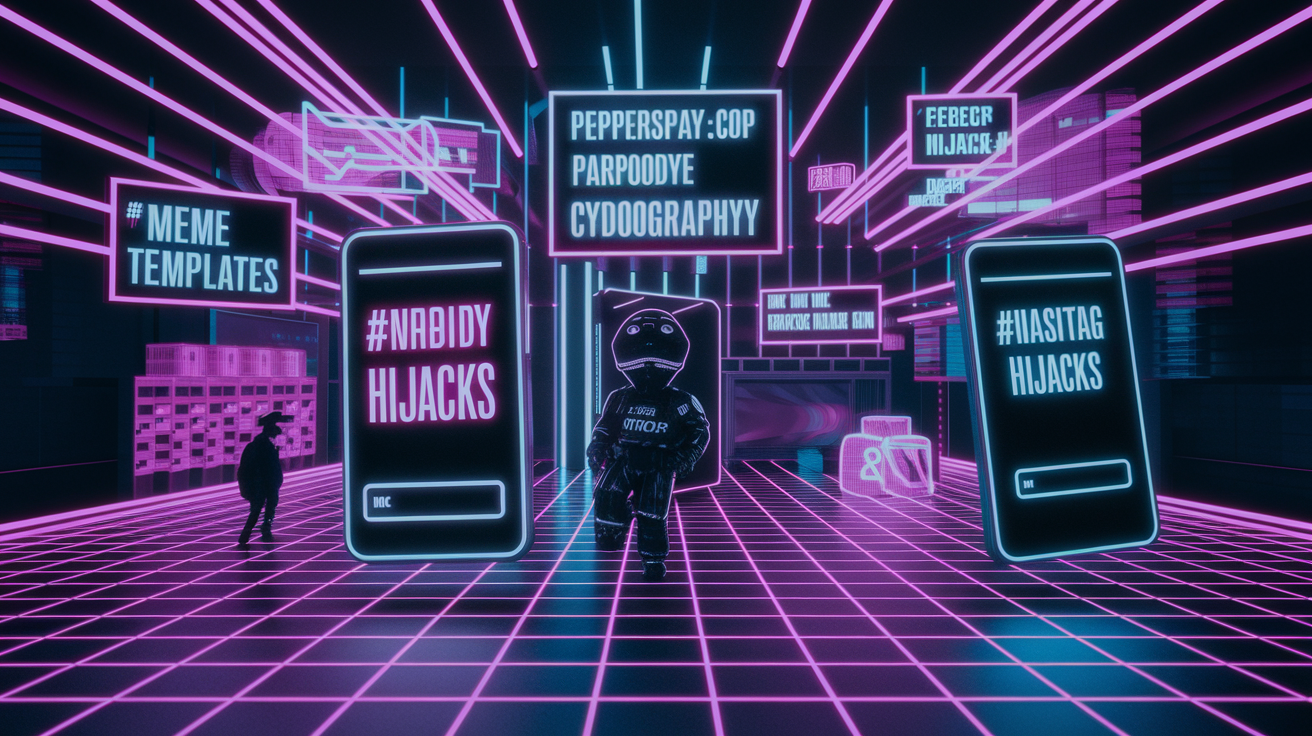
Digital tools shifted culture jamming from signal-blocking to signal-co-opting. Social platforms amplified subversive messages at viral speed. Free image editors like GIMP and Photoshop let anyone produce professional-looking spoofs. Meme generators, template libraries lower the barrier further. Rapid production, remix. Fake corporate accounts on Twitter, Instagram, Facebook mimic brand voice and visual identity to post satirical content. Often gaining thousands of followers before platform moderation catches up. The confusion between official and parody amplifies impact. Brands issue clarifications, media attention drawn to the critique.
Hashtag hijacking turns branded campaigns into participatory critique. Chevron launched #AskChevron early 2010s to field public questions. Activists flooded the hashtag with pointed queries: “Are you the devil?” and “Can you tell me which country I should bribe & dump my toxins in?” The participatory structure meant anyone could contribute. Volume of critical responses overwhelmed Chevron’s intended narrative. Similar hijacks targeted fast fashion, airlines, pharmaceutical companies. Using the brands’ own promotional infrastructure against them.
Political memes like PepperSprayCop (2011, remixing the image of a UC Davis police officer casually pepper-spraying seated protesters into art history and pop culture scenes), NotABugSplat (2014, giant portrait installed in Pakistan to be visible to drone operators, humanizing strike targets), ICan’tBreathe (2014, spreading Eric Garner’s final words as protest slogan), TinyTrump (2017, digitally shrinking the president in official photos to undermine authority). These demonstrate how meme-jamming translates complex political critique into shareable, emotionally resonant formats. Virality depends on humor, shock, emotional punch. Successful jams are simple enough to understand in seconds, open enough to invite remix.
| Digital Tactic | Purpose | Notable Example |
|---|---|---|
| Hashtag hijacking | Flood branded hashtags with counter-messages | #AskChevron (early 2010s) brandjacking campaign |
| Fake corporate accounts | Mimic brand voice to post satirical critiques | Parody Twitter handles impersonating energy and fashion brands |
| Meme remixing | Insert political commentary into viral image templates | PepperSprayCop (2011), TinyTrump (2017) |
| Image-macro spoofs | Rapid production and distribution of visual critique | NotABugSplat (2014) drone-strike humanization project |
Ethics, Legality, and Risks in Culture Jamming

Legal exposure varies by jurisdiction and method. Physical billboard alteration can trigger trespass charges, property-damage liability, contract-interference claims from advertisers who paid for the space. Penalties range from fines to criminal charges depending on damage value, local statutes. Digital spoofs face trademark and copyright claims if they use brand logos without permission. Parody defenses exist in some countries but aren’t guaranteed, require legal resources to assert. Fake corporate accounts risk platform bans, potential fraud allegations if they mislead consumers into believing official endorsement.
Ethical debates center on intent, method, consequences. Culture jamming claims moral high ground by targeting powerful corporations, exposing harms. Frames alterations as speech rather than vandalism. Critics argue property damage, even with political intent, violates consent. Diverts resources from owners who must repair or replace altered materials. Safety concerns arise when billboard changes obscure emergency information or create visual hazards. Ethical jammers avoid alterations that could endanger drivers or pedestrians. Misinformation risks surface when spoofs are mistaken for real announcements. Potentially spreading false claims about product recalls, corporate policy, public health.
Common legal risks:
- Trespass and property damage when physically altering billboards or posters
- Trademark infringement and dilution claims for unauthorized logo use
- Copyright violations when remixing proprietary images without fair-use justification
- Platform account suspension or permanent ban for impersonation and terms-of-service violations
- Libel or defamation claims if false statements of fact harm a brand’s reputation (distinct from protected opinion or satire)
Fair Use, Parody, and Corporate Pushback
Fair use and parody protections vary by country. In the U.S., parody can qualify as fair use if it comments on or critiques the original work. Uses only the minimum necessary to evoke the source. Doesn’t substitute for the original in the market. Courts assess purpose (commercial vs. nonprofit), nature of the original, amount borrowed, market effect. Culture jamming that clearly satirizes a brand has stronger fair-use claims than work that simply reuses logos for decoration. Many jammers operate anonymously to avoid legal pursuit. But brands with deep legal resources can issue takedown notices, sue for injunctions, pressure platforms to remove content even when fair use might apply. Corporate pushback includes cease-and-desist letters, digital-fingerprinting tools to auto-flag spoofs, public-relations campaigns reframing critique as misinformation or harassment. Chilling future actions through visibility and cost.
Social and Political Impact of Culture Jamming Movements
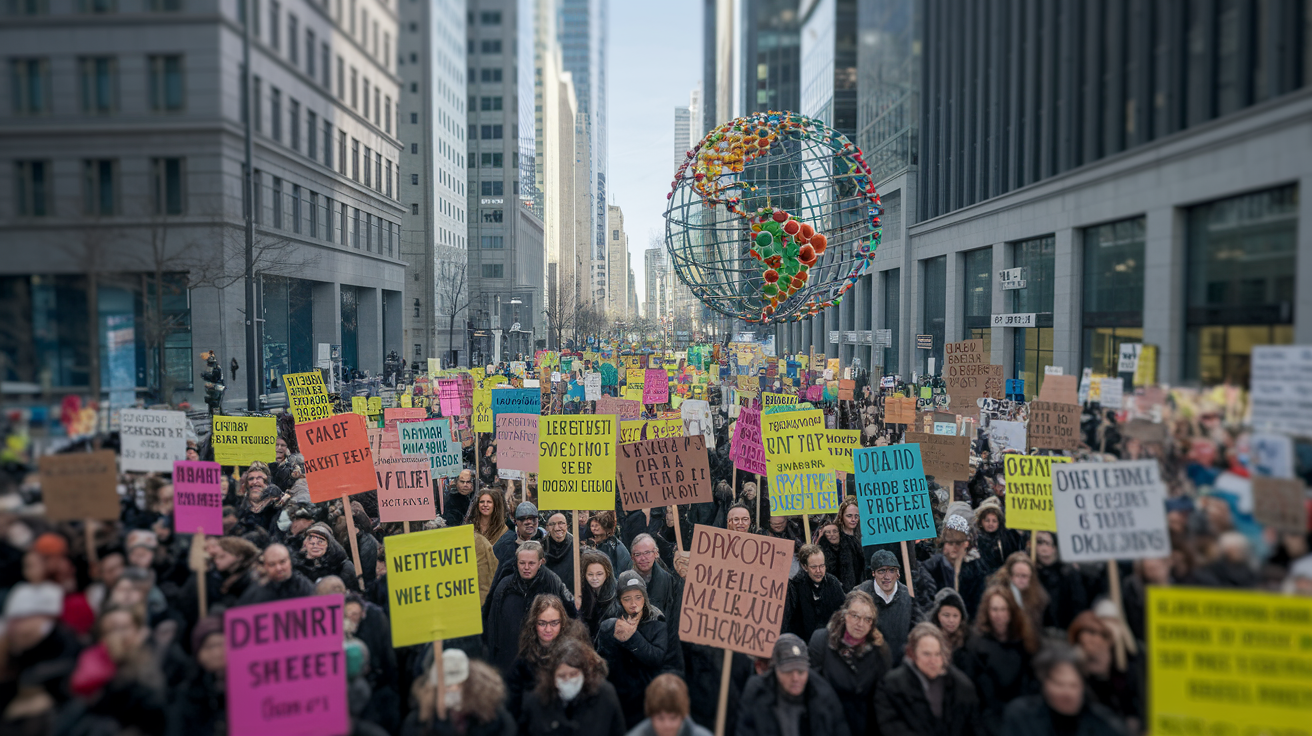
Culture jamming reshaped public discourse by translating abstract critiques of capitalism, consumerism, corporate power into visual, shareable formats reaching audiences outside activist circles. Subvertising forces a “double-take” that interrupts passive ad consumption. Prompts reflection on messages previously accepted without question. Media-literacy programs incorporated culture-jamming analysis and production. Teaching students to decode persuasive techniques, recognize constructed narratives. Anti-corporate campaigns 1990s and 2000s, including movements against sweatshop labor, tobacco marketing to youth, fast-food environmental impact, used culture-jamming tactics to gain media coverage and public sympathy. Pressured companies and regulators to respond.
Movement-level influence is visible in global protests like Occupy Wall Street (2011), where meme-based messaging and parody signage became signature tactics. Arab Spring uprisings (2010 to 2012), where digital remixing and social-media subversion helped coordinate dissent, bypass state censorship. The tactic’s adaptability, low cost, humor made it accessible to decentralized networks without formal leadership or funding. Culture jamming framed protest as creative and participatory rather than purely confrontational. Inviting bystanders to contribute and share rather than simply observe.
Limitations include corporate co-option. Brands adopt subversive aesthetics to appear edgy or socially conscious. Defusing critique by absorbing its visual language. Fast-food chains run self-mocking campaigns. Fashion labels hire graffiti artists. Tech companies launch parody-style ads mimicking activist tone without substantive change. This appropriation can neutralize the tactic’s power. Turning resistance into marketing trend. Measurement challenges also arise. Culture jamming generates visibility and conversation but direct policy wins are harder to attribute. Viral reach doesn’t always translate into sustained pressure or behavior change.
Educational Uses and DIY Approaches to Culture Jamming

Culture-jamming workshops engaged youth aged 10 to 24 in media-literacy projects since 2006. Teaching critical analysis and creative production through hands-on interventions. Students produced collages, sound stories, zines, installations, spatial interventions critiquing gender norms, consumer culture, environmental harm, social hierarchies. A 2016 community map-making project at a Scarborough library branch involved participants altering local advertising, creating alternative neighborhood narratives. Reclaiming public space and visual culture.
Classroom applications treat culture jamming as both historical subject and active practice. Educators assign analysis of famous campaigns, discussion of legal and ethical boundaries, production of original spoof ads or meme-based critiques. Projects encourage students to identify persuasive techniques in advertising. Research corporate practices behind brands. Design visual arguments communicating complex ideas quickly. Outputs include print posters, digital images, video parodies, performative interventions. Student work from 2007 to 2017 documents evolving tactics and themes.
Basic DIY culture-jamming steps:
- Select a target ad, logo, or message representing a broader issue worth critiquing
- Research the brand or topic to ground critique in facts about labor, environment, social impact
- Mimic the original’s visual language (fonts, colors, layout) to create recognition and tension
- Alter text, imagery, or composition to invert or expose the hidden message (swap product for waste, add a $0 price tag, reverse power roles)
- Document and share the result via photos, social media, or physical placement, citing sources and context to support educational fair use
Future Trends in Culture Jamming and Media Resistance

Emerging technologies are expanding the culture-jamming toolkit while raising new ethical and legal questions. Augmented reality (AR) overlays let smartphone users see subverted versions of billboards and storefronts when pointing their cameras at the physical world. Layering critique onto commercial space without physical alteration. AR apps can replace brand logos in real time, insert counter-messages over products, add contextual information (labor conditions, environmental ratings) visible only to app users. Creating parallel visual realities coexisting with official messaging.
Projection mapping has grown more accessible as portable projectors shrink in size and cost. Activists cast images onto buildings, monuments, corporate headquarters during events or protests. QR code engagement tactics hijack physical ads by pasting QR stickers redirecting scanners to counter-narratives, investigative reports, parody sites instead of brand landing pages. Coordinated online micro-campaigns use decentralized networks to organize flash actions, rapid-response meme floods, multi-platform hashtag takeovers. Anonymity and distributed production to evade takedowns, sustain pressure over time.
Building and sustaining long-term campaigns requires balancing viral moments with sustained pressure. Culture jamming’s strength lies in surprise and novelty. But repeated tactics lose shock value. Successful movements pair culture-jamming visibility spikes with organizing infrastructure channeling attention into concrete demands, coalition-building, policy advocacy.
Emerging technologies reshaping culture jamming:
- Augmented reality overlays layering subverted messages onto physical ads via smartphone apps
- Portable projection mapping for temporary, high-impact visual interventions on buildings and monuments
- QR code hijacking redirecting scans from brand promotions to activist counter-narratives
- Coordinated online micro-campaigns using decentralized networks and anonymous production to sustain multi-platform pressure
Final Words
From billboard takedowns to meme hijacks, this piece walked through what culture jamming is, where it began, and the tactics activists use today.
We ran through key figures, real-world stunts, digital tools, legal pitfalls, DIY classroom ideas, and future tech like AR and projection mapping.
Culture jamming still works when it surprises and teaches, and it’s only getting more creative online. Keep your eyes open — the next clever intervention might be just a scroll away.
FAQ
Q: What is an example of culture jamming?
A: An example of culture jamming is a subverted billboard where activists replace or alter a soda ad to turn its message into an anti-consumerism critique, forcing passersby to rethink the brand’s claim.
Q: What does jamming mean?
A: Jamming means deliberately disrupting or hijacking media messages or signals to subvert commercial advertising, expose corporate power, or create a counter-message that interrupts everyday consumer imagery.