

Clowning isn’t just circus silliness, it’s one of the oldest social tools humans have used.
From 2400 BCE ritual jokers to medieval court fools and today’s circus and street performers, clowns have taught, mocked, healed, and crossed lines society keeps closed.
This piece traces those threads: the rituals, the communities that keep them alive, the training and performance forms, and how the role changed over time.
Read on to see why clowns matter beyond laughs, as teachers, critics, and cultural mirrors.
Understanding the Foundations of Clown Culture Across History and Society

Clown culture goes back about as far as human civilization does. We’re talking 2400 BCE, maybe earlier. Nearly every documented society has had some version of the clown, which tells you something: this isn’t just entertainment. It’s ritual. Social criticism. Spiritual teaching. A way to cross boundaries that otherwise stay firmly in place.
What’s interesting is how universal the impulse is, but how specific each culture’s version becomes. Siberian Akh-Khaskha rituals weave laughter into spring ceremonies and fertility rites, treating humor as shamanic practice. Hopi and O’otham ceremonial clowns (kachinas) teach humility through extreme symbolic acts. Peruvian Wanka Inti clowns serve as messengers during Inti Raymi ceremonies, linking performance to passing down knowledge. African trickster figures like Anansi and Zangbeto use chaos and wit to educate and protect. German Carnival fools deploy parody to mock political authority.
Scholars often examine these figures through the trickster archetype, a cross-cultural pattern combining innocence with wisdom, humor with subversion. Tricksters expose contradictions. They restore balance. They create spaces where rigid hierarchies temporarily dissolve.
Clowns across cultures tend to serve a few major functions:
- Ritual participation and spiritual mediation — marking seasonal transitions, fertility cycles, community ceremonies
- Social critique and power reversal — mockery of authority, temporary inversion of hierarchies
- Teaching through disruption — extreme or absurd acts that communicate moral lessons
- Emotional regulation and collective release — laughter as cultural medicine, reducing tension
- Boundary exploration and liminality — occupying thresholds between order and chaos, sacred and profane
Historical Evolution of Clown Culture From Ancient Tricksters to Modern Icons
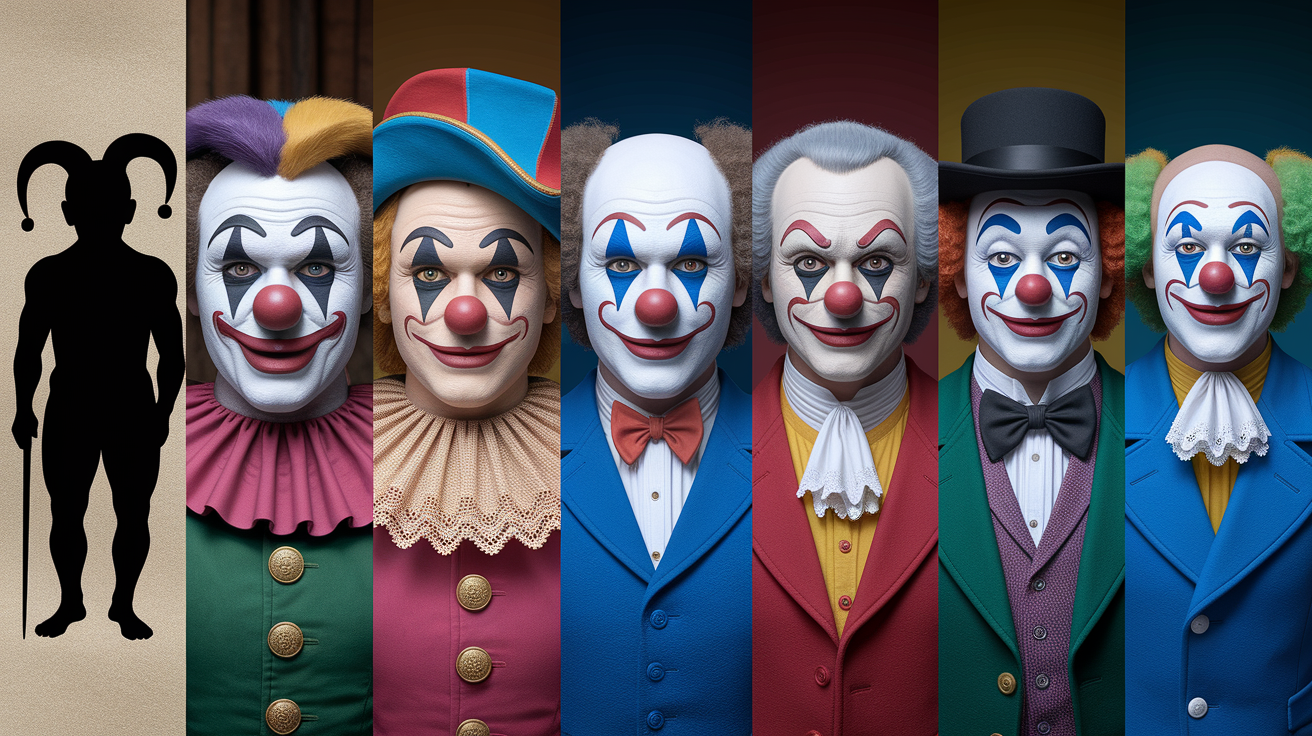
The lineage runs from pre-historical times through ancient civilizations, where trickster figures and comic performers showed up in ritual contexts and royal courts. By the medieval period (5th through 15th centuries), European jesters had formal roles within aristocratic households. They entertained, sure. But they also had a unique privilege: they could speak truths that would otherwise get you punished. Court fools operated under protected license to mock, critique, observe. They were both insider and outsider.
The 16th century brought commedia dell’arte in Italy, a performance tradition that codified character archetypes like Harlequin, Pierrot, Zanni. These masked figures combined physical comedy, improvisation, and stock scenarios that traveled across Europe and influenced theater, carnival traditions, eventually circus performance. Commedia’s legacy is in its fusion of character types, mask work, physicality, audience interaction. All elements that still shape contemporary clown culture.
The shift from ritual and social clowning to professional entertainment accelerated during this period as traveling troupes commercialized practices that had previously existed within ceremonial or communal frameworks.
Modern circus clowning is typically dated to 1768, when Philip Astley established the first circus ring in London and incorporated comic equestrian acts. Joseph Grimaldi (1778–1837) became the pivotal figure in developing the modern whiteface clown persona, performing in pantomime and music halls with exaggerated makeup, slapstick routines, character driven comedy that audiences recognized and loved. Grimaldi’s influence established conventions that 19th century circus culture adopted and institutionalized. American vaudeville circuits later expanded clown performance into variety theater, creating professional pathways that separated clowning from its earlier ritual and folk contexts.
Classical Clown Types Within Clown Culture

Clown culture traditionally organizes itself around three classical types. Each has distinct visual codes, performance styles, social dynamics within the circus or stage environment.
The whiteface clown traces directly to Joseph Grimaldi’s innovations and represents authority, refinement, often a position of leadership or superiority within clown hierarchies. Whiteface makeup covers the entire face in white base with delicate features painted in red or black. Performers typically wear elegant or symmetrical costumes. This type often plays the straight role or the figure who maintains order.
The auguste clown emerged later as a contrasting figure. Exaggerated features, chaotic energy, physical comedy that disrupts the whiteface’s composure. Auguste makeup uses flesh tones with oversized features painted in red and white. The typical red nose ranges from 1 to 3 inches in diameter. Costumes are intentionally mismatched, ill fitting, absurdly colorful. The auguste’s role is the fool, the underdog, the agent of disorder.
Character clowns represent a third category. They portray recognizable professions, personalities, archetypes like tramps, hobos, eccentrics. Character clowns often use minimal or stylized makeup and rely on costume and behavior to communicate identity.
| Type | Core Traits | Performance Use |
|---|---|---|
| Whiteface | Authority, elegance, refined features, symmetrical costume | Straight role, leader, sets up comic situations |
| Auguste | Chaos, exaggerated makeup, red nose, mismatched costume | Fool, physical comedy, disrupts whiteface’s plans |
| Character | Recognizable persona (tramp, hobo, eccentric), minimal makeup | Relatable figure, story-driven comedy, empathy |
Techniques and Training That Shape Modern Clown Culture

Physical comedy forms the technical foundation. Slapstick, pratfalls, juggling, mime, silent clowning. Core skills across global traditions. Slapstick relies on exaggerated, safe looking violence and timing. Pratfalls demand body awareness and the ability to absorb impact without injury. Juggling, acrobatics, object manipulation add spectacle and skill demonstration. Mime or silent clowning strips away verbal language to emphasize gesture, facial expression, physical storytelling.
All of these techniques require disciplined training in body mechanics, spatial awareness, timing, audience reading.
Training traditions within clown culture often connect to physical theatre pedagogies that emerged in the mid-20th century, particularly a school founded in 1956 that popularized neutral mask work as a method for discovering authentic movement and character. Mask based exercises bypass rational thought and encourage performers to listen to inner impulses, textures, energies, then translate those sensations into vocalization and movement. This approach aligns with practices described in workshops such as Clown Through Mask, where instructors guide participants to connect with nature, intuition, “more than human intelligences” rather than performing from preconceived ideas. Improvisation exercises build spontaneity, presence, responsiveness. All essential for clown work that depends on live audience interaction.
Training formats vary widely. Short workshops last 1 to 5 days and introduce foundational concepts. Certificate courses run 4 to 12 weeks and cover technique, character development, performance practice. Professional programs extend from 6 to 24 months and often include intensive physical training, repertory performance, apprenticeship opportunities. Many contemporary clown schools blend European mask traditions with improvisation, physical theatre, intercultural ceremonial learning. Hybrid pedagogies that honor diverse lineages while training new generations of practitioners.
Six common training methods:
- Neutral mask exploration — discovering movement and presence without character or expression
- Listening and vocalization exercises — translating inner sensations into sound and physicality
- Slapstick and pratfall drills — building safe, convincing physical comedy sequences
- Improvisation and audience engagement — developing spontaneity and live responsiveness
- Character and persona development — creating distinct identities through costume, makeup, behavior
- Juggling, acrobatics, object work — adding technical skill and visual variety
Global Ritual and Sacred Dimensions of Clown Culture

Ritual clown figures occupy sacred space within many Indigenous and folk traditions. Their performances serve spiritual, educational, communal functions far beyond entertainment.
In Siberian Akh-Khaskha traditions, clowns participate in spring renewal festivals and fertility rituals. Laughter and fooling are embedded within shamanic ceremony. Humor becomes a tool for restoring balance, inviting abundance, mediating between human and spiritual realms. The clown’s role isn’t comic relief but integral ritual action that addresses seasonal cycles and the continuity of life.
Hopi and O’otham ceremonial clowns (kachinas) teach humility, sacred responsibility, balance through extreme symbolic acts that demonstrate the consequences of imbalance or disrespect. Stories from contemporary knowledge keepers describe kachinas lighting themselves on fire and intentionally crashing cars. Dramatic lesson bearing performances that embed moral instruction within visceral spectacle.
Peruvian Wanka Inti traditions position clowns as Kuraka and Chaski Willaq, messengers for circles of wise elders and guardians of sacred sites such as Waka Ychsma-Maranga. Their participation in Inti Raymi ceremonies links clowning to cosmological order, intergenerational transmission, the protection of sacred geography.
African trickster figures like Anansi and Zangbeto use chaos, mimicry, wit to educate communities, protect cultural knowledge, navigate power imbalances. Anansi embodies the smallness and cleverness that defeat or subvert greater force, offering a model for resilience and creative resistance. European Carnival fool archetypes engage in political satire and communal parody, temporarily inverting social hierarchies and allowing public critique of authority figures.
Across these diverse contexts, masks interact with identity and cosmology in specific ways. Sometimes as vessels for spirit beings. Sometimes as tools for anonymity that enable transgressive speech. Sometimes as markers of cultural continuity and lineage.
Contemporary Performance Communities Within Clown Culture

Today’s clown culture sustains itself through diverse performance communities. Traditional circus troupes, experimental physical theatre collectives, hospital clown organizations, street performance networks, international festival circuits.
Clown festivals often run 3 to 7 days and attract thousands of participants and spectators. They offer workshops, parades, gala shows, peer exchanges that transmit technique, share repertoire, build solidarity across geographic and stylistic boundaries. These festivals function as both training sites and cultural hubs where practitioners from different traditions meet, collaborate, negotiate the tensions between universal clown impulses and culturally specific practices.
Clown schooling ranges from short workshops costing $50 to $400 to multi-month academies charging $500 to $3,000 or more. Professional programs often include intensives, apprenticeships, residency opportunities that embed students within working troupes or performance communities. Many contemporary networks emphasize intercultural respect and ethical borrowing, especially when weaving together Western performance practices with Indigenous ceremonial lineages. This awareness reflects ongoing debates about cultural specificity, appropriation, the responsibilities of practitioners who draw on multiple traditions.
Five major community types within contemporary clown culture:
- Circus clowns — traditional big-top performers, touring companies, contemporary circus artists
- Street and commedia revivalists — buskers, plaza performers, artists reviving historical archetypes
- Physical theatre and fringe collectives — experimental groups blending clown with dance, mime, devised performance
- Hospital and therapeutic clowns — specialized practitioners working in pediatric wards, elder care, community health settings
- Festival and ceremonial participants — artists engaging with seasonal rituals, parades, intercultural exchange events
Therapeutic and Social Impact Dimensions of Clown Culture

Hospital clown programs became widespread in the late 20th century as healthcare institutions recognized the emotional and physiological benefits of play, laughter, gentle disruption within clinical environments. Therapeutic clowning methods focus on emotional regulation, stress reduction, creating moments of joy and normalcy for children facing illness, surgery, extended hospitalization. Research into pediatric entertainment shows that clown visits can lower anxiety, improve cooperation with medical staff, provide psychological relief for both patients and families.
Practitioners in hospital settings often adapt traditional clown techniques to meet clinical needs. Smaller props, quieter physicality, consent based interaction that respects patient autonomy and medical protocols. Some therapeutic clowns draw on mask and intuition based techniques similar to those used in performance training, listening to the emotional textures of a room and responding with improvised play, song, gentle absurdity. The goal isn’t to perform for an audience but to co-create healing moments that acknowledge suffering while offering tenderness, levity, connection.
Beyond hospitals, clown culture intersects with social support through community programs, disaster relief efforts, refugee camp performances, initiatives that use play as a tool for trauma recovery and resilience building. These applications position clowning as cultural medicine, a practice that addresses emotional, social, even political wounds through embodied creativity and relational presence. The argument that current crises (climate collapse, inequality, social disconnection) increase the need for clowns and tricksters reflects this expanded understanding of what clown culture can offer beyond traditional entertainment contexts.
Media Portrayals and the “Creepy Clown” Impact on Clown Culture
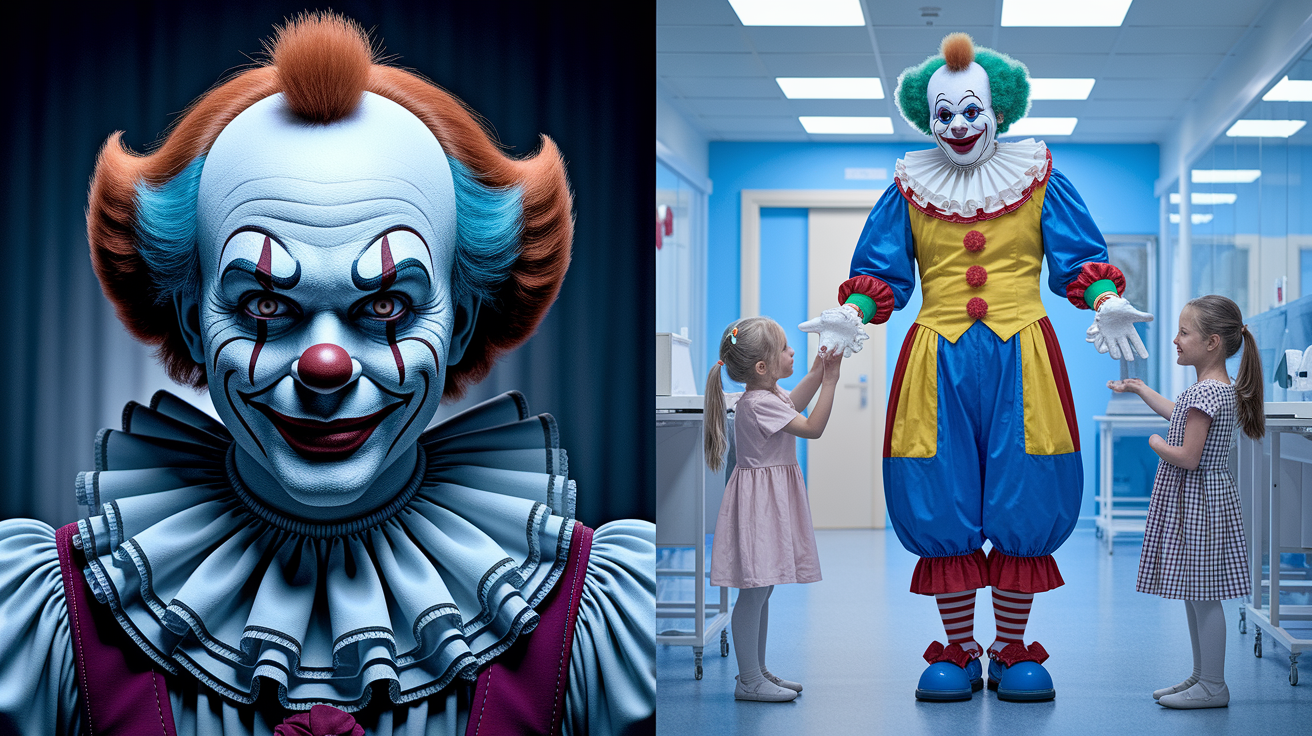
The “creepy clown” phenomenon reached a global peak in 2016. Sightings of menacing clown figures across multiple countries triggered widespread panic, law enforcement responses, arrests. Viral social media posts amplified fear. Professional clowns faced stigma, harassment, economic losses as public perception shifted.
This moral panic built on decades of horror portrayals that reframed the clown from playful trickster to threatening predator. Most notably through the character of Pennywise, introduced in Stephen King’s 1986 novel It, adapted for television in 1990, later featured in major films released in 2017 and 2019.
Horror media capitalized on the uncanny dissonance between a clown’s cheerful appearance and the potential for violence or malevolence lurking beneath the makeup. Coulrophobia (the fear of clowns) became a recognized psychological phenomenon. Studies examined how exaggerated features, ambiguous expressions, the anonymity provided by makeup can trigger discomfort or dread. Film and television portrayals reinforced these associations, embedding the “killer clown” archetype into popular culture and overshadowing the historical and ritual roles that clowns have played across societies.
In response to this stigmatization, professional clown organizations developed safety and consent guidelines. Transparent communication, respectful engagement, clear boundaries in public and private performance contexts. Many practitioners worked to reclaim clown culture by highlighting its therapeutic, ceremonial, communal dimensions. Pushing back against reductive media narratives.
The tension between fear based portrayals and the lived reality of working clowns continues to shape public perception and the conditions under which clown culture operates.
Four major media influences on clown perception:
- Pennywise (1986 novel, 1990 TV adaptation, 2017/2019 films) — established the “killer clown” as a mainstream horror icon
- 2016 creepy clown sightings — viral panic that led to real-world violence, arrests, professional stigma
- Coulrophobia coverage — media amplification of clown fear as a psychological condition, reinforcing negative associations
- Horror film proliferation — ongoing production of clown themed slasher and thriller films that sustain fear based imagery
Building a Persona: Identity and Character Development in Clown Culture

Character development within clown culture begins with playful exploration rather than intellectual planning. Embodied discovery through movement, voice, sensory awareness. Contemporary practitioners often use mask work to bypass the “thinking mind” and access raw, authentic impulses that become the foundation of a clown persona.
Exercises include listening to inner textures, sounds, energies, then vocalizing those sensations and translating them into physical gestures. This process encourages performers to follow curiosity, intuition, spontaneity rather than imposing preconceived ideas onto character creation.
Naming and stage character development involve testing personas in front of audiences, refining traits based on what generates laughter, connection, disruption. Gender and identity in clowning have become sites of creative exploration, with many artists challenging traditional binaries and using clown work to investigate fluidity, queerness, non-normative expression. Diversity and inclusion practices emphasize cultural sensitivity, especially when drawing on ritual or Indigenous clown traditions. Practitioners acknowledge lineage, seek permission, avoid appropriation of sacred symbols or practices.
Four common persona creation techniques:
- Mask exploration and neutral body work — discovering movement patterns and character impulses without imposed identity
- Vocalization and sound exercises — translating inner sensations into voice qualities that shape character
- Costume and makeup experimentation — testing visual codes to find resonance between appearance and behavior
- Audience feedback and iteration — refining character through live performance and observing what lands
Careers, Training Paths, and Practical Realities in Clown Culture
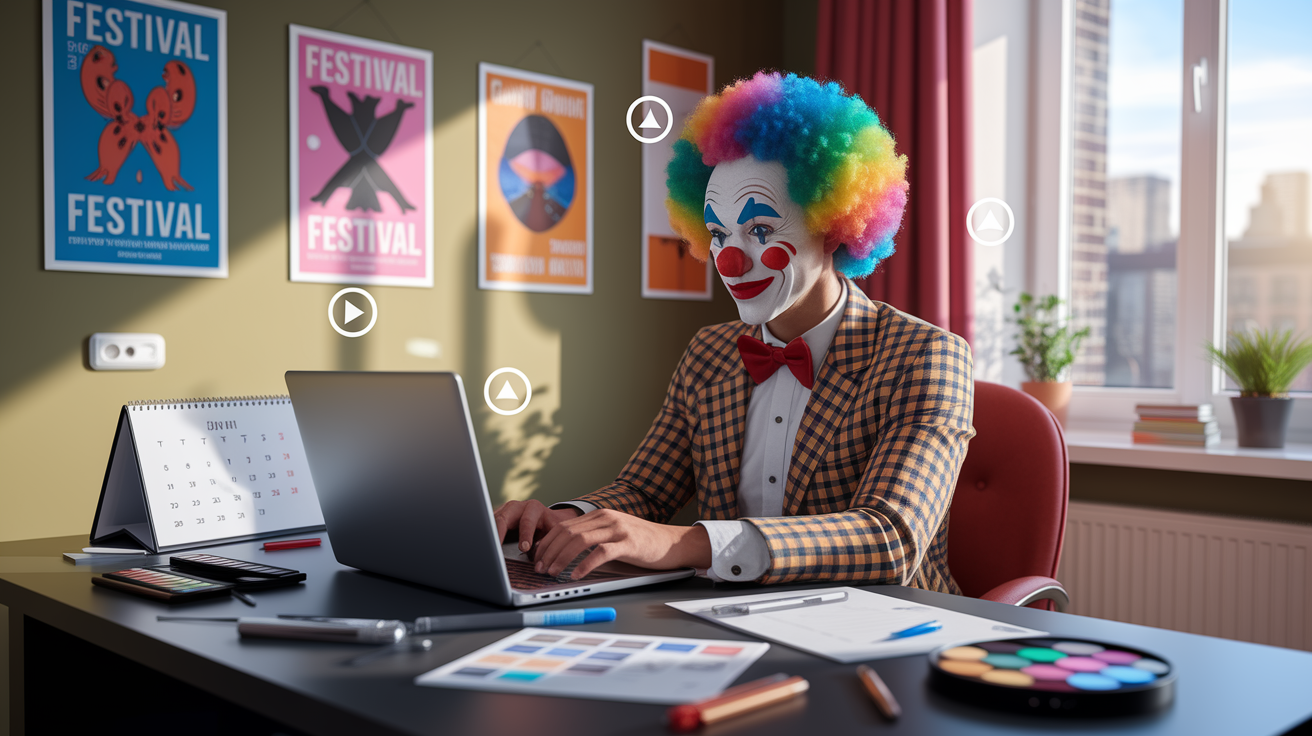
Building a professional career within clown culture requires navigating a fragmented industry where income sources include circus and theater companies, corporate events, children’s parties, hospital programs, street performance, festival bookings. Training costs range from workshops priced at $50 to $400 for short introductions, to multi-week courses costing $500 to $3,000 that provide deeper skill development and repertoire building. Freelance performance rates vary widely by region and experience, often falling between $75 and $300 or more per hour. Corporate and private events command higher fees than community or street work.
Many clown artists rely on digital platforms and social media for visibility. Video clips, reels, behind the scenes content to build audiences and attract bookings. Marketing for performing artists involves maintaining an online presence, networking within festival circuits, developing a clear brand identity that communicates style, skill level, target audiences. Professional clowning career advice emphasizes diversification. Combining performance income with teaching, workshop facilitation, therapeutic clown work to create financial stability.
Training pathways typically begin with weekend workshops or introductory classes, progress to certificate programs or intensive courses, may culminate in long term apprenticeships, residencies, professional company membership. Some practitioners follow lineage based training, studying with specific teachers who hold knowledge from recognized traditions such as the Richard Pochinko lineage, which integrated European mask work influenced by Jacques Lecoq with First Nations teachings in Toronto during the 1970s. Sue Morrison is identified as a primary lineage holder after Pochinko’s death. Contemporary instructors such as Isaac Luy continue to transmit these methods through experiential workshops that emphasize connection to nature, intuition, more than human intelligences.
Final Words
We’ve moved fast through the many faces of clown culture, from ancient ritual tricksters to commedia archetypes, circus clowns, and modern therapeutic performers.
You’ve seen classic types, training paths, global ceremonies, and how media moments changed public view. Short lists and clear examples showed what clowns do and why they matter.
If you’re curious, keep watching festivals, hospital programs, and training schools. Clown culture keeps changing, and it’s more playful and purposeful than you might expect.
FAQ
Q: What is the clown culture?
A: The clown culture is a global practice of humor-based performance and ritual that mixes theater, satire, and ceremonial roles, showing up across societies as entertainment, social critique, and ritualized boundary-breaking.
Q: What are the 4 types of clowns?
A: The four common clown types are whiteface, auguste, character, and tramp (hobo). Whiteface is stylized and precise; auguste is chaotic; character plays professions; tramp is sad or streetwise.
Q: Why are clowns part of Chicano culture?
A: Clowns entered Chicano culture through festivals, street theater, and carnaval traditions that blend Indigenous, Spanish, and Mexican folk practices, using humor for community identity, protest, and cultural storytelling.
Q: What does a clown symbolize spiritually?
A: A clown symbolizes the trickster and a boundary-crosser who upends norms to teach humility, restore balance, mark seasonal cycles, and serve as messenger or mediator in ritual contexts.