

What if being famous isn’t enough to be a culture icon?
Lots of people are famous for a minute, but icons mean something bigger.
A true culture icon combines wide recognition, symbolic power, and staying power, and they become shorthand for an era, an idea, or a feeling.
That matters because icons steer trends, politics, and how we remember moments.
This piece breaks down the traits, moments, and timing that turn someone from a public figure into a lasting cultural symbol.
Defining a Culture Icon

A culture icon is someone (or something) that gets recognized everywhere and stands for big pieces of a cultural identity, a moment in time, or values people share. They’re not just viral for a week. They carry weight that sticks around.
The gap between regular celebrity and culture icon? Scope and staying power. You can be famous for your talent or because you’re all over the media. But an icon represents something bigger. A movement. An aesthetic flip. A fundamental idea. When you’re known by last name only, you’ve usually crossed over. “Beyoncé.” “Bowie.” Instant recognition tied to meaning, not just personal success.
Icons earn their place through public perception, symbolic ties, and time. They become shorthand for entire eras or identities. A single image or name triggers a flood of associations. Style, rebellion, resilience, innovation. Millions of people have collectively decided this figure matters culturally. That shared understanding, held for years or decades, is what turns a well-known person into a true icon.
Prominent Examples of Culture Icons
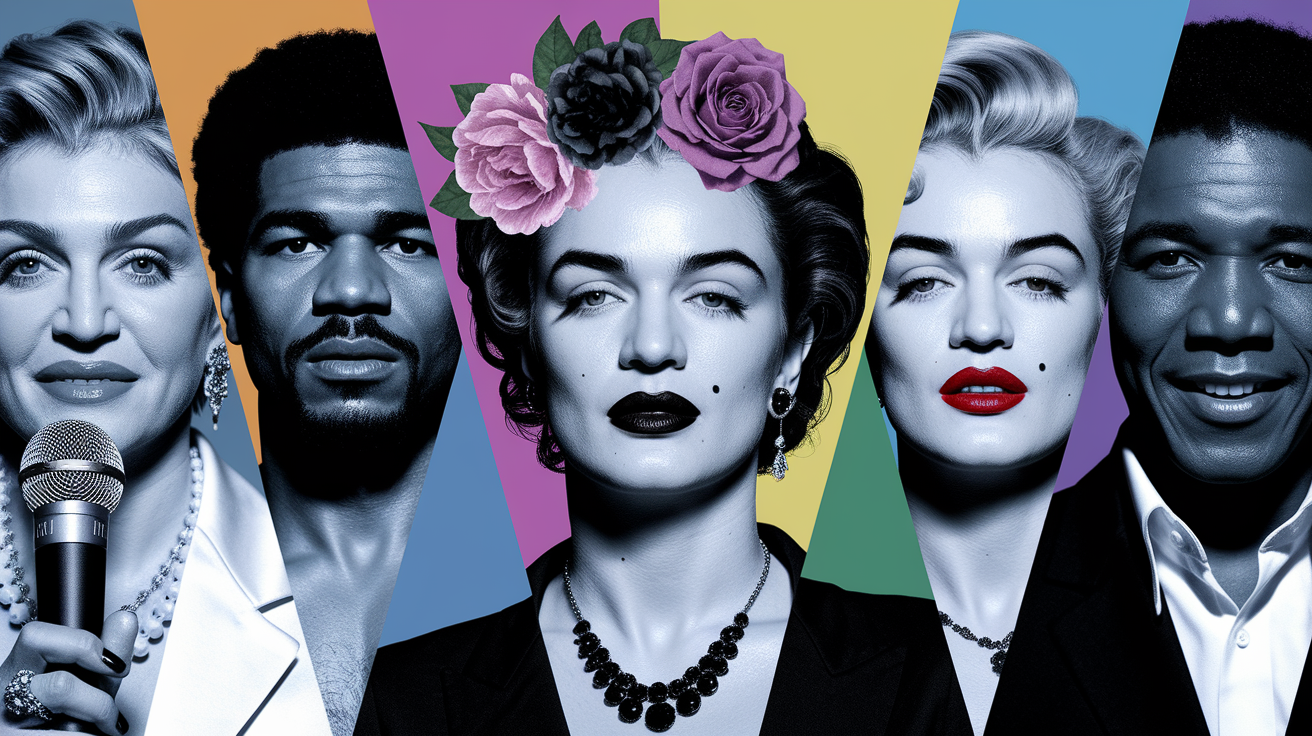
Some people reach icon status so completely that their names alone summon entire cultural shifts. These figures span entertainment, activism, sports, and visual art. Each one represents a distinct slice of cultural life that changed how millions of people saw the world.
Madonna became a culture icon by constantly reinventing pop and challenging gender norms through fashion and performance. Muhammad Ali symbolized athletic greatness and civil rights conviction, using his platform to push back against war and racism at huge personal cost. Frida Kahlo turned personal pain and Mexican identity into globally recognized art that still speaks to body politics and self-representation.
Marilyn Monroe remains an icon for embodying Hollywood glamour while also exposing the tensions of fame and femininity. Nelson Mandela became a living symbol of reconciliation and resistance, representing the global anti-apartheid movement. Elvis Presley reshaped popular music by mainstreaming rock and roll, bridging racial divides in sound and style that influenced generations.
Each of these figures got recognized way beyond their original fields:
- Madonna – pop reinvention and gender-norm challenges
- Muhammad Ali – athletic greatness and civil rights activism
- Frida Kahlo – identity-driven visual art and body politics
- Marilyn Monroe – Hollywood glamour and fame’s contradictions
- Nelson Mandela – anti-apartheid resistance and reconciliation
- Elvis Presley – rock and roll cultural bridge and musical revolution
Key Characteristics That Define a Culture Icon

Real culture icons share a few core traits that separate them from ordinary public figures. First, they get recognized across geographic, generational, and social boundaries. A culture icon isn’t just known within their field. People who’ve never directly engaged with their work still know who they are. That kind of recognition becomes self-sustaining. Each new generation discovers and reinterprets what the figure means.
Longevity and symbolic meaning matter just as much. A culture icon’s influence doesn’t fade when they step out of the spotlight or even after death. Instead, their impact deepens over time as they come to represent broader concepts. Rebellion, elegance, resilience, innovation. They transcend their original profession because the public assigns them roles as representatives of ideals or movements. David Bowie, for example, moved beyond musician to symbolize artistic reinvention and gender fluidity across decades.
Public perception and collective memory play the deciding role in creating and maintaining culture icon status. An icon exists because a large, diverse audience agrees on their cultural importance and keeps referencing, reinterpreting, and debating their legacy. This collective assignment of meaning gets reinforced through media, education, and everyday conversation. That’s what transforms individual achievement into a shared cultural touchstone that lasts across generations.
Historical and Social Significance of Cultural Icons

Cultural icons often show up at moments of major social or political change, becoming inseparable from the movements or eras they represent. Rosa Parks became a culture icon not just through one act of resistance but because her refusal to give up a bus seat sparked a broader civil rights movement and symbolized collective courage against systemic injustice.
Icons help shape collective memory by giving abstract historical forces a human face and a clear story. The Beatles didn’t just make music in the 1960s. They came to represent youth rebellion, creative experimentation, and a generational break from postwar conservatism. Decades later, their music and image still function as shorthand for that entire cultural moment, even for people born long after the band broke up.
Different generations assign different meanings to the same icons, which is part of what keeps them relevant. Marilyn Monroe, for instance, has been reinterpreted over decades. From sex symbol to victim of Hollywood exploitation to feminist subject reclaiming her own image.
As cultural values shift, so does the lens through which icons are understood. Figures once celebrated mostly for style may later be recognized for political courage or artistic innovation. That evolving significance is a hallmark of real iconic status. Culture icons remain fixed in history while their meanings continue to grow, reflect, and sometimes challenge the values of each new era that encounters them.
How Cultural Icons Influence Trends and Movements

Cultural icons shape the world around them by setting trends, shifting norms, and inspiring entire movements. Their influence extends into everyday life, from the clothes people wear to the language they use and the causes they support. When an icon adopts a look, idea, or stance, it often ripples outward with surprising speed and staying power.
Madonna’s constant reinvention in the 1980s and 1990s didn’t just change pop music. It influenced fashion runways, music video aesthetics, and conversations about female autonomy and sexuality. Muhammad Ali’s refusal to be drafted during the Vietnam War became a rallying point for anti-war activism and inspired athletes across sports to use their platforms for social justice. Icons operate as cultural accelerators, validating emerging ideas and making them accessible to mainstream audiences who might otherwise resist change.
The ways they influence are varied and layered:
- Fashion – Icons introduce or popularize styles that define entire decades (Audrey Hepburn’s little black dress, James Dean’s rebel uniform).
- Social activism – Figures like Nelson Mandela and Martin Luther King Jr. galvanize movements and provide symbolic anchors for collective action.
- Art and design – Andy Warhol reshaped visual culture by merging commerce and fine art, influencing graphic design and advertising permanently.
- Popular language – Phrases, gestures, and slang tied to icons (from Elvis’s hip swivel to Beyoncé’s “Beyhive”) enter everyday speech and meme culture.
- Media and entertainment narratives – Icons redefine genre expectations and storytelling conventions, opening space for new voices and formats.
Why Certain Figures Become Cultural Icons
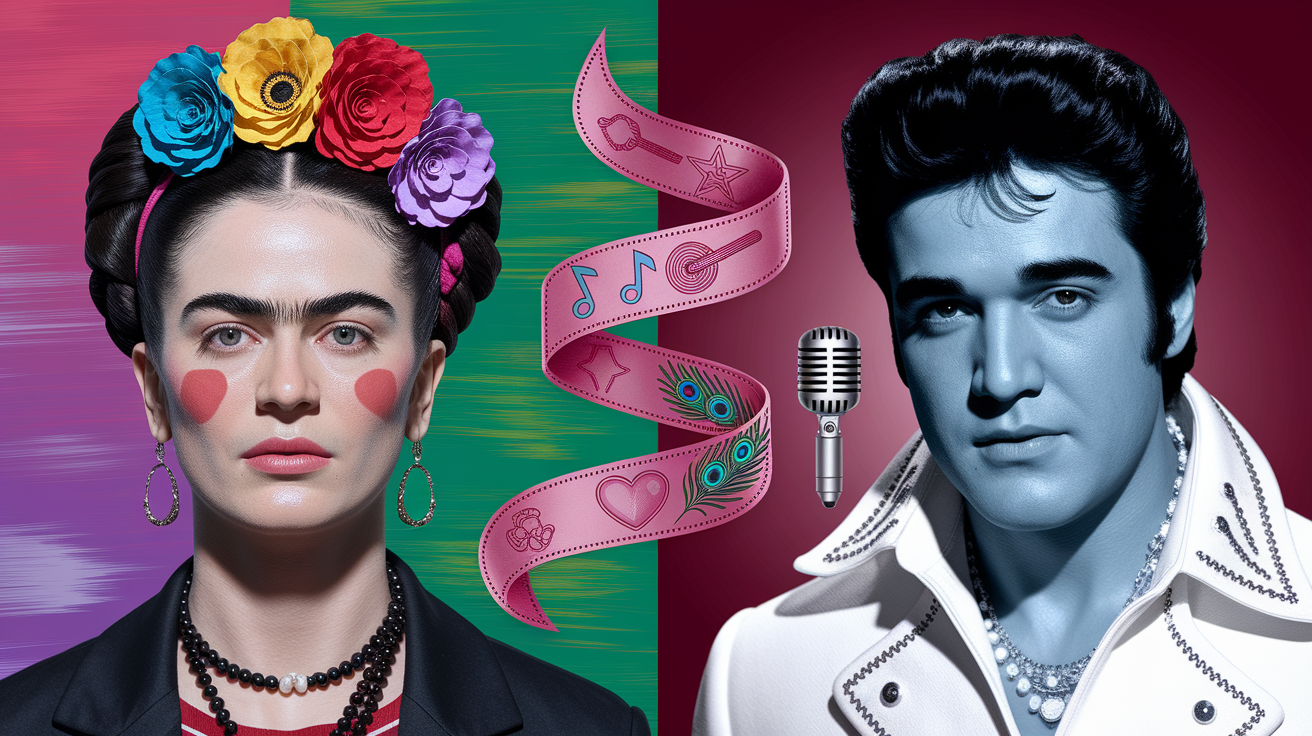
Iconic status doesn’t happen by accident. It results from a precise combination of uniqueness, timing, narrative power, and symbolic resonance. A figure must offer something genuinely distinct, whether that’s a new sound, a bold stance, or an aesthetic that hasn’t been seen before. Frida Kahlo’s unapologetic self-portraits and overt Mexican identity stood apart in a mid-century art world dominated by European modernism, making her work immediately recognizable and symbolically rich.
Timing and cultural context determine whether that uniqueness translates into lasting influence. Icons often emerge at moments when society is ready (or hungry) for the ideas they represent. Elvis Presley’s fusion of Black rhythm and blues with white country music arrived just as postwar America was grappling with racial integration and youth culture. His success wasn’t just about talent. It was about embodying a cultural shift at the exact moment it was happening. Media amplification then takes that symbolic moment and scales it globally, embedding the figure in public consciousness through repeated exposure, reinterpretation, and institutional recognition.
Not every talented or visible person becomes an icon because the combination of factors is rare and often unpredictable. A compelling personal narrative, the ability to represent broader ideas, and sustained public engagement all matter. But so does the collective decision by audiences, critics, and historians to assign lasting meaning to that figure’s life and work.
Final Words
We defined a culture icon as a widely recognized symbol or figure that stands for shared values, aesthetics, or a moment in time.
Then we ran through clear examples like Madonna, Muhammad Ali, and Frida Kahlo, and the traits that set icons apart: lasting relevance, wide recognition, and symbolic meaning. We also looked at how icons shape trends, mirror history, and gain status through timing and public perception.
Whether someone becomes a culture icon comes down to story, timing, and how people keep them alive. It’s exciting to watch new icons emerge.
FAQ
Q: What is an example of a cultural icon?
A: An example of a cultural icon is Madonna, a performer whose music, style, and public image helped define pop culture and gender expression across decades.
Q: What are the 5 types of icons?
A: The five types of icons are religious (sacred figures), political (leaders or symbols), celebrity (entertainers), brand/commercial (logos or products), and cultural/symbolic (art, styles, or rituals).
Q: Which symbol represents culture?
A: There is no single symbol that represents culture; communities instead use flags, traditional dress, language, monuments, or art to symbolize shared values, history, and identity.