
What happens when a dumb dare meets a hungry algorithm?
The summer 2020 Benadryl Challenge answered that in the worst way.
A cheerful TikTok clip treated an over-the-counter allergy pill like a party trick, then remixes and duets pushed doses up until teens started hitting ERs and one teenager died.
This piece peels back the anatomy of that viral fail, looking at the template mechanics, platform dynamics, and social pressure that turned a goofy trend into real harm, and shows how we might stop the next one.
Breakdown of the Viral Meme Challenge Incident and What Went Wrong

The “Benadryl Challenge” showed up in late summer 2020 when someone on TikTok posted themselves taking way too much of the over-the-counter allergy med to get high. The video made it look harmless, complete with cheerful music and zero sense of danger. Days later, teens were copying it, filming themselves downing handfuls of pink pills and counting how many it took to “trip.” Things went from dumb to dangerous fast once kids started posting follow-ups showing seizures, heart problems, and trips to the ER.
What made it worse was how each new version cranked things up. Early attempts used sort of normal doses and nothing much happened, so later participants doubled or tripled the amount for better content. Younger viewers thought bigger doses meant better footage, completely ignoring the warnings buried in comment sections. Several teens ended up hospitalized with heart complications. One 15-year-old in Oklahoma died from an overdose in August 2020.
The aftermath was messy. Emergency rooms across multiple states saw a surge in cases. School districts sent warnings home to parents. TikTok put out a statement condemning the whole thing and started removing thousands of videos. Medical centers reported a spike in diphenhydramine poisoning among teens during those peak weeks. Community response split between fury at the platform for letting it spread and frustration with participants for ignoring the overdose risks printed on every bottle.
- First upload and seeding — Someone posted the original clip on TikTok in late July 2020, gave it a catchy tag and listed some vague pill count.
- Remix wave on TikTok and Instagram — Within three days, creators added their own spin, upped the doses, threw in reaction shots. The #BenadrylChallenge hashtag took off.
- Mass participation spike — By mid-August, thousands of teens posted attempts. The For You Page algorithm and peer tagging pushed it everywhere.
- Incident moment — Multiple hospitalizations and the Oklahoma death happened between August 20 and September 5, 2020.
- Viral backlash — News outlets ran with the story. Parents flooded social platforms with warnings. Medical professionals issued urgent advisories.
- Platform and real-world consequences — TikTok banned the hashtag, yanked videos, added in-app warnings. The FDA released a public alert on September 24, 2020.
Structural Appeal and Risk Factors Built Into the Challenge Format

The Benadryl Challenge worked because it was stupidly simple. Typical post showed someone holding that recognizable pink bottle with captions like “Taking 12 to see what happens” or “Trip report coming soon.” That combo of familiar product plus casual dare made participation feel easy and low-risk. The humor came from treating a boring drugstore antihistamine like some exotic substance. The whole absurdist premise that allergy meds could deliver a wild experience drew people in.
The template format made risk worse because it encouraged numbers to go up. Each participant could remix by increasing the dose, shortening the time window, or adding performance elements like dancing or answering questions while impaired. Timing mattered too. This thing peaked during pandemic lockdowns when teens were isolated, bored, and glued to their phones. The template became so sticky that people scrolling past absorbed the dare without registering the danger in fine-print captions or buried comments.
| Component | Function |
|---|---|
| Visual element | Recognizable pink pill bottle and handful of tablets signal the challenge premise instantly, creating trust through familiarity |
| Text/caption | Dose count and casual phrasing (“let’s see what happens”) reframe medical risk as playful experiment, masking real consequences |
| Remix template mechanics | Quantifiable escalation (more pills, faster ingestion, wilder reactions) creates competitive pressure and algorithmic reward through shock value |
Platform Dynamics That Amplified the Challenge’s Spread

It started in private group chats and smaller Discord servers where teens shared the original TikTok clip and argued about whether it was real. Early posts used vague captions to dodge platform flags, relying on inside jokes and emojis to signal participation without triggering keyword filters. Within two days, the challenge hit public TikTok feeds when users added the explicit hashtag and tagged friends. That pushed the content straight into recommendation algorithms. Reddit’s r/Teenagers and r/TikTokCringe picked it up next, cross-posting clips and dissecting whether the stunt was legit, which drove more traffic back to TikTok.
Platform features supercharged everything. TikTok’s For You Page algorithm prioritized high-engagement content, so videos showing visible reactions or ER visits racked up thousands of shares in hours. Instagram Reels adopted the trend through duets and reaction videos. YouTube compilations titled “Benadryl Challenge Gone Wrong” pulled together the most extreme clips, grabbing millions of views. Hashtag momentum on TikTok meant every new post fed the algorithm, creating a loop where visibility rewarded risk-taking and shock value. The brevity helped too. Most clips ran under 30 seconds, perfect for rapid scrolling and instant sharing.
Mainstream visibility arrived when sites like BuzzFeed and entertainment outlets published “What Is the Benadryl Challenge?” explainer posts in late August 2020. Those articles embedded TikTok clips and pulled hospital warnings, pushing the challenge beyond the creator’s control and into the attention of parents, educators, regulators. Local TV news followed within days, often replaying the most alarming footage and amplifying the very content they meant to condemn. By early September, the challenge had jumped from niche teen communities to national headlines. Its spread became impossible to reverse even as platforms started mass-removing tagged content.
Key Failure Points: Why the Meme Challenge Went Wrong
Misinterpretation drove the most dangerous phase. The original post suggested a dose without stating it clearly, so viewers filled the gap by guessing or picking random numbers. Escalation followed as later participants figured “more is better,” treating the challenge like a high-score competition instead of a medical risk. Remix culture stripped away any cautionary context that might’ve existed in early comment threads, leaving only the dare. The three-step pattern (hear about the challenge, react by trying it or warning others, pass it on through posting or sharing) meant even critics amplified the meme by talking about it.
Social and psychological stuff made the structural problems worse. Teen risk-taking behavior, already heightened during pandemic isolation, found an outlet in a challenge that promised instant peer validation and algorithmic visibility. Pressure to outperform earlier participants pushed teens toward dangerous doses, and the platform’s reward structure (views, likes, shares) reinforced that escalation. The dare format tapped into competitive instincts. The visual template made participation feel safe because the product was in every household. Teens who hesitated saw dozens of others posting “successful” attempts, normalizing the behavior and shrinking perceived danger.
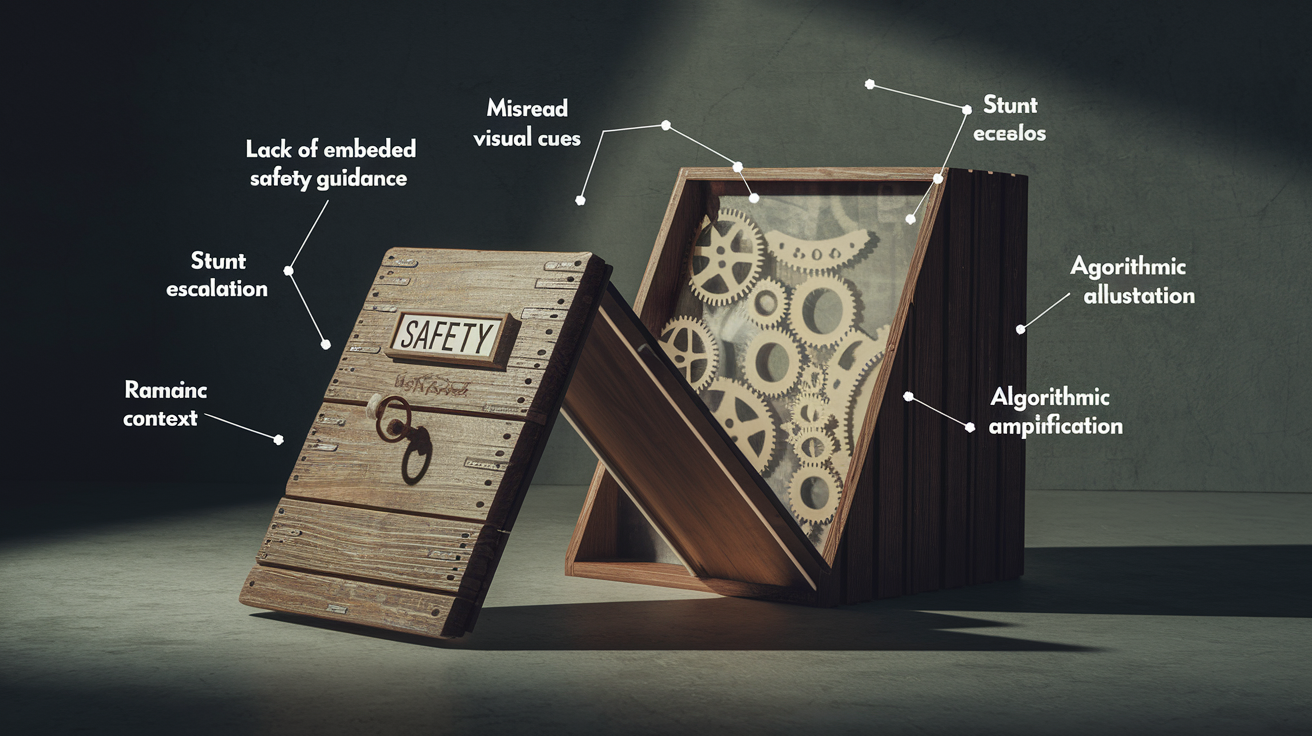
- Lack of embedded safety guidance — No warnings in the template itself. Platform flags only showed up after mass hospitalization reports.
- Misread visual cues — That familiar pink bottle signaled “harmless household item” instead of “controlled substance with overdose risk.”
- Stunt escalation mechanics — Template grammar pushed dose increases to generate more dramatic content and higher engagement.
- Absence of medical context — Remixes deleted any mention of overdose symptoms, organ damage, or lethal thresholds. Only the dare remained.
- Algorithmic amplification — Platforms prioritized high-engagement shock content, rewarding the most dangerous attempts with the widest reach.
Comparing the Incident to Other Meme Challenges That Ended Badly
Meme challenges produce real harm when participants misunderstand risk, chase algorithmic rewards, or strip away context during remixing. The Benadryl Challenge fits a larger pattern of viral dares that escalated beyond their creators’ intent, causing injuries, legal fallout, and public health responses. Comparing it to other high-profile incidents shows common failure modes and helps gauge relative severity.
Physical-Hazard Challenges
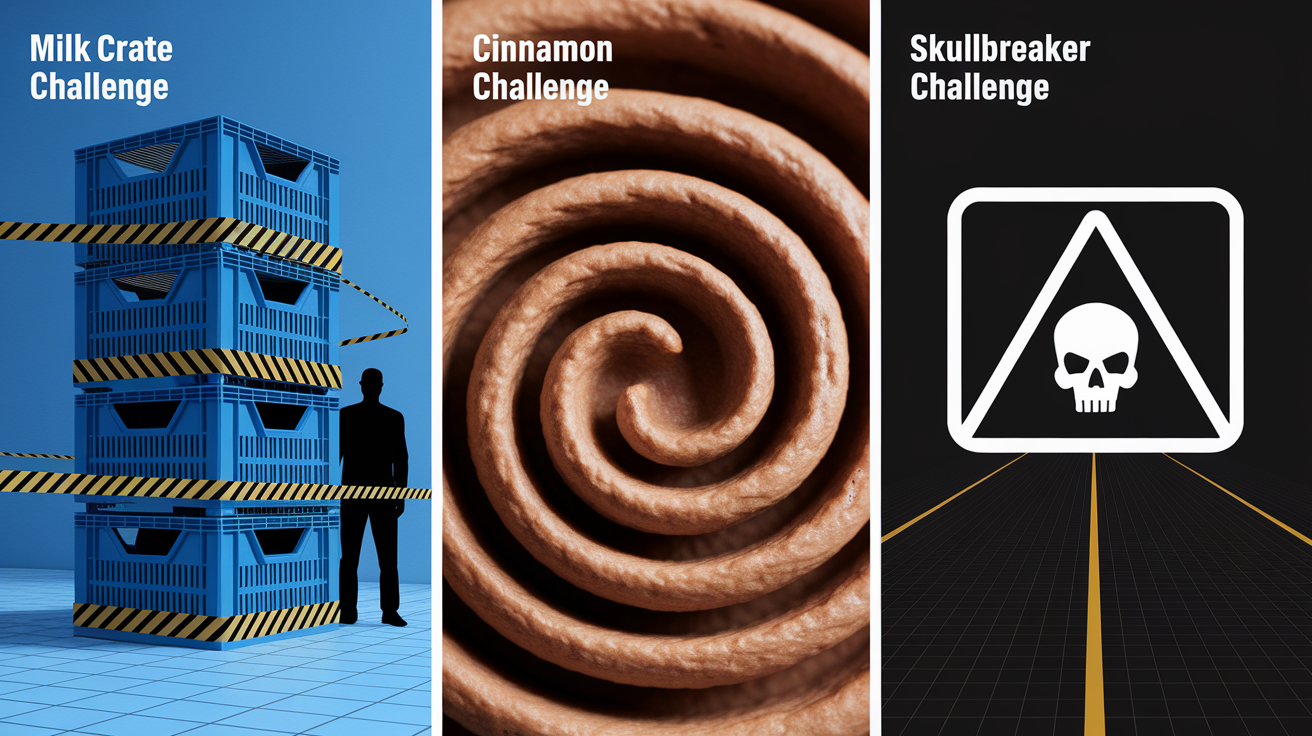
The Milk Crate Challenge went viral in August 2021. People stacked plastic crates into a pyramid and tried walking across the unstable structure. Participants routinely fell from five to seven feet, suffering fractures, concussions, dislocated shoulders, spinal injuries. Emergency departments reported clusters of orthopedic trauma cases. Several hospitals issued public warnings. The Skullbreaker Challenge, popular in early 2020, tricked participants into jumping while friends kicked their feet out from under them, causing head impacts with floors and traumatic brain injuries. The Cinnamon Challenge, which peaked around 2012, dared participants to swallow a spoonful of ground cinnamon without water. That led to choking, aspiration pneumonia, collapsed lungs as the powder coated airways. All three shared structural similarities with the Benadryl Challenge (simple instructions, escalating difficulty, algorithmic reward for extreme outcomes) but differed in how immediate the harm was and how visible the injuries were.
Hoax and Misinformation Challenges
The Momo hoax spread in 2018 and came back in 2019. It falsely claimed a disturbing image was appearing in children’s videos and messaging apps, telling kids to harm themselves. No verified cases of “Momo” content existed, but the hoax triggered widespread panic, school lockdowns, parental monitoring campaigns. Misinformation spread through news coverage and parent Facebook groups, creating a loop where warnings amplified the false threat. The hoax showed how meme structures can generate real consequences (anxiety, policy changes, platform moderation shifts) even when the underlying threat is fake. Unlike physical-hazard challenges, hoax memes spread through fear and second-hand reporting rather than direct participation. But they still relied on viral template mechanics and platform amplification.
Remix-Driven Revival Challenges
Some challenges come back years after their initial peak when new participants discover archived clips or when a high-profile user revives the format. The “Astronaut Sloth” meme got renewed attention long after its original 2011 popularity when a Reddit user documented a prank involving the image, sparking fresh rounds of remixes. The Tide Pod Challenge saw periodic revivals between 2017 and 2019 as new groups of teens encountered the meme through recommendation algorithms or nostalgic posts. Revival patterns show challenges can stay dormant in platform archives and re-enter circulation unpredictably, often reaching audiences who missed the original warnings and context. This makes moderation and public health messaging tough because a single viral post can restart the entire cycle.
Social Media Reactions and Backlash After the Incident

Immediate reactions split hard. Parents and medical professionals flooded comment sections with urgent warnings, tagging TikTok’s official account and demanding takedowns. Teens who’d participated early posted follow-ups showing hospital wristbands or describing seizures, shifting from promotional to cautionary. Some users mocked participants, creating reaction videos that ridiculed the challenge while accidentally keeping it in circulation. Anger targeted both the platform for algorithmic promotion and individual creators for ignoring obvious risks. Some comments called for legal consequences or permanent bans.
Platform-wide discussion peaked in late August and early September 2020. The #BenadrylChallenge hashtag got millions of views before TikTok squashed it. Related tags like #BenadrylTrip and #AllergyChallenge kept trending as users dodged filters. Repost spikes happened each time a new hospitalization or the Oklahoma death got reported, with news clips and screenshots circulating across Twitter, Facebook, Instagram. Engagement metrics showed cautionary posts often got higher visibility than original challenge videos, creating a weird situation where warnings drove as much traffic as participation. Reddit threads in r/News and r/Parenting piled up thousands of comments debating platform responsibility, parental oversight, adolescent judgment.
Traditional media amplified things through sensationalized coverage. Morning shows like “Good Morning America” ran segments titled “Deadly TikTok Trend” with dramatic reenactments and interviews with ER doctors. Local news stations replayed the most alarming clips, often without content warnings, pushing the challenge into households that didn’t use TikTok. Coverage emphasized platform negligence and teen recklessness, with less focus on the structural and psychological drivers that made the challenge appealing. The coverage accidentally extended the challenge’s lifespan by introducing it to new audiences. Some outlets published explainer articles that embedded playable videos, giving the content more reach even as they condemned it.
Platform Responsibility and Moderation After the Challenge Went Wrong

TikTok put out a public statement on September 18, 2020, condemning the Benadryl Challenge and announcing removal of content that promoted or glorified the behavior. The platform added keyword filters to block searches for related hashtags and put up in-app warnings when users tried viewing flagged videos. Instagram and YouTube followed with similar moves, removing compilations and reaction videos that included challenge clips. Moderation proved difficult though because the challenge spread through multiple evolving hashtags, private messages, and coded language that dodged automated filters. Some content stayed accessible for weeks after the initial takedown wave.
Earlier intervention could’ve cut down the harm. The original video circulated for several days before platform flags showed up. During that time the challenge seeded across multiple communities and spawned hundreds of remixes. Proactive monitoring of emerging trends, especially involving household products or physical dares, might’ve let platforms suppress the content before it hit critical mass. Teaming up with public health agencies to issue immediate warnings within the app could’ve provided real-time context to viewers. The delay between first upload and moderation response created a window for mass participation and the Oklahoma death.
- Warning labels and interstitial screens — Platforms started displaying pop-up messages when users searched challenge-related terms, linking to medical resources and overdose hotlines.
- Age restrictions on dare-related content — Some platforms tested policies requiring users to confirm their age before viewing or posting videos tagged with specific challenge keywords.
- Algorithm demotion — Content matching challenge patterns got deprioritized in recommendation feeds, cutting organic reach even when not fully removed.
- Mass removal of tagged videos — TikTok, Instagram, and YouTube deleted thousands of posts containing the hashtag or showing pill ingestion. Enforcement stayed inconsistent across remix formats though.
Lessons Learned from the Meme Challenge Gone Wrong

Parents, teens, and content creators need to get that meme challenges stay fundamentally unpredictable. Early viral momentum often races ahead of any ability to add safety context. For parents, regular talks about platform trends and algorithmic reward structures help teens understand why shocking content spreads and how to think through risk before jumping in. Monitoring app usage and discussing specific challenges when they pop up in the news creates chances to step in before participation happens. For teens, understanding that platforms amplify extreme behavior for engagement (not safety) can shift decisions away from chasing views and toward weighing real consequences. Content creators carry responsibility to embed warnings, avoid formats built on escalation, and think about how their posts will get remixed by audiences who strip away context.
Preventing future harmful challenge escalations needs platform-level changes and cultural shifts. Platforms can set up faster trend-detection systems that flag emerging challenges involving household products, physical stunts, or substance use. That triggers immediate human review and public health consultation. Embedding safety information directly into popular formats (like mandatory disclaimer screens for videos tagged with dare-related keywords) cuts the chance that context gets lost during remixing. Educators and youth organizations can teach media literacy that shows how template mechanics and algorithmic incentives shape online behavior, helping young users spot when a trend’s designed to escalate. Public health agencies should keep rapid-response communication channels open with major platforms to coordinate warnings and takedowns within hours of a challenge emerging, closing the window for mass participation before serious harm happens.
Final Words
in the action, the clip that started the challenge seemed like a silly stunt, one post, one laugh, then a dangerous copycat moment. The post timeline, remixing, platform boosts, and missing context turned a meme into real harm.
This piece walked through the anatomy of a meme challenge gone wrong explained: origin, format risks, platform dynamics, failure points, and similar incidents. Takeaways are simple: add safety cues, slow down remixing, and platforms should act faster.
We can still enjoy viral creativity, and with a little care the next trend can be fun and safe.
FAQ
Q: Who is the woman yelling at Smudge the cat, and what’s the story behind the “lady yelling at the cat” meme?
A: The woman yelling at Smudge the cat is Taylor Armstrong, a Real Housewives cast member. The meme pairs her 2011 reality-TV outburst with a separate 2018 photo of Smudge, creating a viral two-panel joke about arguments.
Q: What is the story behind the Disaster Girl meme?
A: The story behind the Disaster Girl meme is that Zoe Roth’s smirking photo was taken by her father at a controlled burn in 2004. It became shorthand for mock villainy and she later sold the image as an NFT.
Q: Why did the Great meme reset fail?
A: The Great meme reset failed because attempts to control meme flow ran into decentralized communities, algorithm incentives, and rapid remixing. People reposted and adapted content, so the reset couldn’t stick.