

Think celebrity divorces always end in chaos?
Turns out many stars make co-parenting look like a smart team project.
From Gwyneth Paltrow and Chris Martin’s “conscious uncoupling” to Ben Affleck and Jennifer Garner’s steady coordination, high-profile splits offer clear, usable playbooks.
This post highlights real examples that actually work, the habits they share, the rules they stick to, and the small moves that keep kids stable.
If you want co-parenting tactics that don’t rely on perfect feelings, read on for five models and practical tips you can use.
Top Celebrity Co‑Parenting Examples

When Gwyneth Paltrow and Chris Martin announced their split in 2014, they introduced the world to “conscious uncoupling.” It sounded like wellness jargon at first. But it turned into something more: a blueprint for cooperative divorce. Their approach treated separation as a restructuring rather than a battle. They maintained joint decisions about their children Apple (born May 14, 2004) and Moses (born April 8, 2006), showed up together at school events and holidays without tension. The result wasn’t just tabloid-friendly. It became a case study in prioritizing children’s stability over adult conflict.
Ben Affleck and Jennifer Garner followed a similar path after separating in 2015 and finalizing their divorce in 2018. They share custody of three children: Violet (born December 1, 2005), Seraphina (born January 6, 2009), and Samuel (born February 27, 2012). They built a system around regular coordination for school routines, extracurriculars, and holidays. Affleck told the Today Show in November 2017, “If you recognize that you both have the best interest of the kids at heart, it’s quite a special connection. We’re the only two people in the world who care this much about these three kids.” That mindset translated into joint appearances at soccer games, church outings, and family vacations. Proof that divorce doesn’t require disappearing from each other’s lives.
Other high-profile pairs have modeled different but equally effective arrangements. Orlando Bloom and Miranda Kerr share custody of their son Flynn and publicly celebrate holidays together, often with new partners included in a blended-family format. Bruce Willis and Demi Moore remain so close post-divorce that they’ve quarantined together and attended each other’s weddings. A decades-long cooperative structure for their three daughters. Reese Witherspoon and Ryan Phillippe split in 2007 but continue coordinated parenting for Ava (born September 9, 1999) and Deacon (born October 23, 2003), attending milestones side by side and keeping communication functional despite the years.
Here are five standout examples organized by arrangement type:
Mariah Carey & Nick Cannon (divorced 2016, twins Monroe and Moroccan born April 30, 2011): Co-plan birthday parties and public events, emphasize shared responsibility, and coordinate schedules despite busy careers.
Gwen Stefani & Gavin Rossdale (separated 2015, finalized 2016, sons Kingston born May 26, 2006, Zuma born August 21, 2008, Apollo born February 28, 2014): Use structured holiday rotations and prioritize consistency across multiple children’s routines.
Courteney Cox & David Arquette (separated 2013, daughter Coco born June 13, 2004): Maintained a friendship-based co-parenting relationship and attend family events together without drama.
Jenna Dewan & Channing Tatum (announced separation in April 2018, daughter Everly): Used a joint Instagram statement emphasizing “a new normal where there is a lot of love” and attended preschool graduation together two months post-announcement.
Pink & Carey Hart (relationship ups and downs, reconciled, children Willow born June 2, 2011 and Jameson born December 2016): Demonstrate flexible, team-oriented co-parenting that adapts through relationship changes and public reconciliation.
These examples resonate because they show that cooperation isn’t about perfection or pretending conflict never existed. They work because the parents treat co-parenting as a long-term commitment separate from their romantic relationship, use clear communication systems, and let the world see that stability for kids doesn’t require one household or one version of family.
Patterns and Strategies Seen in Successful Celebrity Co‑Parenting
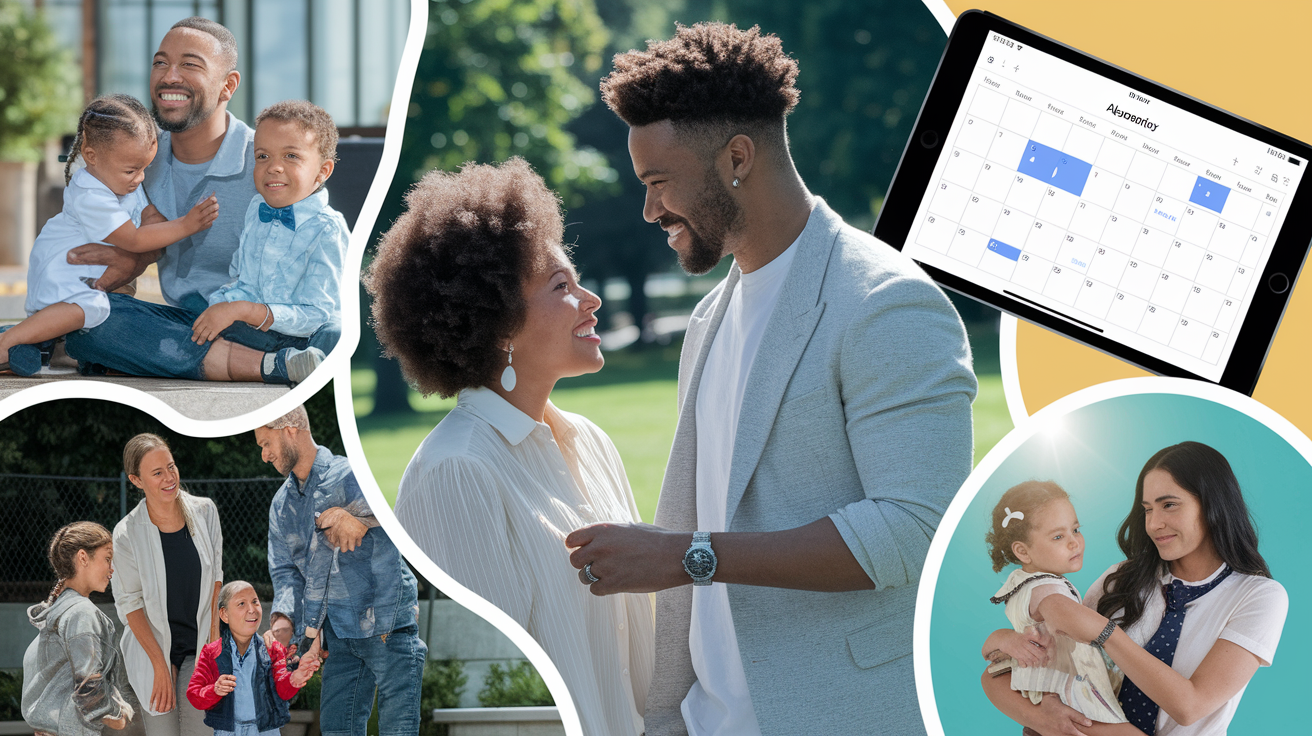
The clearest pattern across successful celebrity co-parents? A shift from adversarial thinking to operational partnership. Gwyneth Paltrow said of her arrangement with Chris Martin, “We’ve learned how to communicate with each other. We love each other. We laugh. We have the best in each other. It’s really nice. It makes you feel like you don’t have to lose.” That mindset shows up in nearly every functional example: treating the ex-partner as a collaborator rather than an opponent. They schedule regular check-ins, use shared digital calendars for school and medical appointments, and avoid putting children in the middle of disputes. When conflict runs high, many shift to parallel parenting (limited direct contact, clearly defined responsibilities) until emotions cool, then gradually increase cooperation.
Another common thread is public commitment. By making respectful statements in interviews or on social media, celebrities create accountability. Drew Barrymore said of co-parenting with Will Kopelman, “We have good days and bad days, but I think it’s driving towards the same purpose of unity and love and what’s best for our kids… We are learning as we go. The important thing for us is just communicating as much as we can.” That transparency forces consistency because the world is watching. It normalizes the idea that co-parenting is a work-in-progress, not a fixed success or failure.
Key behaviors that appear repeatedly:
Attending events together: School plays, graduations, sports games, and holidays are treated as shared family moments rather than territorial disputes.
Allowing solo parent time: Giving the other parent uninterrupted time with the kids preserves individual relationships and reduces competition.
Neutral handoffs: Exchanges happen at predictable times in calm locations (parks, schools) with all needed belongings ready to avoid last-minute stress.
Flexibility with schedules: When work travel or emergencies arise, successful co-parents adjust without making the other parent beg or trade favors.
Challenges Celebrity Ex‑Partners Commonly Overcome

Media scrutiny adds a layer of pressure that most families never face. Every park outing, airport pickup, or school drop-off can become a tabloid story. Paparazzi presence can escalate tension or force parents to perform civility even when emotions are raw. Celebrities who succeed typically set strict privacy rules: keeping children’s faces off certain platforms, refusing to comment on custody details, and using legal agreements to control what can be shared publicly. That level of boundary-setting requires constant vigilance and often legal support.
Scheduling conflicts from filming, touring, or press obligations complicate logistics. When one parent is on location for months or traveling internationally, maintaining equal custody becomes nearly impossible. Successful celebrity co-parents build flexibility into agreements, allowing makeup time after long absences and using video calls to stay connected during shoots. They also coordinate with schools and nannies to keep routines stable when one parent is unavailable. Treating consistency for the child as the non-negotiable priority even when work demands compete.
New-partner dynamics introduce another challenge. When celebrities start dating or remarry, blending families requires negotiation about boundaries, involvement in parenting decisions, and how much the new partner participates in events. The healthiest examples (like Bruce Willis and Demi Moore inviting each other’s spouses into family gatherings) normalize the idea that a child’s extended family can include multiple adults without rivalry. That only works when ex-partners trust each other’s judgment and new partners respect existing custody arrangements without trying to replace the other parent.
Expert Commentary on High‑Profile Co‑Parenting

Family therapists point to celebrity co-parenting examples as teaching moments because they make abstract advice concrete. Dr. Susan Heitler, a clinical psychologist, notes that Ben Affleck’s statement about being “the only two people in the world who care this much about these three kids” captures the essence of successful co-parenting: recognizing a unique shared purpose that outlasts romantic feelings. That mindset shift (from “my ex” to “my co-parent”) requires emotional maturity and often benefits from professional mediation, especially in the first one to two years post-separation when wounds are fresh.
Clear boundaries and consistent communication are the two pillars experts emphasize most. Therapists recommend treating co-parenting like a business partnership: scheduled check-ins, written agreements, and neutral language that focuses on logistics rather than past grievances. Celebrity examples like Gwyneth Paltrow and Chris Martin, who reportedly use shared calendars and regular planning meetings, illustrate how structure reduces conflict. When parents know exactly who handles which decisions (medical, education, extracurriculars) and when exchanges happen, there’s less room for misunderstandings or power struggles.
Child-centered decision-making is the ultimate measure of success. Experts cite examples like Drew Barrymore and Will Kopelman continuing shared holiday celebrations as proof that cooperation isn’t about the adults’ comfort. It’s about giving children a sense of family continuity even after divorce. Research shows that children adjust better when they see parents working together and when routines remain predictable across households. Celebrity co-parents who publicly model that behavior help normalize cooperative divorce and reduce the stigma that keeps many families stuck in adversarial patterns.
Practical Takeaways for Everyday Co‑Parents

The most transferable lesson from celebrity co-parenting? Treat the arrangement as a long-term operational partnership, not an extension of the romantic relationship. That means setting clear, written agreements about custody schedules (50/50 splits, alternating weeks, or primary/visitation patterns), holiday rotations (odd-even year splits for major holidays), and decision-making authority (joint for medical and schooling, individual for day-to-day routines). Written plans reduce ambiguity and give both parents a reference point when disagreements arise.
Concrete strategies to adopt:
Use co-parenting apps or shared digital calendars: Tools like OurFamilyWizard or Google Calendar keep everyone aligned on pickup times, events, and appointments without requiring constant direct communication.
Schedule regular check-ins: A weekly 15 to 30-minute call or email exchange about upcoming needs (school projects, doctor visits, extracurriculars) prevents last-minute surprises.
Keep exchanges child-focused and neutral: Meet in public places like parks or school, arrive on time with the child’s belongings packed, and save adult discussions for separate conversations away from the kids.
Invest in mediation or counseling early: If communication breaks down, bring in a professional within three to six months rather than letting conflict escalate. Many celebrity co-parents credit mediators with moving them from adversarial to cooperative.
The real takeaway isn’t that celebrity co-parenting is easier. It’s that the same principles (clear communication, child-first decisions, flexibility, and mutual respect) work whether you’re coordinating around a film schedule or a shift at a local hospital. Accept that co-parenting is a work-in-progress, expect setbacks, and prioritize the child’s stability over winning arguments. That’s the pattern every successful example shares.
FAQs About Celebrity Co‑Parenting

How do celebrities keep custody arrangements private?
Most use sealed court records and non-disclosure agreements that prevent details from becoming public. They also avoid discussing specifics in interviews, sticking to general statements about prioritizing their children. Legal teams often negotiate privacy clauses that limit what can be shared on social media or with the press.
Do celebrity co-parents actually follow 50/50 custody splits?
Many do, especially when both parents live in the same city and children are school-age. Schedules often alternate weekly or use a 2-2-3 pattern (two days with one parent, two with the other, then three-day weekend rotation). Travel-heavy careers sometimes require flexibility, with makeup time built in after long absences.
How do they handle new partners in blended families?
Successful examples set clear boundaries about the new partner’s role, typically supportive but not replacing the other parent. Co-parents often introduce new partners gradually and communicate openly about involvement in parenting decisions. The healthiest arrangements include all adults in major events without competition.
What happens when celebrity co-parents disagree on major decisions?
Most custody agreements include mediation clauses that require dispute resolution through a neutral third party before returning to court. For urgent decisions (medical emergencies), one parent may have tie-breaking authority. Long-term disagreements about schooling or relocation often involve judges, but many celebrities resolve issues privately through lawyers to avoid public court battles.
Final Words
In the action, we looked at real-life splits — Paltrow & Martin, Affleck & Garner, Bloom & Kerr, Willis & Moore — and how each handled custody, communication, and public messaging.
We pulled out patterns: flexible schedules, clear boundaries, joint events, and experts stressing kid-first choices.
We also covered media pressure, travel clashes, and practical fixes like shared calendars and respectful public statements.
These celebrity co-parenting after divorce examples show that thoughtful planning and steady communication can help families thrive — and there’s plenty to borrow for everyday co-parents.
FAQ
Q: What is the 7 7 7 rule for parenting?
A: The 7 7 7 rule for parenting is not a single official method; different coaches use “7‑7‑7” for things like seven minutes of focused play, seven positive comments, or a seven‑second pause before reacting.
Q: What are the three C’s of divorce?
A: The three C’s of divorce are commonly framed as communication, cooperation, and consistency — clear talking, working together on parenting, and steady routines to support children through the split.
Q: At what age is a child most affected by divorce?
A: Children most affected by divorce are often preschoolers (about 3–6) and teenagers, though effects vary; calm adults, consistent routines, and low parental conflict reduce harm at any age.
Q: What celebrities have 50/50 custody?
A: Celebrities reported to use near 50/50 custody arrangements include Ben Affleck & Jennifer Garner, Orlando Bloom & Miranda Kerr, and Gwyneth Paltrow & Chris Martin; exact legal splits often remain private.