
What if short-form dance challenges aren’t about talent, but a machine built to make anyone famous overnight?
They blow up because the moves are easy, the music hits fast, and platforms reward quick, visible participation.
Put social proof and recommendation algorithms together and you get a self-feeding loop.
This post explains how low skill barriers, emotional audio hooks, and algorithm design combine to turn 15 seconds into a global movement.
Core Drivers Behind the Rapid Spread of Short-Form Dance Challenges
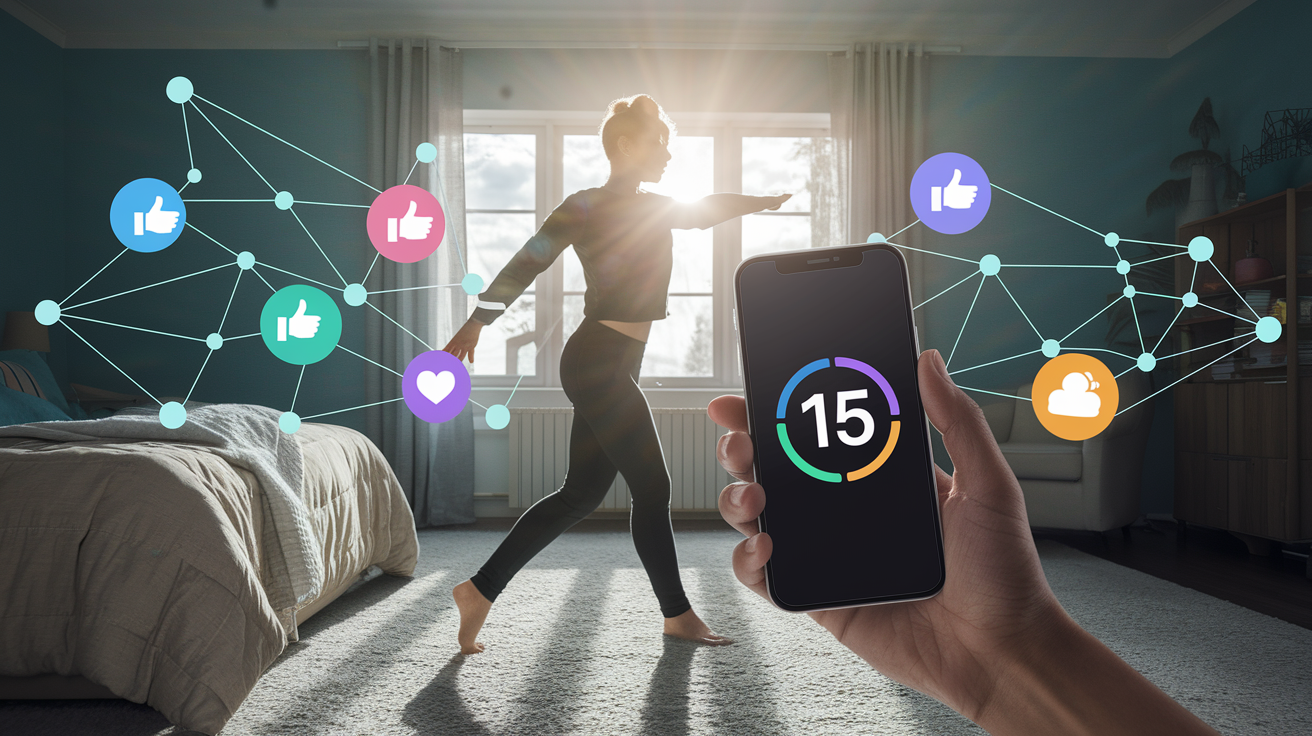
Short-form dance challenges blow up fast because they hit three sweet spots at once: you don’t need skill to join, the music hits emotionally, and the platforms are literally built to spread this stuff. A typical challenge needs zero training. Just a phone and 15 seconds. You can do it in your bedroom, at work, wherever. When a song that makes you feel something meets choreography anyone can copy, millions of people across every age group and continent can jump in without thinking twice.
Platform design takes that natural accessibility and throws gasoline on it. Short video formats kill commitment anxiety before it starts. You’re not investing an hour. You’re watching 15 seconds, and you already know you could replicate it right now if you wanted. Algorithmic feeds push content that gets people to actually do something, so a challenge that sparks early completions and shares gets boosted exponentially within hours. Visibility drives participation. Participation drives more visibility. The loop feeds itself.
The psychology and the tech merge into this self-sustaining viral machine powered by social proof. When you see your friends, random strangers, and celebrities all doing the same moves to the same audio, copying it feels easy and socially smart. Each new participant is visible proof that the challenge is worth your time, which lowers the barrier for the next person scrolling.
Five things that make this loop work:
- Low friction participation — Simple, repetitive moves that need no dance background or gear. If you’ve got a phone, you’re in.
- Music-driven emotional contagion — Catchy, emotionally charged audio hooks create shared feelings that make you want to move.
- Rapid algorithmic elevation — Early engagement spikes trigger recommender systems to push the content wider, multiplying reach within hours.
- Social proof visibility — Hashtags and view counts signal popularity, making it easier to say yes and harder to feel weird about joining.
- Replicability across demographics — Short, loopable routines work across age, culture, and skill level, so global spread happens without needing adaptation.
Psychological Triggers That Fuel Participation and Sharing
Music-driven emotional contagion is the rocket fuel here. When you hear a song synced with movement, it activates mirror neurons and emotional synchronization pathways in your brain. Upbeat tempos and sticky melodies create affective resonance that makes you want to recreate the feeling physically. You’re not just listening anymore. You’re embodying it. This emotional spread moves faster when the audio clip is compressed into a short, high-intensity burst that hits before your brain can overthink it.
Mimicry instincts and dopamine reinforcement build a neurochemical reward loop that keeps people coming back. Successfully copying a trending dance triggers dopamine release tied to mastery, social validation, and group membership. Each completed video, each view notification, each new follower compounds the reward cycle. Your brain learns to crave that hit again. The low skill floor means even beginners taste success fast, avoiding frustration that would shut down engagement in harder activities.
Personal identity expression turns passive copying into creative self-presentation. The core choreography stays the same, but participants add their own spin. Costume choices, location backdrops, facial expressions, comedic twists. This balance between fitting in and standing out keeps engagement alive. Users claim social belonging while protecting personal brand identity. Each video is both homage and individual statement.
Algorithmic Systems That Elevate Dance Challenges

Platform algorithms are accelerant structures that turn small trends into global events in hours. Recommendation engines track engagement velocity, the rate at which early viewers complete, like, share, or replicate a video. That velocity becomes a primary ranking signal.
Two mechanisms drive dance challenge virality. First, completion rate measurement identifies content that holds viewer attention through the entire clip, signaling high watch quality. Dance challenges naturally optimize for this because the full routine resolves in seconds. No mid-video abandonment. Second, duplicated audio tracks function as unified algorithmic entities. Every new participant video feeds engagement signals back to the original audio source, compounding its ranking power across the platform. When thousands replicate a challenge using the same audio, the algorithm reads it as strong collective preference and pushes related content to wider audiences.
Remixable formats multiply visibility through built-in network effects. Duets, stitches, reaction videos let users participate without creating original choreography. This lowers production barriers while expanding reach. Each remix generates new ranked content that inherits algorithmic credit from the source, creating exponential scaling as the challenge spreads across subnetworks. Hashtag aggregation speeds this up by clustering all related content under searchable labels that work as discovery hubs for latecomers.
| Signal | Description | Effect on Dance Challenges |
|---|---|---|
| Engagement Velocity | Speed at which early viewers complete, like, and share the video within the first hour of upload | Challenges that spark immediate replication get exponential visibility boosts, pushing them to wider audiences before momentum dies |
| Audio Duplication Count | Number of unique videos using the same audio clip as ranking entity | Each new challenge video feeds engagement signals to the shared audio track, compounding algorithmic favor for all related content |
| Completion Rate | Percentage of viewers who watch the entire short clip without swiping away | Short, loopable dance routines naturally optimize for completion, signaling high content quality and triggering repeat algorithmic pushes |
Community Dynamics and Network Effects
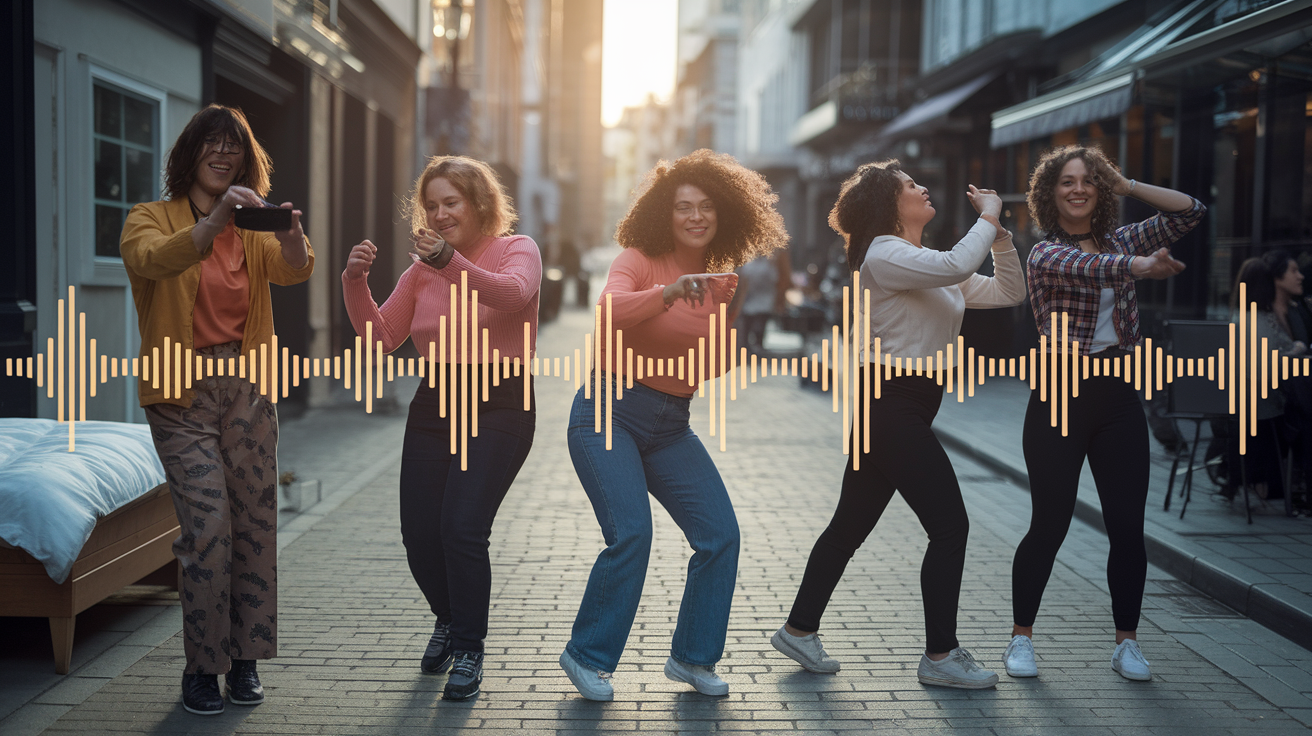
Trend participation accelerates when you see familiar accounts doing a challenge. Seeing a friend, classmate, or local influencer perform a routine lowers the psychological barrier. What was an abstract viral trend becomes an in-group activity. This visibility within trusted networks creates social proof cascades. Participation begets more participation. Each new video reinforces the challenge’s legitimacy within micro-communities.
Community clusters work as amplification nodes that concentrate diffusion energy. Tight-knit groups (school cohorts, sports teams, fan communities, workplace crews) adopt challenges collectively, producing bursts of simultaneous uploads that flood localized feeds. These bursts trigger algorithmic attention, pushing the challenge beyond its origin community into broader recommendation streams. Cross-cluster diffusion happens when overlapping network members carry the trend between groups, stitching isolated pockets into coordinated waves.
Shared audio libraries unify dispersed communities under a single participatory framework. Unlike text-based trends that fragment across languages and regional slang, standardized audio clips create a universal participation template. A user in Seoul, São Paulo, or Stockholm can join the same challenge without translation or adaptation. Identical audio and choreography signal membership in a global in-group. This shared infrastructure collapses geographic and cultural distances, enabling simultaneous worldwide spread that would be impossible for language-dependent trends.
Four network accelerators:
- Peer visibility — Seeing friends or followed accounts participate triggers imitation through social influence and in-group signaling.
- Cluster saturation — When multiple members of a tight-knit community adopt a challenge at once, it becomes locally dominant, pressuring non-participants to join.
- Cross-platform spillover — Challenges that jump from TikTok to Instagram, Twitter, or YouTube generate secondary adoption waves as platform-specific users join late.
- Influencer seeding — High-follower accounts that participate early lend social proof and visibility, accelerating adoption among their fan bases and beyond.
Cultural and Demographic Factors Influencing Spread
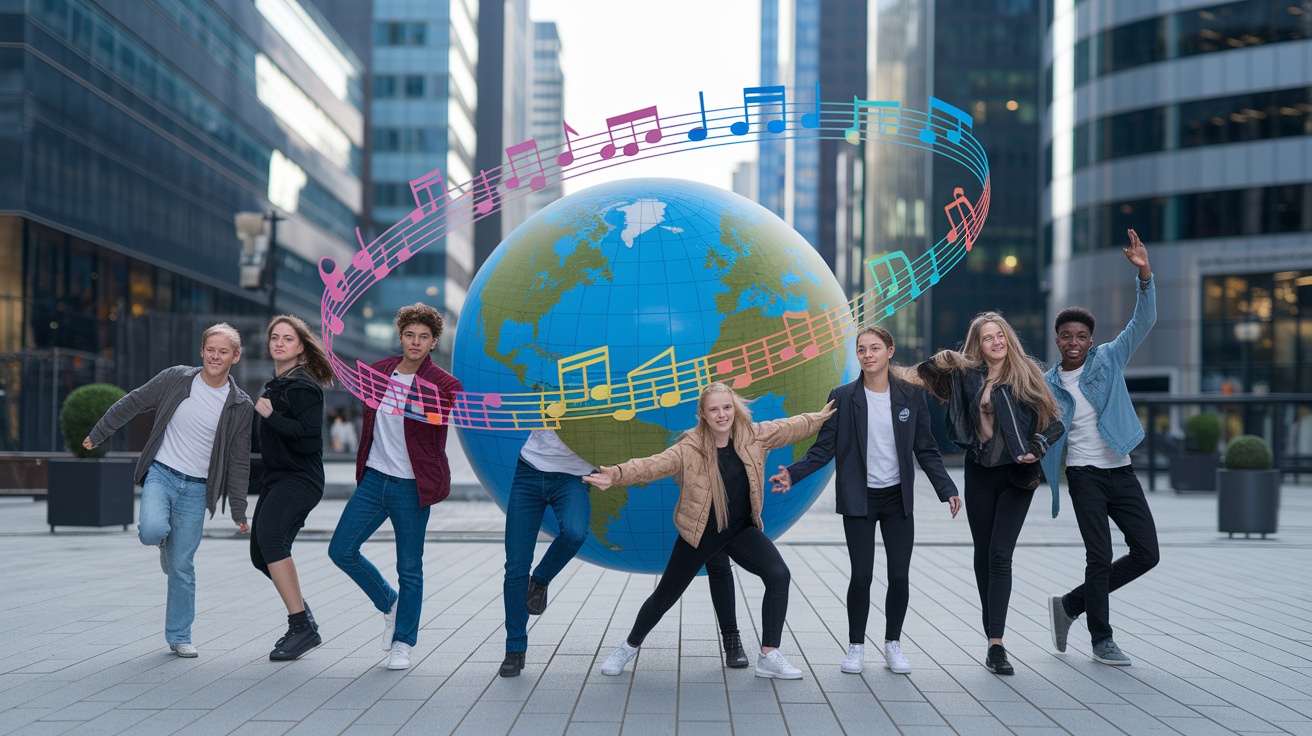
Youth-heavy user bases adopt and drop trends at speeds older demographics can’t match. Adolescents and young adults have higher tolerance for rapid cultural turnover, lower inhibition around public self-expression, and more time for platform participation. This demographic concentration means viral dance challenges often start and peak within youth subcultures before trickling into older age brackets through cross-generational exposure. The lifecycle pattern: challenges explode among teens, gain mainstream visibility through media coverage, and eventually reach parents and older relatives as late adopters.
Global music distribution synchronizes participation across regions, collapsing traditional geographic diffusion delays. Streaming platforms and algorithmic music discovery mean a song released in South Korea can reach listeners in Lagos, Berlin, and Los Angeles at the same time. When an artist seeds a dance challenge with a new single, fans worldwide receive the audio and choreography simultaneously. This coordination creates temporal clustering where millions adopt the same challenge within a narrow 48 to 72 hour window, overwhelming algorithmic feeds and dominating cultural conversation.
Culturally resonant moves spread faster within specific groups while universal gestures enable cross-cultural diffusion. Choreography with culturally specific references (traditional dance motifs, regional hand gestures, localized humor) gains intense traction within origin communities but may struggle to cross cultural boundaries. Conversely, challenges built on universal movements like jumping, clapping, or simple arm waves translate seamlessly across cultures. Maximum global spread. The most successful challenges balance these forces, embedding subtle cultural markers within accessible frameworks that allow both in-group recognition and out-group participation.
Case Studies Illustrating Viral Mechanisms
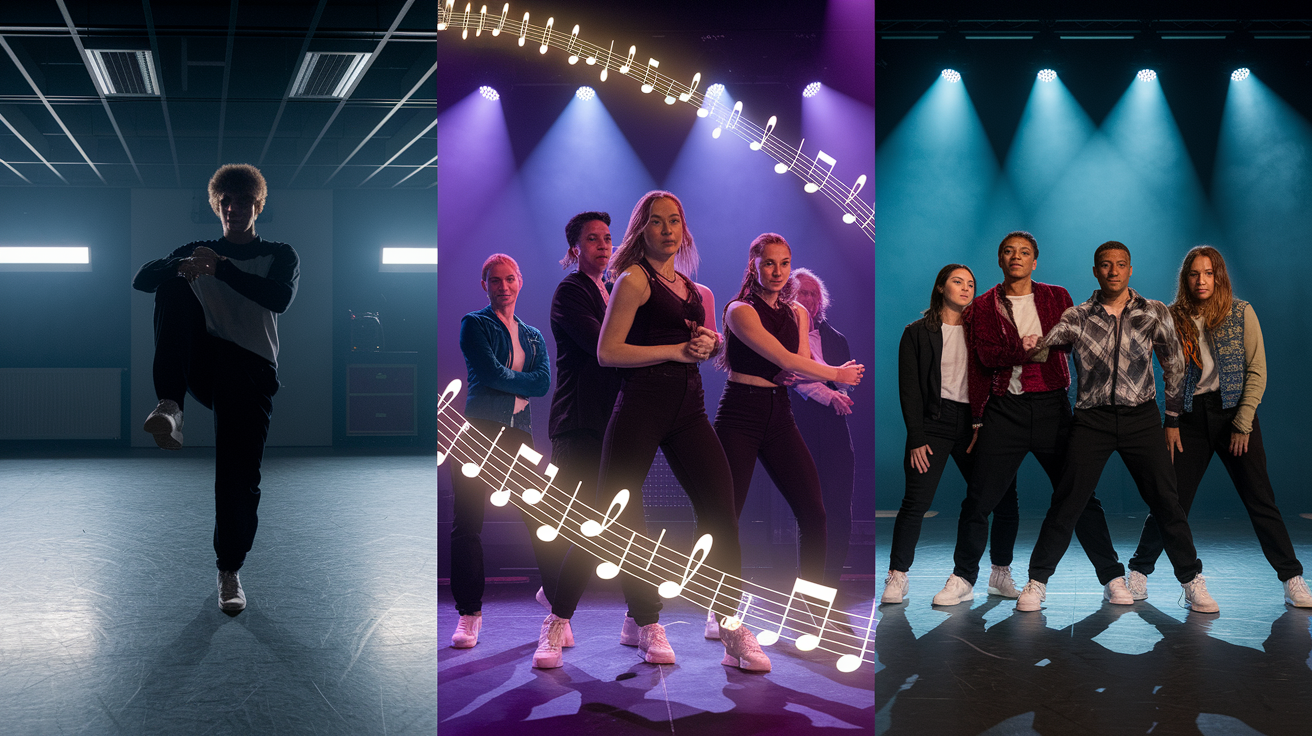
The “Renegade” challenge is textbook bottom-up virality driven by community dynamics and algorithmic amplification. Created by a teenage dancer in 2019, the routine featured intricate arm movements synced to a high-energy hip-hop track. Initial spread happened through friend networks and local dance communities on TikTok. Early adopters tagged peers and challenged them to replicate the choreography. As participation density increased within these micro-communities, the algorithm detected rising engagement velocity and started pushing related content to broader audiences. Within weeks, the challenge crossed into mainstream visibility when high-follower influencers adopted the routine. Each new celebrity participant triggered secondary adoption waves among their fan bases.
“Savage Love” shows music-industry-led seeding and psychological triggers working together. The artist and label released the song with a pre-choreographed dance routine designed specifically for viral replication. Simple, repetitive moves timed to the chorus hook. Early promotional pushes placed the challenge in front of platform-native influencers, who got the choreography before public release. Their coordinated uploads created an artificial saturation effect that mimicked organic virality, triggering algorithmic boosts while activating emotional contagion through the song’s catchy melody. Dopamine reinforcement kicked in as novice participants successfully replicated the accessible choreography. Positive feedback loops sustained momentum.
Case analyses of three viral mechanisms:
-
Psychological mechanism, “Blinding Lights” challenge — The nostalgic 1980s synth-pop sound triggered emotional resonance across age groups, activating memory associations that drove cross-generational participation. Parents who grew up with similar music joined alongside their kids, expanding demographic reach beyond typical youth-dominated trends. Dopamine reward cycles got reinforced through visible view counts and family participation, creating multi-layered social validation.
-
Algorithmic mechanism, “Say So” challenge — The song’s existing popularity on streaming platforms primed the algorithm to favor related TikTok content. When the artist officially endorsed a fan-created choreography, the dual signals of streaming data and platform engagement triggered exponential visibility boosts. Completion rate optimization happened naturally because the choreography synced perfectly to the song’s catchiest 15-second segment. Maximum watch-through rates fed algorithmic ranking.
-
Community-driven mechanism, “Git Up” challenge — The challenge spread initially through country music fan communities and line-dancing subcultures before crossing into mainstream spaces. Tight-knit community clusters created localized saturation. Entire friend groups and dance studios uploaded coordinated videos. Cross-platform spillover happened when these niche communities shared their content to Facebook and Instagram, exposing older demographics who then participated through those platforms. This created a reverse adoption flow back into TikTok.
Final Words
We’re in the action: accessibility, emotionally charged music, and platform design are teaming up to make short dance clips blow up fast.
This post breaks down the viral loop — low‑effort moves, music that sparks mimicry, early algorithm boosts, social proof, and easy replication across groups.
Keep watching creators who make joining simple and platforms that push early winners. This piece is about explaining the virality of short-form dance challenges and points to more remixing, wider reach, and upbeat trends ahead.
FAQ
Q: Why do dancers say 5 6 7 8 instead of 1 2 3 4?
A: Dancers say “5 6 7 8” instead of “1 2 3 4” to give a preparatory count before the phrase starts, signaling exactly when to begin and fitting moves into eight-count phrases.
Q: What is the short-form of dance?
A: The short-form of dance is bite-sized choreography made for quick social videos like TikTok or Reels, designed to be easy to learn, copy, and share across platforms.
Q: How do dance challenges go viral?
A: Dance challenges go viral when simple moves, catchy audio, influencer boosts, and low‑effort participation spark early engagement, and platform algorithms then amplify visible imitation across feeds.
Q: What are the 7 basic dance actions?
A: The seven basic dance actions are walk, run, jump, hop, leap, skip, and slide, fundamental movements choreographers combine to build phrases and teach timing.