

What if the trends you think you choose are actually chosen for you?
It’s not a conspiracy.
It’s math and design.
Algorithms watch every pause, like, save, and caption.
They boost what gets attention, test it on new people, then push the hits wider.
That loop creates micro-trends that erupt in days and vanish just as fast.
This post explains that feedback loop: how tiny signals become huge visibility, how personalized feeds make trends feel universal inside groups, and how that visibility turns into quick buys.
The Micro-Trend Feedback Loop Explained
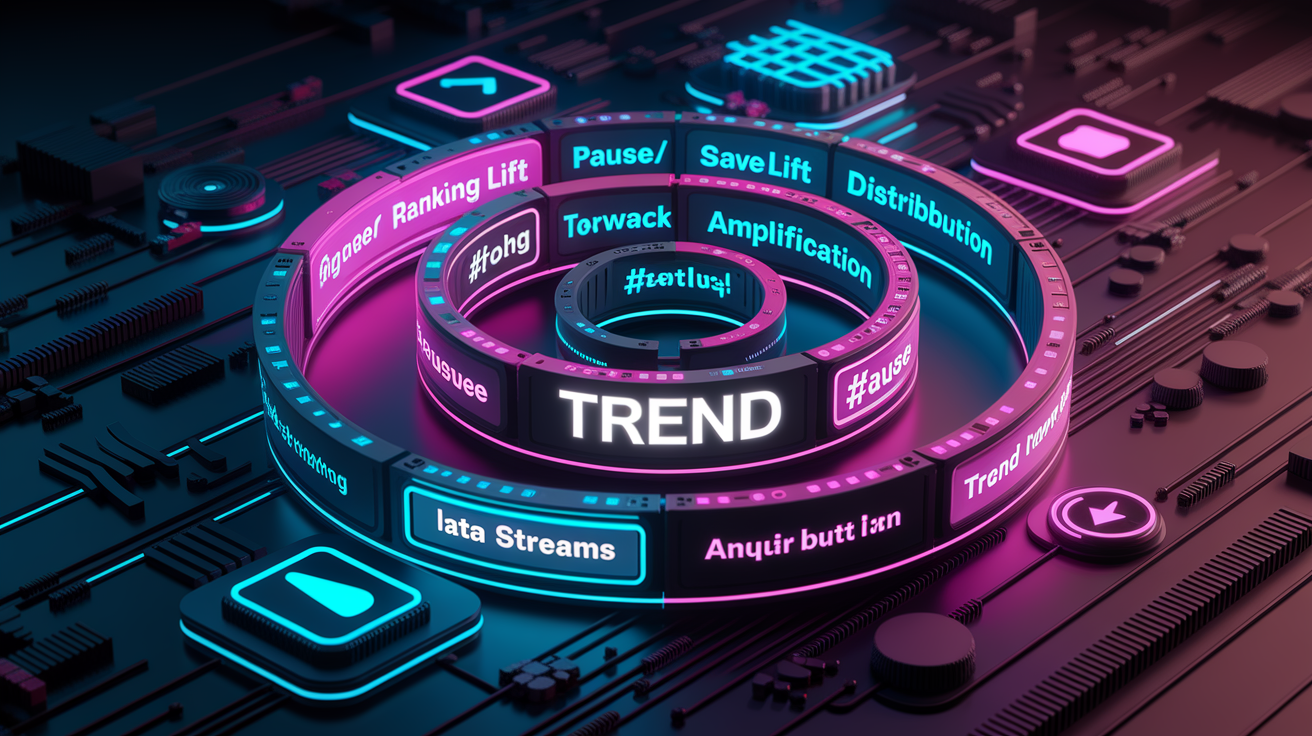
Micro-trends are those blink-and-you’ll-miss-it cultural moments that take over your feed for a week or two, then vanish. They don’t build slowly like old-school trends used to. Instead, they explode through algorithmic loops that track every scroll, tap, and pause you make. Dalgona coffee went from a niche Korean recipe to a global thing in what felt like days. That’s the speed we’re talking about.
Platforms are constantly watching three types of signals. Passive ones, like how long you stare at a video before moving on. Active signals capture the obvious stuff: likes, saves, shares, comments. Then there’s contextual data pulling from hashtags, captions, audio clips, geotags. All of it gets fed into ranking models that predict which posts will keep you glued to your screen longest. High scores mean higher placement. More visibility means more engagement, which the algorithm reads as proof it made the right call. So it shows you more of the same.
The loop works in five moves:
- Signal capture – You pause on a video about dry yogurt bowls. Maybe you save it.
- Ranking lift – The algorithm notices and starts scoring similar yogurt content higher for you and people who look like you.
- Distribution – More yogurt posts flood your feed, Stories, Explore page.
- Amplification – Other people engage, generating fresh signals that push the content even wider.
- Trend emergence – Within days, dry yogurt bowls are everywhere. It feels like a movement.
Real examples map straight onto this. One person engaged with period drama content and suddenly couldn’t escape Bridgerton memes. Another watched an Irish coffee reel and bought one that same week because the algorithm kept serving it up, then linked her directly to a storefront. The power isn’t just in the speed. It’s in the consistency. Engagement data flows back into the system in real time, so visibility compounds within hours.
How Personalization Engines Predict User Preferences

Personalization engines build profiles of you from everything you do. Watch time, skip rate, comment tone, search history, even how fast you type. Machine learning models take all that behavior and guess what’ll keep you engaged next. They don’t wait for you to tell them what you want. They infer it by comparing your patterns to millions of others. If people who watched a specific skincare tutorial also liked minimalist home decor, the engine might show you home content after you watch the same tutorial. It’s predicting what you’ll actually engage with, not what you think you want.
Cross-device tracking makes these predictions sharper and speeds up micro-trend formation. Watch a coffee reel on your phone during lunch? The algorithm updates your profile instantly. Open the app on your laptop that night and coffee content’s waiting at the top. This sync means one moment of interest can trigger days of concentrated exposure across every screen you own. Your profile treats every interaction as part of one ongoing conversation, which makes the algorithm’s guesses better and micro-trends stickier.
| Feature | What It Tracks | Why It Matters for Micro-Trends |
|---|---|---|
| Watch Time | Seconds spent on a video before scrolling | Longer watch time signals strong interest, so the platform amplifies similar content immediately |
| Engagement Actions | Likes, shares, saves, comments, follows | Each action increases visibility for that content type, creating faster feedback loops |
| Contextual Metadata | Hashtags, captions, audio, geotags | Links posts to trending clusters, allowing the algorithm to group micro-trends and push them to specific audiences |
Platform-Specific Amplification Dynamics
Niche content spreads through pathways designed to prioritize novelty and engagement speed, not just reach. A single food trend video can jump from a small community to millions of views because the platform’s discovery layer tests content with bigger and bigger audiences. If early viewers engage hard, the algorithm assumes it’ll perform well at scale and pushes it wider. This testing-and-expanding thing turns subcultural moments into micro-trends that feel universal in days.
Different platforms have their own acceleration methods:
TikTok For You Page serves content based on immediate engagement, not follower count. A creator with 200 followers can hit millions if early viewers watch to the end and share.
Instagram Explore surfaces posts from accounts you don’t follow, weighted by what users like you engage with. It concentrates niche aesthetics into tight visual clusters.
YouTube Recommendations prioritizes session time. If users binge a micro-trend topic, the algorithm treats the whole topic as valuable and recommends it more aggressively.
Reels Repetition shows you the same or nearly identical content multiple times across different sessions. It builds familiarity and ups the chance you’ll engage or buy.
Platform velocity creates these sharp peaks because amplification’s continuous and self-reinforcing. Once a post hits a certain engagement threshold, it enters a high-visibility tier where every new view generates more reach. You get exponential growth curves that traditional media can’t touch. A trend that used to take months to move from a niche blog to mainstream retail now peaks in a week because the algorithm’s delivering thousands of impressions per hour to targeted groups.
Visibility converts straight into commerce through frictionless buying paths built into feeds. Instagram and TikTok link product tags to storefronts, so the same scroll that shows you a trending item also gives you a one-click buy option. That Irish coffee example, where a single reel led to a purchase in the same week, shows how compressed the whole thing’s become. Discovery to transaction. Algorithms don’t just show you a trend. They connect you to the supply chain while your interest’s still hot.
The Role of Filter Bubbles and Echo Chambers in Micro-Trend Formation

Personalized feeds narrow what you see by prioritizing content similar to what you’ve already engaged with. When you interact with one post about a micro-trend, the algorithm reads that as a preference and serves more of the same. Over time, your feed becomes this concentrated stream of related content. Alternatives get filtered out. You see less diversity in trends. This narrowing speeds up micro-trend adoption inside specific groups because everyone in the bubble’s seeing the same stuff repeatedly, which makes a niche behavior feel like it’s everywhere.
Repeated exposure works on you psychologically. When dry yogurt bowls show up in your feed five times in two days, familiarity grows. The trend starts feeling like a shared cultural thing instead of an algorithmic pick. This repetition creates social pressure. Seeing others participate makes you more likely to join. The feed presents tons of options, which feels like choice, but they’re all shaped by the same engagement signals. You’re choosing within a pre-curated set. The result? Faster micro-trend churn. Niche interests rise and fall inside echo chambers without ever hitting broader audiences.
Case Studies: Examples of Algorithm-Created Micro-Trends

Dalgona coffee blew up during COVID after a Korean recipe video went viral on TikTok. The trigger was straightforward. Users stuck at home wanted easy, photogenic activities. The algorithm caught high engagement on whipped-coffee clips. Watch time and shares spiked, so the platform pushed the content to food fans, home cooks, lifestyle accounts. Within days, millions were filming their own versions. Each video generated new signals that fed back into the loop. The trend peaked fast, then dropped off as engagement fell and the algorithm moved to newer content.
Dry yogurt bowls followed almost the same script. A wellness influencer niche started sharing preparation tutorials. Users saved and shared them. The algorithm interpreted saves as strong interest and surfaced yogurt content to people with similar dietary habits. Repetition across Instagram Reels and TikTok made it feel like a movement. It spread through targeted cohorts: plant-based eaters, high-protein dieters, aesthetic food posters. But it stayed invisible to users outside those groups. Short lifespan because engagement dropped once the novelty wore off and the algorithm shifted focus.
Bridgerton memes took over feeds after the show dropped because engagement on period drama content surged. One user said after she interacted with a single Bridgerton post, her Instagram became flooded with memes, fan art, product recs. The algorithm clustered her into a Regency-era enthusiast cohort and delivered concentrated doses for weeks. The intensity created a loop. She engaged more because the content was everywhere, which told the algorithm to show even more. The micro-trend felt inescapable inside that bubble but was barely visible to people who hadn’t signaled interest in costume dramas.
An Irish coffee purchase shows how visibility converts to action fast. A café barista’s reel showed the drink’s prep and look. The user watched it twice, paused, saved it. Same week, she saw similar coffee content multiple times. Each appearance reinforced her interest. Instagram’s shopping feature linked the reel to a local café storefront. Engagement turned into a one-click buy. The whole thing took less than seven days. Discovery, repeated exposure, purchase. That’s how micro-trends compress decision timelines and drive spending through algorithmic nudges and frictionless buying.
Comparing Algorithmic Micro-Trends to Traditional Trend Cycles
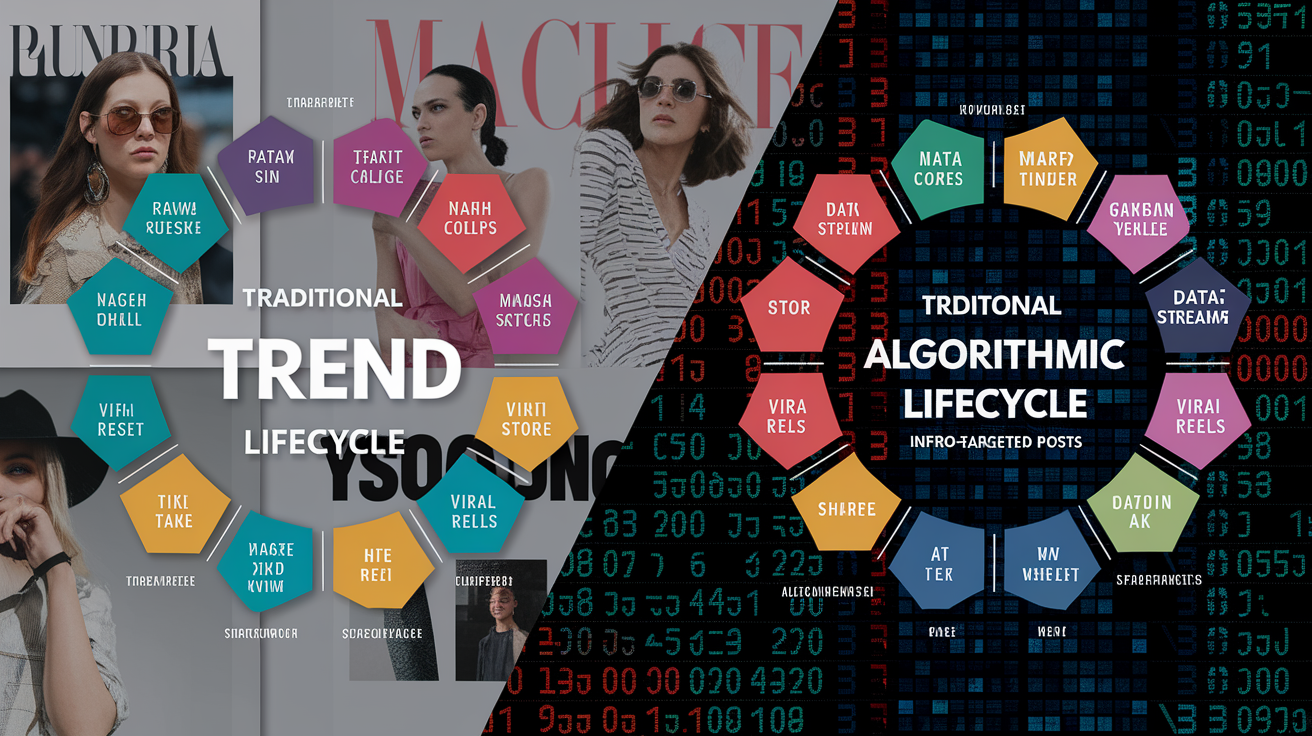
Traditional trends took months or years. They moved top-down from designers, editors, celebrities, retail buyers. A runway look might show up in a fashion magazine, get picked up by a department store, slowly diffuse into mainstream retail as people saw it in different contexts. Physical distribution, editorial curation, seasonal cycles gave trends longer lives and slower adoption. The typical consumer found a trend through deliberate exposure: flipping through a magazine, visiting a store, watching a styled TV segment. Not through automated, personalized feeds.
Algorithmic trends emerge in days or weeks. Continuous feedback loops and distributed participation fuel them. A single user’s post can spark a micro-trend if it resonates with a niche group and gets high engagement. The algorithm amplifies that signal across similar profiles, creating rapid, targeted spread that skips traditional gatekeepers. The origin’s often decentralized. No single influencer or brand owns it. The lifecycle’s compressed because the platform constantly tests new content and shifts attention as engagement changes.
Three core differences:
Speed. Traditional trends took months to hit mainstream. Algorithmic micro-trends peak in days, fade in weeks.
Origin. Traditional trends moved top-down from elites to mass markets. Algorithmic trends rise bottom-up from niche communities, amplified by engagement data.
Cultural effects. Traditional trends created shared, lasting cultural moments. Algorithmic micro-trends fragment culture into parallel, short-lived bubbles that feel universal inside groups but stay invisible outside them.
Psychological and Economic Effects of Algorithm-Driven Micro-Trends
Repetition creates pressure by making a behavior feel both popular and expected. When your feed shows the same trend over and over, the frequency alone creates the impression everyone’s doing it. This illusion of widespread adoption lowers your resistance to joining. You start feeling like you’re missing out if you don’t buy the thing, try the recipe, adopt the look. The algorithm doesn’t persuade you directly. It just increases exposure until participation feels like the default.
Algorithmic micro-trends produce a bunch of psychological effects:
Illusion of control. The feed feels personalized, like it reflects your interests. But the algorithm shapes which interests get visibility. You’re getting a curated sense of preference, not true autonomy.
Reinforcement loops. Each engagement triggers more of the same content. Pausing on a post, saving a video, clicking a link makes it harder to break free from a trend once you’ve signaled interest.
Social validation. Seeing others participate provides instant proof it’s safe. Reduces the perceived risk of trying a new behavior. Speeds up spread inside groups.
Spending behavior. One-click buying and repeated exposure compress decision timelines. Casual interest turns into immediate purchases. Financial strain builds as micro-trends churn faster than budgets can handle.
The economic impact’s not just personal. Micro-trends drive frequent, small purchases that stack up fast. The speed of churn means you’re replacing products or aesthetics before they wear out or lose value. Waste piles up. Financial pressure mounts. The feed presents tons of options, which masks the fact most are algorithmically curated. Spending feels like personal choice when it’s often a response to targeted, repeated nudges. Platforms and brands win through higher transaction speed. Consumers bear the cost, financial and environmental, often without realizing how much their choices are shaped by amplification loops instead of genuine need.
Strategies to Reduce Micro-Trend Influence in Personalized Feeds
Spotting algorithmic nudges starts with recognizing feed patterns. If the same type of content shows up multiple times in a short window, especially stuff you didn’t search for, the algorithm’s testing your interest. Notice when a product, look, or behavior suddenly feels urgent or popular. That urgency’s often manufactured through repetition and social proof built from engagement signals, not real-world need. Ask yourself whether you found the trend organically or whether the platform pushed it at you. The Irish coffee thing shows how one save can trigger a week of concentrated exposure, turning casual interest into a purchase.
Building slower decision habits counters the one-click paths micro-trends rely on. Add friction between discovery and action by creating a waiting period. Save items to a list, revisit after 48 hours. This pause breaks the reinforcement loop and gives you time to figure out whether the purchase fits your actual needs or budget. Compare options outside the platform. See if cheaper, more sustainable, better-reviewed versions exist. Check whether the product solves a problem you had before seeing the trend or just fits the aesthetic the algorithm’s been pushing.
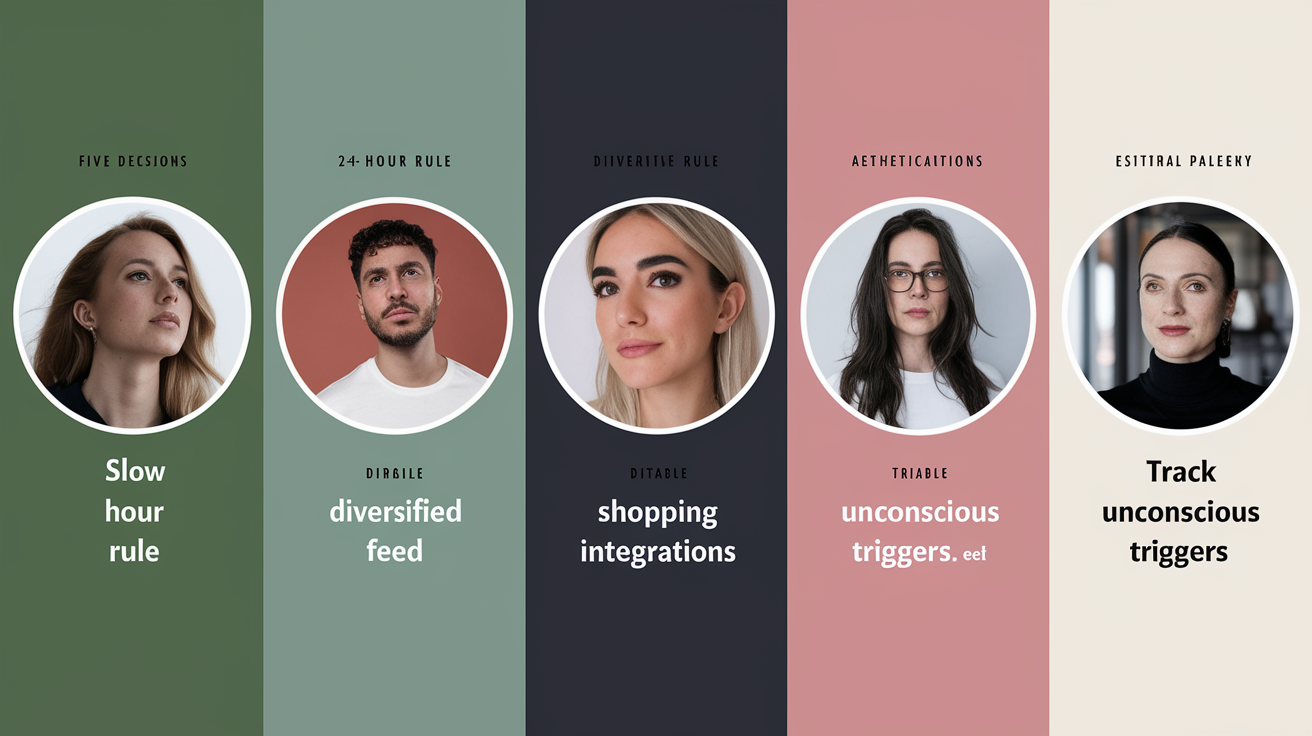
Five ways to cut micro-trend influence:
-
Ask “Do I need this?” Before clicking a buy link, pause. Figure out whether the item solves a problem you had before you saw the trend.
-
Diversify your feed. Actively search for and engage with content outside your usual zones. It disrupts the algorithm’s clustering and broadens what you see.
-
Disable shopping integrations. Turn off in-app purchase features or unlink payment methods. Adds friction between discovery and buying.
-
Track unconscious triggers. Keep a note of impulse buys and trace them back to the posts that sparked them. Recognizing the pattern weakens its grip.
-
Adopt a 24-hour rule. Wait a full day before acting on any algorithmic suggestion. If the interest sticks without repeated exposure, it’s more likely real.
Final Words
Engagement kicks off the loop: a view turns into a like, the algorithm nudges visibility, and repetition turns attention into a short-lived trend.
We mapped signal capture, ranking, platform accelerators, filter bubbles, and case studies so you can see each step clearly.
If you want one clear takeaway, this is how algorithm-driven recommendations create micro-trends explained, a fast, repeatable cycle you can spot and sometimes slow. Try small habits to reclaim your feed, and enjoy the parts that actually matter.
FAQ
Q: What are recommendation algorithms and how do they work?
A: Recommendation algorithms are systems that suggest items by scoring content for users using signals (views, likes, watch time). They use collaborative filtering, content-based, and hybrid models to rank and surface personalized picks.
Q: How has algorithm analysis been used to improve the performance of real world systems or applications?
A: Algorithm analysis has been used to improve real-world systems by finding inefficiencies, reducing latency, and lowering resource use—boosting search, ad auctions, recommendation ranking, routing, and large-scale data processing performance.
Q: What are the 7 types of algorithms?
A: The seven common algorithm types are brute force, divide-and-conquer, dynamic programming, greedy, backtracking, branch-and-bound, and randomized algorithms—each uses different strategies for problem solving and optimization.
Q: What are the 4 ways to represent an algorithm?
A: The four main ways to represent an algorithm are natural language descriptions, flowcharts, pseudocode, and actual code in a programming language—each trades human readability for precision and executability.