

Think a tuxedo works for every red carpet? Not quite.
Black tie and white tie sit on different rungs of the formal ladder: black tie is the go-to for awards and galas, white tie is the ultra-rare state-dinner tailcoat territory.
Get this wrong and you’ll stick out, so dress like you belong.
This guide breaks down what men and women must wear, the key accessory rules, and when each code actually shows up on the red carpet so you can arrive confident and camera-ready.
Definitive Breakdown of the Black Tie vs White Tie Red Carpet Dress Code

White tie is as formal as it gets. Think state dinners, royal galas, the kind of events where protocol actually matters. Black tie sits just below it on the ladder but still reads extremely formal, which is why you see it everywhere from awards shows to charity galas to those high-profile red carpet premieres. Knowing the difference matters because rolling up in a tux when a tailcoat’s required, or wearing a cocktail dress where floor-length is the only acceptable option, signals you didn’t do your homework. And people notice.
Men’s requirements split pretty sharply. White tie demands a black tailcoat with those cutaway tails, formal trousers with a silk stripe running down the leg, a white low-cut waistcoat, white bow tie, stiff-front dress shirt with a wing collar, and black patent leather court shoes or formal pumps. Black tie, on the other hand, calls for a black dinner jacket (the tux) with shawl or peak lapels, matching formal trousers, black bow tie, white dress shirt with a pleated or plain front, and maybe a black waistcoat or cummerbund paired with black patent oxfords.
Women’s requirements are just as distinct. White tie allows only floor-length evening gowns in luxe fabrics—silk, satin, velvet, chiffon—often with long gloves (elbow or opera length) and fine jewelry. Tiaras or formal headpieces show up at royal or state functions. Black tie offers more room to play. Floor-length gowns are common, sure, but formal cocktail or tea-length dresses work too. Silhouettes can range from fitted to A-line to mermaid, and embellishments like sequins or beading are fair game as long as they stay polished instead of overpowering. Statement jewelry and an evening clutch complete the look.
| Dress Code | Men’s Requirements | Women’s Requirements |
|---|---|---|
| Black Tie | Tuxedo jacket, black bow tie, formal trousers, pleated or plain shirt, patent oxfords | Floor-length or formal cocktail gown, statement jewelry, evening bag |
| White Tie | Tailcoat, white bow tie, white waistcoat, wing-collar stiff-front shirt, patent court shoes | Floor-length gown only, long gloves, fine jewelry, formal clutch |
Black Tie Formalwear Requirements for Red Carpet Appearances

Black tie is what you’ll see at most awards shows, film festival galas, charity balls, formal weddings. It signals elegance without crossing into the ultra-rare territory of white tie, making it the standard for Hollywood red carpets and high-profile fundraisers.
Men must wear a black tuxedo jacket (also called a dinner jacket) with either shawl or peak lapels. Notch lapels read too casual. The matching formal trousers feature a satin or grosgrain stripe down the outer seam. A black bow tie isn’t negotiable. Pre-tied or self-tied both work, but it’s got to be black. The dress shirt can be pleated-front or plain-front, always in white, with a turn-down or wing collar. A black waistcoat or cummerbund covers the waistband and adds polish. If you skip one, the jacket must stay buttoned. Footwear is always black patent leather oxfords or formal pumps. Nothing with visible laces or casual detailing.
Women get broader creative freedom within black tie’s formal framework. Floor-length evening gowns are the classic choice, but shorter formal styles—cocktail or tea-length dresses in luxe fabrics—are perfectly acceptable. Silhouettes span the full spectrum. Fitted sheaths, flowing A-lines, dramatic mermaids, sculptural columns. Fabrics range from satin and silk to velvet, lace, chiffon. Embellishments like beading, sequins, or embroidery work as long as the overall effect stays polished and refined instead of costume-like. Gloves are optional. Statement jewelry, a structured evening clutch, and elegant heels (closed-toe pumps or sleek strappy sandals) complete the look.
Key black-tie rules for red carpet settings:
Always wear a bow tie, never a long necktie, and never leave the collar open. Footwear must be formal and polished. No sneakers, loafers, or boots. Keep outerwear classic: a black overcoat or elegant wrap, not a puffer jacket or denim. Skip loud prints or overly casual fabrics like jersey or cotton. When in doubt, err on the side of more formal.
White Tie Formalwear Requirements for Elite Red Carpet Occasions

White tie is so formal that most people will never attend a white-tie event in their lifetime. It’s reserved for state dinners, royal ceremonies, prestigious opera galas, diplomatic receptions—occasions where protocol and tradition matter deeply. On the red carpet, you’ll see white tie only at royal state banquets or the rare ultra-formal gala tied to monarchy or heads of state.
Men’s white-tie requirements are exacting. The centerpiece is a black tailcoat with cutaway tails that fall to the back of the knees, worn open at the front to reveal a white low-cut waistcoat (the waistcoat must be white, never black). Formal trousers are black with a silk stripe down each leg. The shirt is white with a stiff front (often piqué) and a wing collar, fastened with mother-of-pearl or white studs instead of buttons. A white bow tie—stiff, often self-tied or carefully pre-tied—sits at the collar. Footwear is black patent leather court shoes or formal pumps, sometimes called opera pumps. White gloves are sometimes worn, and a top hat may appear at the most traditional events, though it’s rarely seen on modern red carpets.
Women must wear full-length, floor-grazing evening gowns. No exceptions. The silhouette leans classic and structured: think ballgowns, column gowns, or modified A-lines in luxurious fabrics like silk satin, duchess satin, velvet, or fine chiffon. Long gloves, reaching the elbow or higher (opera length), are traditional and often expected. Jewelry is fine and understated. Diamonds, pearls, precious gemstones set in elegant designs. At royal or state events, tiaras or formal headpieces may be worn by women of certain rank or status. The overall effect is restrained elegance, not fashion-forward experimentation. Shoes are closed-toe formal pumps or delicate evening sandals, and the evening bag is small, structured, refined.
Common white-tie mistakes to avoid:
Wearing a standard tuxedo instead of a tailcoat. Choosing a cocktail-length or tea-length dress instead of a floor-length gown. Substituting a black bow tie or waistcoat for the required white versions. Wearing informal shoes like loafers, open-toed sandals, or anything with visible casual details.
Side-by-Side Comparison of Black Tie vs White Tie on the Red Carpet
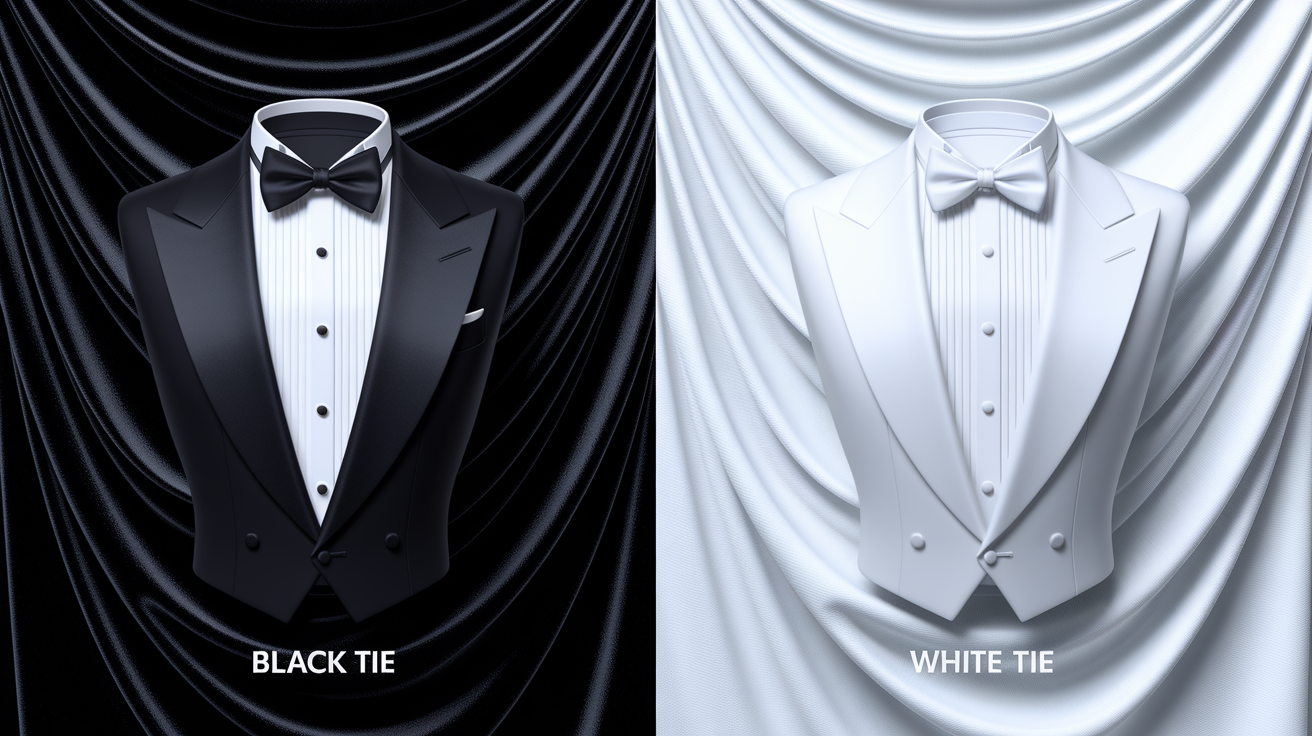
Men’s attire components separate cleanly between the two codes. Black tie centers on the tuxedo jacket with its shawl or peak lapels, paired with a black bow tie, a pleated or plain-front shirt, and black patent oxfords. White tie replaces the jacket with a tailcoat that features cutaway tails, swaps the black bow tie and waistcoat for white versions, requires a wing-collar stiff-front shirt, and calls for black patent court shoes or pumps. The tailcoat’s open-front silhouette and white accessories instantly signal the highest formality.
Women’s differences hinge on gown length and accessory expectations. Black tie permits floor-length gowns but also welcomes formal cocktail or tea-length dresses, allowing a wider range of silhouettes, colors, embellishments. White tie restricts women to floor-length gowns exclusively, favors classic silhouettes and luxe fabrics, and expects long gloves and fine jewelry. Event formality mirrors these distinctions. White tie appears at state banquets, royal functions, diplomatic ceremonies where tradition and protocol reign. Black tie dominates gala dinners, awards shows, film premieres, upscale charity events where individual style can shine within formal boundaries.
| Category | Black Tie | White Tie |
|---|---|---|
| Formality | Very formal, one step below white tie | Highest evening formality |
| Men’s Attire | Tuxedo jacket, black bow tie, patent oxfords | Tailcoat, white bow tie & waistcoat, wing-collar shirt, patent pumps |
| Women’s Attire | Floor-length or cocktail formal gown, statement jewelry | Floor-length gown only, long gloves, fine jewelry |
| Typical Events | Awards shows, galas, charity balls, formal weddings | State dinners, royal ceremonies, diplomatic receptions |
Red Carpet Interpretations of Black Tie and White Tie
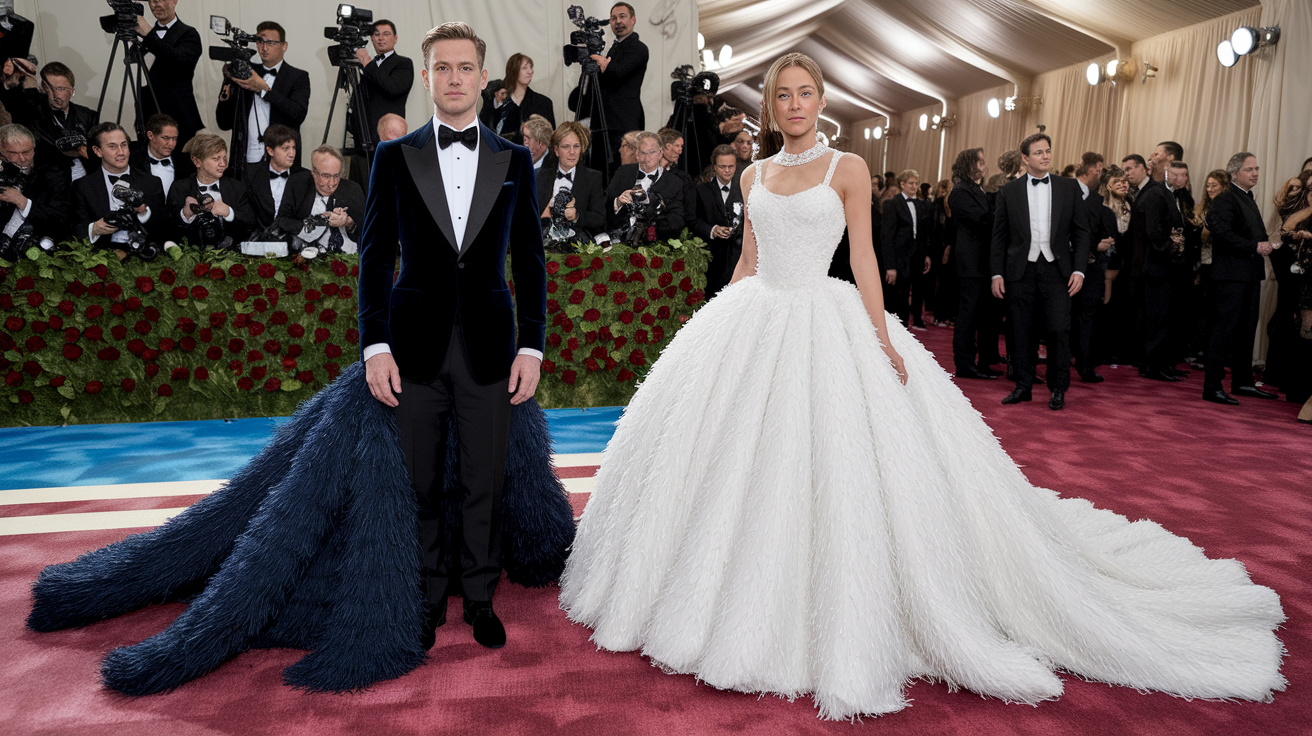
Red carpet producers and event organizers almost always specify black tie for major awards ceremonies and film festivals. The Oscars, the Met Gala (when it calls for formal rather than themed attire), Cannes, and similar events all default to black tie. It balances formality with flexibility, letting celebrities and stylists showcase creativity in fabrics, cuts, colors while maintaining the polished, camera-ready elegance that defines red carpet moments.
Celebrities and their stylists interpret black tie by pushing boundaries within the core rules. You’ll see men in midnight blue or deep burgundy dinner jackets instead of strict black, velvet shawl lapels, patterned bow ties, statement cufflinks. Women experiment with dramatic trains, sculptural silhouettes, high slits, sheer panels, bold colors, all while keeping the gown formal and the overall effect elegant. The key is that these creative details enhance the look without breaking the fundamental black-tie framework: tuxedo jacket for men, formal evening gown for women, polished shoes, refined accessories.
White tie is almost invisible on Hollywood red carpets because the events that demand it—state banquets, royal court functions, certain opera galas—operate outside the entertainment industry’s orbit. When you do see white tie, it’s at events like royal weddings, state dinners hosted by monarchies, or ultra-formal charity galas tied to royalty or diplomacy. The rigid protocol and historical tradition of white tie don’t align with the fashion-forward, brand-driven nature of most celebrity red carpets, so it remains rare and reserved for the most exclusive, tradition-bound occasions.
How to Choose Between Black Tie and White Tie for an Event
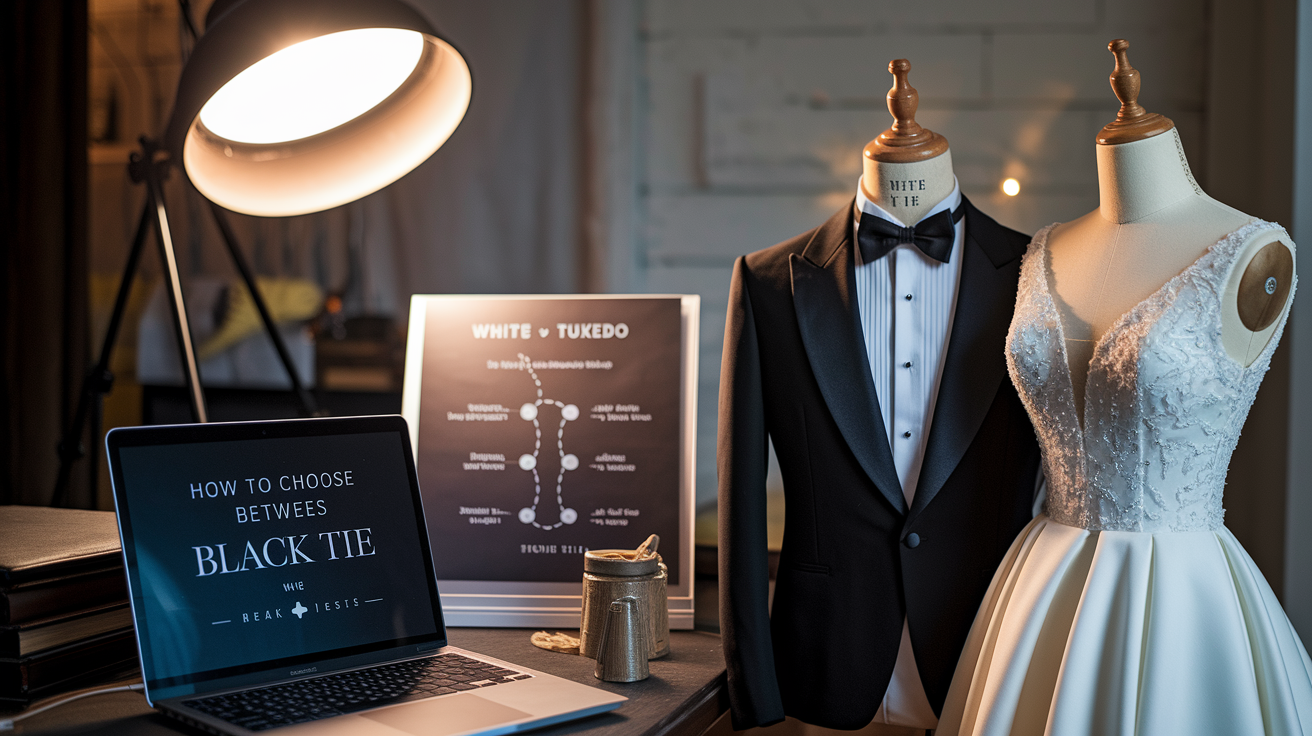
Invitation wording is your clearest guide. “White tie” or “full evening dress” on an invitation means white tie. Tailcoat and floor-length gown, no exceptions. “Black tie,” “formal,” or “black tie optional” signals black tie, with “optional” meaning you can lean slightly less formal (a dark suit for men, a cocktail dress for women) but tuxedo and evening gown remain the safer, more appropriate choices. If the invitation says “creative black tie” or “black tie preferred,” stick to black tie but feel free to add personal flair. When no dress code is stated but the event is clearly upscale—a gala, an awards ceremony, a formal wedding—assume black tie.
Seasonal, venue, and cultural cues also help. White tie events almost always take place in the evening at grand historic venues like palaces, state houses, or opera houses, often during cooler months when formal layers make sense. Black tie events can happen year-round, indoors or in elegant outdoor settings like garden galas or rooftop receptions. Geographic and cultural context matters too. European state functions and royal events lean white tie, while American awards shows and charity galas default to black tie. If you’re unsure, contact the host or event organizer directly. It’s always better to ask than to guess wrong.
Examples of invitation wording and the correct code:
“White tie” or “Full evening dress” → White tie (tailcoat, floor-length gown). “Black tie” → Black tie (tuxedo, formal evening gown or cocktail dress). “Black tie optional” → Black tie preferred, dark suit or cocktail dress acceptable. “Formal” → Black tie in most cases. “Creative black tie” → Black tie with room for personal style. No dress code stated for a gala or awards show → Assume black tie.
Fit, Tailoring, and Alterations for High-Formality Red Carpet Looks

Men’s tuxedos and tailcoats require precise tailoring to look polished on camera. The jacket shoulders should sit flat without pulling or sagging, the lapels must lie smooth against the chest, and the sleeves should end just above the wrist bone to show a quarter-inch of shirt cuff. Trousers need to break cleanly at the shoe without pooling fabric or riding too high. For tailcoats, the waist must fit snugly so the coat stays in place when you move, and the tails should fall straight down the back of the legs without twisting. A poorly fitted tuxedo or tailcoat reads as sloppy, no matter how expensive the fabric.
Women’s gowns demand equally careful attention. The hem should just skim the floor when wearing the exact shoes planned for the event. Too short looks unfinished, too long creates tripping hazards and fabric damage. The bodice must fit securely at the bust and waist, often requiring custom alterations for support, especially in strapless or backless designs. Straps, sleeves, and necklines need adjustment to sit smoothly without gaping or pulling. Many red carpet gowns include built-in corsetry or boning that must be tailored to the wearer’s body for both comfort and a flawless silhouette.
Red carpets add pressure because every angle gets photographed and broadcast. A loose waistband or puckering seam that might pass unnoticed in person becomes obvious under camera lights. Stylists and attendees typically schedule multiple fittings. An initial fitting to assess overall fit, a second to refine details, and a final fitting close to the event to ensure nothing has shifted. Rental formalwear also requires alterations. Most rental services offer in-house tailoring to adjust sleeve length, trouser hem, and waist fit. For high-stakes events, budget extra time and money for professional alterations rather than trying to make do with an imperfect fit.
Accessories and Grooming Rules for Red Carpet Dress Codes
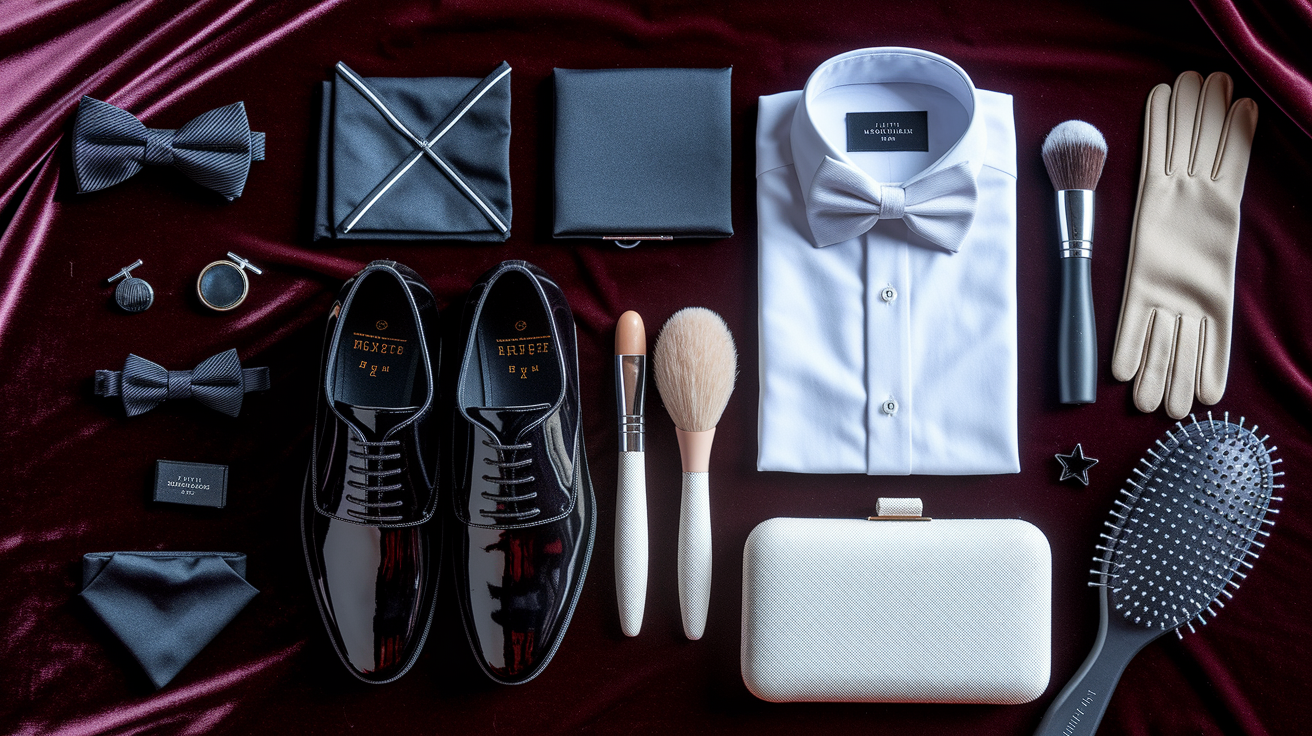
Men’s accessories must match the formality level precisely. Black tie calls for a black bow tie—never a long necktie—worn neatly tied at the collar, with optional black studs (formal shirt fasteners) replacing buttons on the placket. Cufflinks should be simple and understated, often in silver, gold, or mother-of-pearl. A white pocket square, folded crisply, sits in the breast pocket. Black tie discourages watches on the most formal end, though sleek dress watches are increasingly accepted. White tie steps up the requirements: a white bow tie, white studs, white waistcoat, and sometimes white gloves. A pocket watch on a chain is traditional but rare. Patent leather shoes must be polished to a mirror shine.
Women’s accessories lean refined and camera-ready. Black tie welcomes statement jewelry—bold earrings, a cocktail ring, a layered necklace—as long as it complements rather than overwhelms the gown. Evening bags are small, structured clutches in satin, velvet, or embellished fabrics. Gloves are optional but add elegance. Shorter gloves (wrist or elbow length) work well. White tie requires more restraint: fine jewelry in diamonds, pearls, or precious gemstones set in classic designs, long gloves (elbow or opera length), and a small, formal clutch. Hair and makeup must be polished and long-lasting under bright lights. Think sleek updos, soft waves, or classic Hollywood curls paired with camera-friendly makeup that won’t fade or shine under flash photography.
Matching accessories to formality level isn’t negotiable. Wearing casual elements—a leather belt visible under a tuxedo jacket, sneakers with a gown, or a crossbody bag instead of a clutch—breaks the dress code and distracts from the overall look. Metals should coordinate: if your cufflinks and watch are silver, keep your belt buckle and shoe buckles silver as well. For women, jewelry metals can mix intentionally (rose gold and yellow gold, for example), but the overall effect should feel cohesive. Outerwear also matters. Men should wear a black overcoat or wool topcoat, women a formal wrap, shawl, or evening coat. Puffer jackets, fleece, or denim clash with both black tie and white tie.
Grooming essentials for a camera-ready appearance:
Hair neatly styled and secured to last through the event and photo sessions. Skin prepped with primer and long-wear foundation to avoid shine under lights. Nails clean and manicured. Neutral or classic polish colors for formal settings. Facial hair trimmed and groomed. Clean-shaven or well-maintained beard and mustache.
Quick Checklist for Dressing Correctly on the Red Carpet

Use this rapid-reference guide to confirm you’ve covered every detail before stepping onto the red carpet. White tie requires a tailcoat, white bow tie, white waistcoat, wing-collar stiff-front shirt, and patent court shoes for men. Floor-length gown, long gloves, and fine jewelry for women. Black tie requires a tuxedo, black bow tie, formal trousers, and patent oxfords for men. Floor-length or formal cocktail gown, statement jewelry, and evening clutch for women. Footwear must always be formal. Patent leather for men, elegant heels or formal flats for women, with no sneakers, boots, or casual sandals allowed.
Confirm dress code: Check invitation wording (white tie, black tie, formal) and verify with host if unclear
Men—black tie: Tuxedo jacket with shawl or peak lapels, black bow tie, pleated or plain shirt, patent oxfords, optional waistcoat or cummerbund
Men—white tie: Tailcoat, white bow tie, white waistcoat, wing-collar stiff-front shirt, patent pumps or court shoes
Women—black tie: Floor-length or formal cocktail gown, statement jewelry, evening clutch, elegant heels
Women—white tie: Floor-length gown only, long gloves, fine jewelry, formal clutch, closed-toe pumps
Fit and tailoring: Schedule fittings to adjust hem, sleeves, waist, and bodice. Confirm final fit close to event date
Accessories: Match formality level (black studs and tie for black tie, white for white tie). Polish shoes to mirror shine
Grooming: Hair, makeup, and nails camera-ready. Long-wear products to last through photography
Outerwear: Formal overcoat or evening wrap. No casual jackets or fleece
Final check: Review outfit from all angles, test shoes for comfort, pack backup items (safety pins, touch-up makeup, breath mints)
Final Words
You’ve got the hierarchy mapped: white tie is the top level, black tie one step down. We walked through men’s and women’s essentials, from tailcoats and white bow ties to tuxedos and cocktail-length gowns.
We also compared looks side-by-side, covered tailoring, accessories, and a quick checklist so you don’t miss the small details.
Keep this red carpet dress code explained black tie vs white tie quick guide handy next time an invite drops. You’ll feel confident, camera-ready, and ready to enjoy the event.
FAQ
Q: Is red carpet a black tie event? What does red carpet dress code mean?
A: The red carpet is often treated as a black tie event; red carpet dress code means very formal evening wear, usually tuxedos or floor-length gowns, though specifics can vary by event.
Q: What is the difference between white tie and black tie dress code?
A: The difference between white tie and black tie is formality. White tie is the most formal, requiring a tailcoat, white bow tie, and full-length gowns; black tie uses a tuxedo, black bow tie, and allows more gown options.
Q: What are the 4 types of dress codes?
A: The four basic dress codes are casual, smart or business casual, semi-formal (cocktail), and formal (black tie or white tie), each rising in formality and expectation for fabrics and accessories.