

Is dark academia just an excuse to wear tweed and hoard antique books?
Maybe, but it’s also a mood that turns libraries into stages and study into ritual.
It mixes classical scholarship and Gothic style—candlelit wood-paneled rooms, tweed blazers, fountain pens, Bach at midnight.
This post breaks it down fast: the literary roots, the signature colors and pieces, the emotional pull toward melancholy and secrecy, and how the trend moved from novels to Tumblr to TikTok.
By the end, you’ll know what the aesthetic really means and why people keep chasing it.
Comprehensive Breakdown of the Dark Academia Aesthetic

Dark academia romanticizes classical scholarship, candlelit libraries, and preppy-gothic style. It’s about losing yourself in old books, wandering museums, listening to Bach at midnight, and dressing like you’re perpetually on your way to an exam in a Victorian lecture hall. The look mixes vintage academic fashion with Gothic architecture and a deep love for the humanities. Knowledge feels mysterious here. Precious. Maybe a little dangerous.
The themes center on scholarly obsession, classical education (Latin, Greek philosophy, that sort of thing), and a real fascination with mortality. It celebrates the elite academic circles you see in old novels—secret societies, tight friend groups bound by shared knowledge, libraries that feel like cathedrals. There’s melancholy woven through everything, this sense that beauty and learning are fleeting. Studying the past connects you to something timeless and tragic.
What started in 18th and 19th century Romantic and Gothic literature became a full online trend in the 2010s and 2020s. Tumblr, Instagram, and TikTok turned dark academia from a literary vibe into a shareable lifestyle. Between 2017 and 2021, it surged. People posted outfit grids, study setups, book stacks, short videos set to classical music. It became shorthand for valuing depth, tradition, and a certain kind of intellectual seriousness, even if you’re just scrolling on your phone.
Six traits define it:
- Color palette: dark brown, charcoal, forest green, burgundy, cream
- Architecture: Collegiate Gothic and Victorian interiors with stone, arched windows, high ceilings, wood paneling
- Fashion: tweed blazers, cable-knit sweaters, pleated skirts, oxford shoes, leather satchels
- Literature: Gothic and Romantic novels, classical poetry, modern campus thrillers like The Secret History
- Activities: reading annotated classics, writing essays or poetry, studying ancient languages, visiting galleries
- Emotional tone: melancholic, nostalgic, intellectually curious, quietly obsessive
Origins and Early Influences Behind the Dark Academia Aesthetic

The roots go back to Romantic and Gothic literature. Mary Shelley’s Frankenstein (1818) and Charlotte Brontë’s Jane Eyre (1847) explore isolation, intellectual ambition, and the darker sides of knowledge. These novels set a template where learning and emotion collide, where academic spaces become settings for mystery and obsession. Renaissance art fed into it too. Think moody oil paintings, classical statues, a reverence for the past that feels almost religious. Add the visual weight of Oxbridge colleges and Ivy League campuses (stone towers, vaulted libraries, heavy wooden doors) and you’ve got the physical world dark academia tries to recreate.
The modern version got its clearest blueprint from Donna Tartt’s The Secret History, published in 1992. The book centers on classics students at a small, elite college who get entangled in a murder. It set the tone: intellectual elitism, moral decay, secrecy, the intoxicating danger of being part of something exclusive. That novel became a founding text for people who wanted to live inside that same atmospheric tension.
Online, the aesthetic started forming in the 2010s, mostly on Tumblr and Instagram. Users shared quotes, outfit inspiration, photos of old libraries. By 2017, it had a name and a recognizable look. TikTok and Pinterest amplified it between 2018 and 2022, turning it into a full lifestyle category. DIY room tours, thrift hauls, study routines, “get ready with me” videos. What had been a niche literary vibe became widely recognized cultural shorthand for a specific kind of bookish, nostalgic, slightly melancholic style.
Core Motifs and Cultural Themes in the Dark Academia Aesthetic

At its heart, this is about treating knowledge like a sacred mission. Classical scholarship (studying Latin, Greek, ancient philosophy) becomes a marker of depth. The aesthetic romanticizes losing yourself in dense texts, prioritizing learning over social life, finding meaning in old books and forgotten ideas. It’s not just about being smart. It’s about being devoted to something timeless, even if that devotion costs you.
Mortality and melancholy get woven through everything. Death isn’t sanitized. It’s part of the atmosphere. Candlelight, fading pages, autumn leaves—all hint at impermanence. The aesthetic asks you to sit with the idea that beauty fades, that knowledge outlasts individuals, and that there’s something poetic about both. It’s the mood you get from reading a 19th century poet who died young or walking through a cemetery on a gray afternoon.
Secrecy and elite academic circles matter too. Dark academia loves the idea of exclusive groups. Study societies, late-night reading clubs, friend circles bound by shared intellectual obsessions. There’s often an undercurrent of transgression, the sense that these groups operate outside normal rules (morally, socially, academically). It’s the thrill of being on the inside of something not everyone understands.
Five motifs anchor it:
- Candlelit or lamp-lit libraries with rows of leather-bound books
- Classical busts, statues, Renaissance-style art
- Handwritten notes, fountain pens, journals filled with annotations
- Ancient maps, globes, archival documents
- Gothic or Collegiate architecture with stone, wood, and stained glass
Visual Identity of the Dark Academia Aesthetic

The color palette is muted, warm, deeply nostalgic. Charcoal, forest green, burgundy, warm brown, cream. These aren’t bright colors. They’re the tones you see in old oil paintings, in Victorian parlors, in libraries that haven’t been updated in a century. The palette feels grounded, serious, a little somber. It matches the emotional tone. It’s a visual way of signaling you’re drawn to the past, to tradition, to spaces that feel intellectually weighty.
| Color | Hex Tone | Typical Usage |
|---|---|---|
| Charcoal | #2E2B27 | Walls, outerwear, accent furniture |
| Forest Green | #1E2D2F | Textiles, book covers, upholstery |
| Burgundy | #6B2E2E | Scarves, blankets, leather accents |
Architecture and interiors lean heavily on Collegiate Gothic and Victorian styles. Stone facades, arched windows, high ceilings, wood-paneled rooms. Libraries are the spiritual home of this aesthetic. Rows of leather-bound books, brass lamps casting warm pools of light, heavy wooden desks where you can spread out notes and lose track of time. Candlelight adds to the mood. So does the presence of antique frames, botanical prints, objects that feel curated and old. The goal is creating spaces that feel timeless, scholarly, just a little mysterious. Like every corner might hold a secret or a forgotten manuscript.
Fashion Foundations of the Dark Academia Aesthetic

Dark academia fashion centers on vintage academic style with a Gothic edge. The key fabrics are tweed, wool, corduroy, herringbone. Materials that are textured, durable, visually rich. Knitwear is essential (cable-knit sweaters and sweater vests especially). The overall look is preppy but muted, layered but structured. It’s the wardrobe you’d expect on a college campus in the 1940s or in a period drama set at Oxford. The colors stick to the core palette: brown, khaki, black, deep green, burgundy, beige.
Accessories matter as much as the main pieces. Berets, round wire-frame or tortoiseshell glasses, leather satchels, pocket watches, fountain pens. All of it reinforces the scholarly, vintage vibe. The goal is looking like someone who spends their time in libraries, not gyms or nightclubs. Even footwear skews classic: oxford shoes, loafers, brogues in leather or suede. The entire wardrobe prioritizes timelessness over trends, quality over flash. It’s about looking thoughtful, intentional, a little like you stepped out of an old photograph.
Seven essentials form the foundation:
- Tweed blazer (brown, gray, or herringbone)
- Sweater vest in a neutral or muted tone
- Cable-knit sweater in cream, burgundy, or forest green
- Pleated skirt or tailored trousers in wool or corduron
- Wool overcoat for layering
- Oxford shoes, loafers, or brogues in leather
- Leather satchel or tote for books and notebooks
Interior Decor and Styling within the Dark Academia Aesthetic
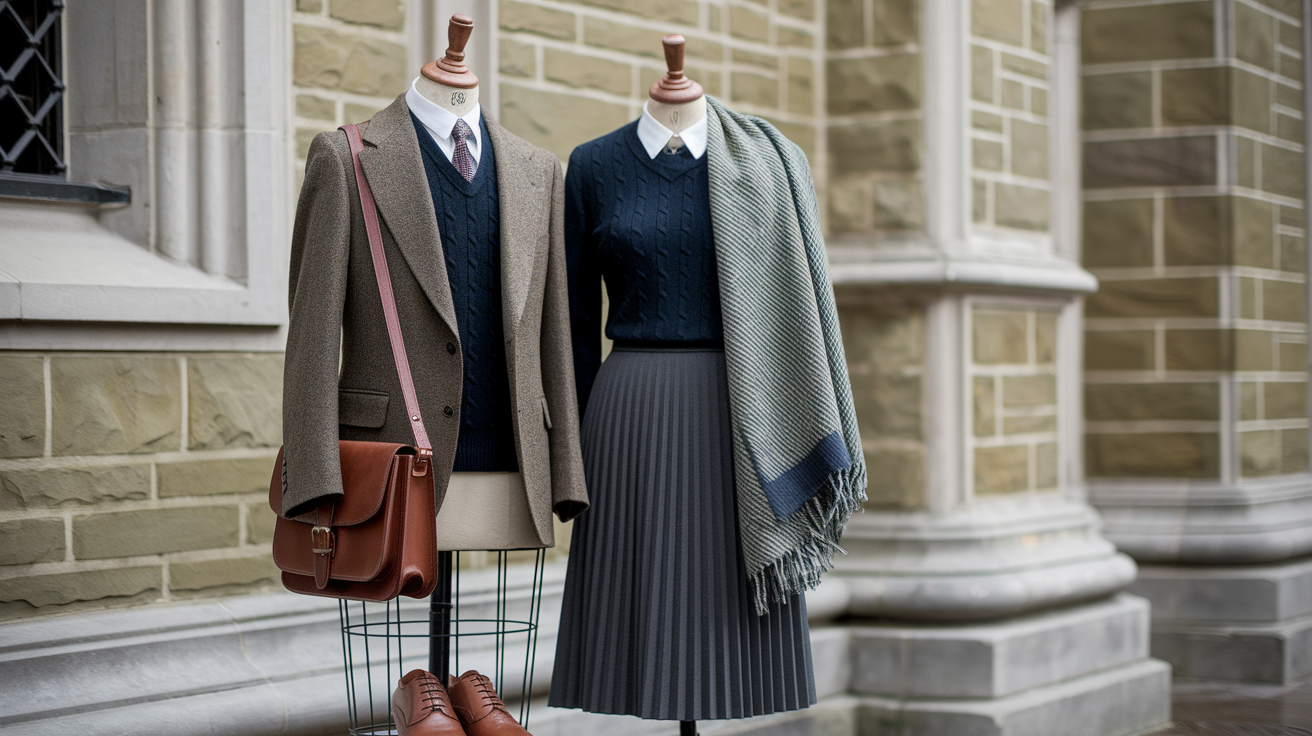
Dark academia interiors recreate the feeling of a private study in an old university or a Victorian reading room. Wood furniture is central. Desks, bookshelves, side tables in dark or warm tones. Leather-bound books stacked on every surface, not just for reading but as decor that signals depth. Warm lighting is key. Brass desk lamps, candles in brass or pewter holders, soft bulbs that create pools of light rather than flooding the room. The effect should feel cozy but focused. A space designed for late-night studying or quiet reflection.
Other decor elements reinforce the scholarly, nostalgic atmosphere. Old maps, botanical prints, framed classical art. They add visual interest without feeling trendy. Antique frames, globes, typewriters serve as props that anchor the aesthetic in a specific time period. Even smaller touches (a gramophone, vinyl records, sheets of classical music) help build the world. The goal is surrounding yourself with objects that feel meaningful, timeless, connected to the life of the mind. It’s not about clutter. It’s about curation.
Seven common decor items:
- Leather-bound books arranged on shelves or stacked on desks
- Candles in simple holders for warm, flickering light
- Old maps or framed botanical prints on the walls
- Classical busts or small statues
- Gramophone, vinyl records, or classical sheet music
- Warm desk lamp with a brass or wood base
- Antique frames, globes, or manual typewriters as accent pieces
Activities and Academic Lifestyle in the Dark Academia Aesthetic

The lifestyle side is built around intellectual and creative rituals. Reading is central, especially annotating classic literature with notes in the margins. It’s not passive. It’s active engagement with texts, treating books like conversation partners. Writing is just as important. Essays, poetry, journal entries, all done in leather notebooks or with fountain pens. The act of writing by hand reinforces the aesthetic’s reverence for tradition and craft. Studying ancient languages like Latin or Greek is another signature activity, less for practical use and more as a way to connect with the classical roots the aesthetic celebrates.
Museums and galleries are natural gathering places. Visiting art exhibits, wandering through historical collections, spending time in archival spaces. All of it feeds the emphasis on knowledge and beauty. Classical music is the soundtrack. Baroque and Romantic era composers like Bach, Chopin, Debussy. Listening becomes a form of study in itself, a way to train your attention and connect with the past. Learning to play an instrument (especially piano or violin) fits the aesthetic’s emphasis on discipline and craft.
Six activities commonly associated with it:
- Reading and annotating classic literature
- Writing poetry, essays, or journal entries
- Studying ancient languages or classical texts
- Visiting museums, galleries, or historic sites
- Listening to classical music or learning an instrument
- Attending lectures, book clubs, or intellectual discussions
Books, Films, and Music that Shape the Dark Academia Aesthetic
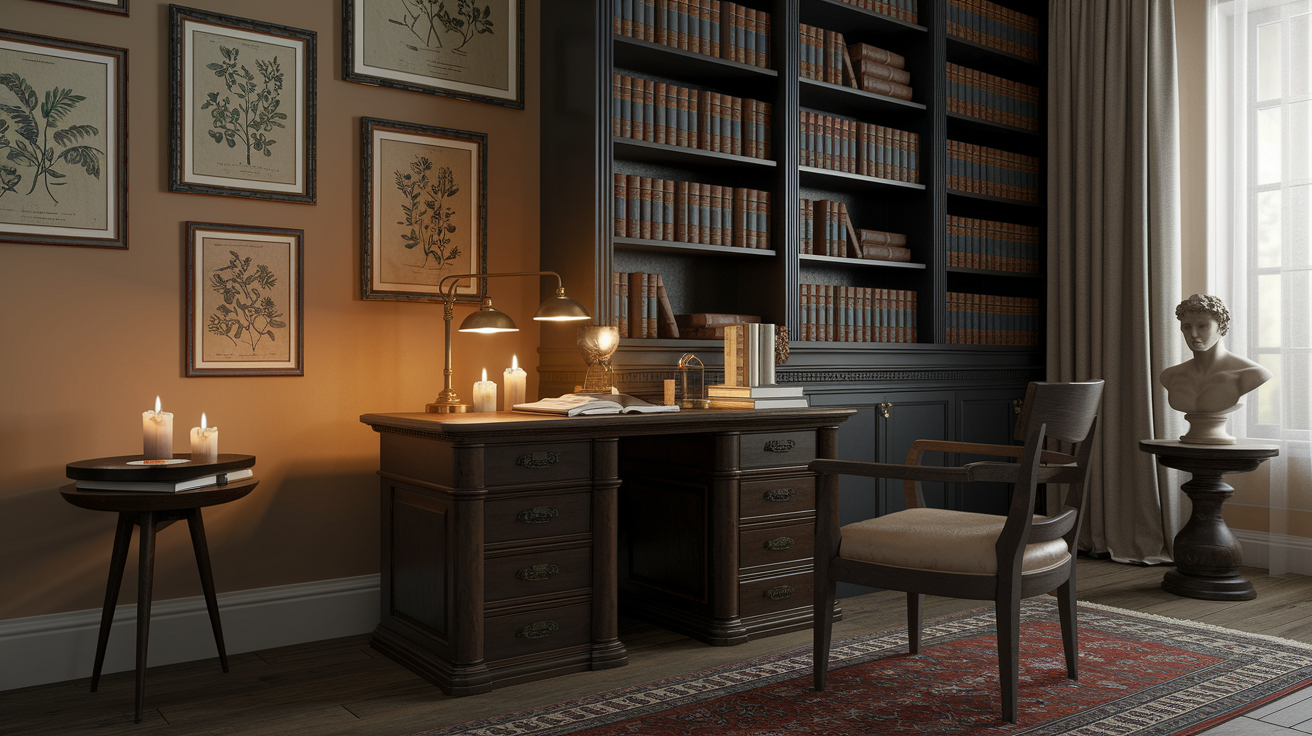
Donna Tartt’s The Secret History (1992) is the most frequently cited modern work. It centers on classics students at a small college who get entangled in a murder. The novel established the template for dark academia narratives: elite academic settings, morally ambiguous characters, obsessive intellectualism, a sense of tragedy lurking beneath the surface. It’s the book people point to when they want to explain what this feels like in narrative form.
Earlier works laid the groundwork. Mary Shelley’s Frankenstein (1818) explores the dangers of unchecked intellectual ambition. Charlotte Brontë’s Jane Eyre (1847) combines Gothic atmosphere with themes of isolation and moral struggle. Both treat knowledge and learning as forces that can elevate or destroy. Poets like John Keats (1795–1821), Lord Byron (1788–1824), and Sylvia Plath (1932–1963) are touchstones too. Their work is marked by beauty, melancholy, and a fascination with mortality.
Film and television add another layer. Dead Poets Society (1989) romanticizes the power of poetry and the bond between students and teachers. Adaptations of Brideshead Revisited (the novel was published in 1945, with multiple screen versions) capture the nostalgia and privilege of elite university life. Period dramas set in academic spaces (fictional or real) help define the visual and emotional palette.
Classical music is the sonic backbone. Baroque composers like Bach and Vivaldi, Romantic era figures like Chopin and Debussy. All of it fits the emphasis on beauty, discipline, emotional depth. Listening to classical music becomes a way to signal that you value complexity and tradition. It’s less about casual enjoyment and more about creating a soundtrack for focused, reflective work.
Eight works across books, film, and music:
- The Secret History by Donna Tartt (1992)
- Dead Poets Society (1989 film)
- Frankenstein by Mary Shelley (1818)
- Jane Eyre by Charlotte Brontë (1847)
- Poetry by John Keats, Lord Byron, and Sylvia Plath
- Brideshead Revisited (novel 1945, various adaptations)
- Baroque and Romantic era classical compositions
- Period dramas and adaptations set in academic or Gothic settings
Social Media’s Role in Popularizing Dark Academia

Dark academia began forming as an online aesthetic in the 2010s, mostly on Tumblr and Instagram. Users shared quotes from classic literature, photos of old libraries, outfit inspiration built around vintage academic style. The aesthetic had a name and a recognizable visual language by the mid-2010s. That made it easy for people to find and contribute to the community. Instagram became a hub for outfit grids, book stacks, carefully staged photos that captured the mood. Candlelit desks, stacks of annotated novels, rain-streaked windows.
TikTok and Pinterest drove a second wave of visibility between 2018 and 2022. TikTok’s short video format was perfect for “study with me” content, room tours, thrift hauls, quick outfit transitions. Creators posted videos of themselves reading in cozy corners, annotating poetry, walking through autumn leaves in tweed blazers. Pinterest became a visual archive. Boards filled with color palettes, decor ideas, outfit inspiration, lists of books and films. The platforms made it easy to discover, curate, and share the aesthetic. It went from a niche interest to a widely recognized style.
Common content types include moody study videos, outfit grids showing layered vintage pieces, room tours highlighting bookshelves and warm lighting, and thrift hauls where people show off secondhand tweed blazers and leather satchels. The aesthetic’s emphasis on nostalgia and craftsmanship made it a natural fit for social media. People could signal their values and interests visually. It became a way to say “I care about depth, beauty, and the life of the mind” all in a single photo or fifteen-second clip.
Differences Between Dark Academia and Related Aesthetics
Light academia shares the academic focus but flips the tone and palette. Where dark academia leans into moody, muted tones and melancholy, light academia favors brighter colors like cream, soft beige, pale gold. The mood is optimistic, warm, less concerned with mortality or secrecy. Both value learning and classical references, but light academia feels like studying in a sunlit library. Dark academia feels like reading by candlelight in a Gothic tower. The textures are softer, the emotional weight lighter.
Cottagecore centers on rural, pastoral life and domestic craft. Baking bread, tending gardens, living close to nature. The aesthetic romanticizes simplicity and self-sufficiency, not intellectual life or academic spaces. While both cottagecore and dark academia value vintage style and nostalgia, cottagecore is grounded in the countryside. Dark academia is firmly urban or institutional. One celebrates the home and the natural world. The other celebrates the library and the classroom.
Goth overlaps in its embrace of darkness, morbidity, Gothic visual cues. But goth is rooted in a specific music subculture and often includes more theatrical, alternative, or punk elements. Dark academia’s darkness is intellectual and melancholic, not rebellious or countercultural. Goth fashion is bolder. Heavier makeup, more dramatic silhouettes, a wider range of black-on-black styling. Dark academia pulls from preppy, academic dress codes and pairs its Gothic mood with restraint and tradition.
| Aesthetic | Tone | Key Differences |
|---|---|---|
| Light Academia | Bright, optimistic | Softer palette, less emphasis on mortality, sunlit spaces |
| Cottagecore | Pastoral, domestic | Rural settings, focus on nature and craft, not scholarship |
| Goth | Dark, theatrical | Music-driven subculture, bolder fashion, less academic focus |
Practical Guide to Adopting the Dark Academia Aesthetic
Building a dark academia wardrobe starts with a simple capsule. Five versatile pieces you can layer and mix. A tweed blazer in brown, gray, or herringbone is the anchor. It works over almost anything and instantly signals vintage academic style. Pair it with a cream button-up shirt for a clean, classic base. Add a cable-knit sweater in burgundy, forest green, or cream for warmth and texture. Pleated skirt or tailored trousers in wool or corduroy give you structure and polish. Finish with oxford shoes or loafers in leather. Comfortable, timeless, easy to wear with everything. These five pieces cover the essentials and can be dressed up or down depending on the setting.
Thrift stores and vintage shops are your best resource. Look for wool blazers, knitwear, pleated skirts, leather accessories. The aesthetic naturally leans on secondhand pieces, which means you can build a wardrobe that’s sustainable and budget-friendly. Focus on quality fabrics and classic cuts. Avoid anything with logos or modern details. The goal is looking like you could’ve pulled the outfit from a 1940s college campus or a Victorian study.
Decor follows the same principle. Focus on a few key items that set the tone. A warm desk lamp with a brass or wood base creates the right lighting. Stack a few classic novels on your desk or nightstand (leather-bound editions if you can find them, or just well-worn paperbacks). A candle in a simple holder adds warmth and atmosphere. Hang a framed map print or botanical art on the wall. Keep a leather satchel visible, filled with notebooks or old books. Add a warm throw blanket in burgundy or forest green. Finish with a small plant or a classical bust if you have space. These seven items create a dark academia environment without overwhelming your room or your budget.
Five-piece capsule wardrobe:
- Tweed blazer (brown, gray, or herringbone)
- Cream button-up shirt
- Cable-knit sweater (burgundy, forest green, or cream)
- Pleated skirt or tailored trousers (wool or corduroy)
- Oxford shoes or loafers (leather)
Seven-item decor checklist:
- Warm desk lamp (brass or wood base)
- Stack of classic novels
- Candle in a simple holder
- Framed map print or botanical art
- Leather satchel (filled with notebooks or books)
- Warm throw blanket (burgundy or forest green)
- Small plant or classical bust
Cultural Significance and Critiques of the Dark Academia Aesthetic
Dark academia has been praised for encouraging reading, study habits, and an appreciation of classical arts. It offers a counter-narrative to fast, disposable culture by emphasizing depth, tradition, intellectual curiosity. For students and creatives, it provides a framework for making learning feel romantic and meaningful. The aesthetic validates the idea that spending time with books, music, and art isn’t just productive. It’s beautiful. That’s a powerful message in a world that often treats education as purely utilitarian.
But the aesthetic has also drawn criticism for romanticizing elitism, exclusivity, and academic anxiety. The focus on Ivy League and Oxbridge imagery, elite study groups, classical Western education can feel narrow and exclusionary. It risks glamorizing privilege and ignoring the barriers many people face in accessing higher education. Some critics also point out that the aesthetic can romanticize toxic academic pressure. The idea that you should sacrifice your well-being for intellectual achievement, or that melancholy and suffering are necessary parts of being smart or serious.
Newer works within the aesthetic have started addressing these concerns. Some recent novels explore institutional corruption, racial dynamics, and the inequities built into elite academic spaces. One book draws inspiration from the 2019 college admissions bribery scandal. Another blends social-thriller elements with elite-school drama to critique racism and privilege. These works show that the aesthetic can evolve. That it’s possible to love the visual and cultural elements of dark academia while questioning the systems it often romanticizes. The aesthetic’s future likely depends on its ability to stay adaptable, inclusive, and self-aware.
Final Words
We ran through the whole dark academia aesthetic: what it means, where it came from, its mood and motifs, plus the look and lifestyle that define it.
You saw the visual cues, wardrobe staples, book and music picks, decor ideas, and how Tumblr, Instagram, and TikTok turned it into a trend.
If you’re still asking what is dark academia aesthetic explained, it’s basically a literary, vintage, moody style centered on scholarship and quiet ritual that anyone can try. Start small, with a sweater, a stack of classics, or a candle. It’s surprisingly cozy and inspiring.
FAQ
Q: What defines the Dark Academia aesthetic?
A: The Dark Academia aesthetic is defined by a love of classical learning, melancholic introspection, and vintage academic visuals—think candlelit libraries, tweed and wool, gothic architecture, and romanticized scholarship focused on mortality and secrecy.
Q: Is Harry Potter light or Dark Academia?
A: Harry Potter is generally considered lighter than Dark Academia: it features youthful adventure, clear heroism, and brighter tones, though it shares gothic campuses, scholarly rituals, and occasional darker themes that Dark Academia fans appreciate.
Q: Is Dark Academia LGBTQ?
A: Dark Academia isn’t inherently about sexual orientation; it’s open to LGBTQ creators and fans, and its focus on secrecy, outsider identity, and intimate friendships often resonates with queer experiences.
Q: Why do girls like Dark Academia?
A: Girls often like Dark Academia because it offers romanticized study culture, cozy vintage fashion, and a thoughtful, moody escape—mixing stylish wardrobe, shared intellectual rituals, and a sense of belonging.